Summer Sale Discount Flat 70% Offer - Ends in 0d 00h 00m 00s - Coupon code: 70diswrap

Autodesk BIM_MGT_101 Dumps

Page: 1 / 6
Total 57 questions

Autodesk Certified Professional in BIM Management for Building Design Questions and Answers

Question 1

A museum project anticipating generative iterations is being designed by a team working across multiple time zones under a tight schedule. The client hosts weekly meetings to review various façade options, document sustainability goals, and evaluate numerous energy analyses.

What project-specific training should the design technology team provide to prepare the team for client meetings and ensure successful project execution?

Options:

A.

AutoCAD, Autodesk Forma, generative design.

B.

Generative design, AutoCAD, Civil 3D.

C.

Forma Site Design, generative design, Autodesk Forma.

D.

Sustainability certification, Revit, Forma Site Design.

Question 2

During early coordination on a hospital project, the BIM manager runs a general clash detection between all models and generates over 3,000 clash results. Many are low-priority issues, such as wall-grid overlaps and minor duct-ceiling intersections. The project’s clash matrix outlines only high-impact clashes between structural, MEP, and architecture in specific zones.

For the BIM manager, what is the most appropriate next step to align clash reporting with the project’s coordination strategy?

Options:

A.

Share the full clash report with all project teams and instruct them to determine and resolve the issues they consider most important.

B.

Export the entire clash list into spreadsheet format so project managers can manually sort, review, and prioritize the items by trade.

C.

Disable or relax selected non-critical clash rules within the detection software to temporarily reduce the total number of reported issues.

D.

Apply the clash matrix to filter out low-priority clashes, adjust detection tolerances where appropriate, and produce reports for each discipline’s scope.

Question 3

When working with separate Revit templates for each discipline, which elements should be standardized to support collaboration and seamless coordination across the project?

Options:

A.

A coordinated set of title blocks, project units, specific view templates, and parameters that include both Project and Shared Parameters.

B.

Individually developed templates with custom levels and grids, allowing each discipline to organize models based on its own internal requirements and modelling preferences.

C.

A blank or out-of-the-box Revit template with no predefined standards, requiring each designer to set up views, parameters, and content from scratch on every project.

D.

A single template used across disciplines with shared settings, general workflows, and uniform file structure to simplify project setup and minimize variation.

Question 4

A federated model has been created for a multidisciplinary project, but clashes are being reported in areas where coordination should already be resolved. Upon investigation, the BIM manager finds that some models were exported with outdated links and local coordinates.

What is the most appropriate next step before proceeding with coordination analysis?

Options:

A.

Instruct teams to verify model references and coordinate systems before reassembly.

B.

Freeze the current model state and ask trades to work around the identified issues.

C.

Notify the client and exclude the faulty models from further coordination.

D.

Run an additional clash-detection pass with adjusted tolerance thresholds to reduce clash totals.

Question 5

A BIM manager is preparing to share a federated model package with an external cost estimator. The estimator only needs access to quantities and location-based metadata, but not design intent or proprietary elements from other teams.

What is the first step the BIM manager should take to ensure appropriate use and minimize data-related risk?

Options:

A.

Export the models as PDFs to prevent the third party from modifying geometry.

B.

Confirm that the model content, format, and permissions match the recipient’s defined scope of use.

C.

Verify that the file sizes are small enough for email transmission.

D.

Convert the models into 2D views to avoid exposing embedded metadata.

Question 6

A client’s project schedule requires a rigorous milestone/gateway review process, defined in the BIM Execution Plan. The design firm has its own internal checklist.

What should a BIM manager do to ensure the team is complying with the client’s requirements?

Options:

A.

Add the client as a member on Autodesk Forma and allow them access to the published model.

B.

Import the client requirements as a PDF on the Revit opening view.

C.

Remap the phase of the model to match the client phase most aligned to Design Development.

D.

Review BEP requirements against the checklist and create Issues in Autodesk Forma for non-standard requirements.

Question 7

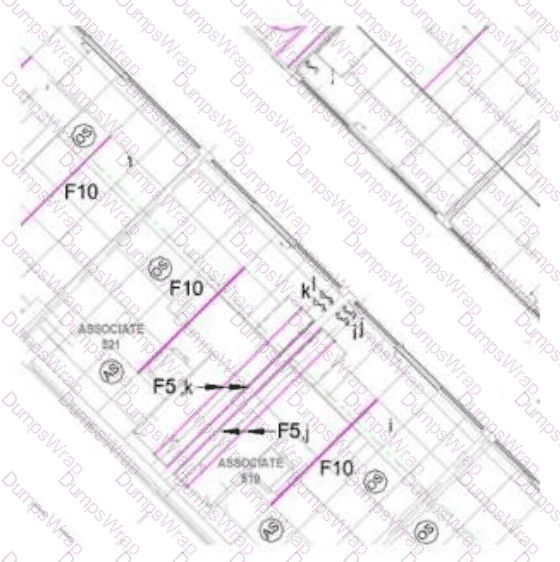
Refer to the exhibit.

as

A designer cannot see a 2x4 tile ceiling in the hallway area of their Reflected Ceiling Plan, but that same ceiling is visible in a 3D view. The 2x2 ceilings in the other rooms are visible in both views.

What are two possible reasons for this? (Select two.)

Options:

A.

The ceiling was inadvertently deleted.

B.

A View Filter has been applied for that ceiling type.

C.

A View Template has been assigned with ceilings category visibility off.

D.

A Plan Region with a higher cut level has been applied to that area.

E.

Hide in View by Category was applied to that ceiling.

Question 8

A project team has been ignoring their model warnings, and from talking with the team, it is apparent that they are intimidated by the number of warnings and unwilling to tackle resolving them.

What steps can the BIM manager take to educate the team and alleviate their reluctance to address these issues?

Options:

A.

Show the team how warnings are sorted by type and advise them on how to research and resolve them.

B.

Advise the team to export the warnings list, then bulk delete the elements creating the warnings.

C.

Install a third-party add-in that allows the team to mark all warnings with “ignore.”

D.

Create Autodesk Forma issues for each warning and assign them to specific team members.

Question 9

A client is seeking bids from a range of possible fabricators to determine which will win the contract to join the team.

What settings in Autodesk Forma allow a team to distribute files to a party that is not a project member?

Options:

A.

Audit and Compact the file and then save.

B.

Centralize the model and have the recipient create a local file.

C.

Set the permissions of the folder to allow Everyone to access.

D.

Enable the project for public sharing and send a transmittal from the files.

Question 10

The BIM manager has finalized the BIM Execution Plan (BEP) for a multi-discipline educational facility project. Some consultants have already begun modelling, while others are onboarding late. A few external stakeholders are not listed in the original BEP distribution but will need access to coordinated models during design and preconstruction.

What two actions could be taken in order to manage distribution of updates? (Select two.)

Options:

A.

Update and reissue the BEP only to the consultants who have not yet started modelling to ensure they catch up to project standards.

B.

Formally distribute the BEP to all relevant parties as an addendum to the contract.

C.

Formally distribute the BEP to all relevant parties and confirm receipt to ensure alignment on roles, responsibilities, and agreed BIM processes.

D.

Upload the BEP in a shared Autodesk Forma Data Management folder to ensure version tracking and verify access to stakeholders.

E.

Wait until construction coordination begins before sharing the BEP with external stakeholders.

Question 11

The BIM manager is conducting a health check of a design model submitted by a consultant to assess its readiness for coordination. Several model performance concerns have been raised, including long open times, sluggish navigation, and excessive file size.

Which of the following actions would best help to evaluate the model’s health and identify areas of improvement?

Options:

A.

Run a performance audit using review tools and evaluate the number of warnings, file size, and modeling practices such as in-place families.

B.

Notify the consultant to reduce the model file size by deleting sheets and exporting only 3D views.

C.

Review the consultant’s coordination clash reports to determine if unresolved issues are impacting performance.

D.

Disable all linked files and re-enable them one at a time to identify which one is causing performance issues.

Question 12

A regional user group raised awareness about a third-party add-on tool that enables a team to establish thresholds for model warnings. In addition, it automates suppressing warnings deemed negligible to a specific project.

Which two data points should a BIM manager gather to build a business case to have the tool approved for use across the firm? (Select two.)

Options:

A.

The cost per user multiplied by the number of entire office staff, including the cost of time to implement and train on the tool.

B.

How many of the firm’s competitors are already using the tool.

C.

The language that available training materials on the tool are in.

D.

The reliability of the tool creator and the time to install, test, and create training materials on the tool.

E.

The relevant user group, the projected cost to supply the group, and the anticipated time savings and/or risk mitigation that the tool would provide.

Question 13

A BIM manager is reviewing a consultant’s architectural model before the next coordination milestone. The project requires each model to conform to a defined naming convention, include COBie parameters, and populate shared parameters according to the Model Element Table. The BIM manager notices that several elements are missing metadata and that some naming is inconsistent.

Which step best supports a systematic evaluation of completeness and compliance with project standards?

Options:

A.

Manually review each element in the Model Browser to confirm naming and parameter completeness.

B.

Use a model checker or data-validation tool to compare parameter presence, naming conventions, and required values against the established project standard.

C.

Ask the design team to re-export the model with updated information based on verbal clarification and metadata from the BIM Execution Plan.

D.

Filter out incomplete elements in a 3D view and hide them to avoid confusion during coordination.

Question 14

What is included in a BIM Execution Plan?

Options:

A.

Project schedule and design playbook.

B.

Modeling standards and technology ecosystem.

C.

LOD Matrix and project specifications.

D.

Collaboration protocols and project playbook.

Question 15

A Revit model in Autodesk Forma that does not have any consultant links is opening for all team members except one. The project BIM manager has already audited and compacted the model.

What should the BIM manager do so that the team member can open the model?

Options:

A.

Clear the user’s collaboration cache files and retry again.

B.

Agree to a user request for a hardware upgrade.

C.

Roll back the model to a previous version.

D.

Publish the model to Autodesk Forma and ask the user to retry again.

Question 16

The BIM Execution Plan (BEP) has just been completed for a new project. To ensure all multidisciplinary team members review and understand their roles and responsibilities, what is the most effective way to distribute the BEP before the project starts and ensure it remains accessible to everyone throughout the project?

Options:

A.

Include the BEP as part of the project contract and distribute it at project kickoff.

B.

Conduct a mandatory training session to review the BEP and archive it as official once approved by all disciplines.

C.

Upload the BEP to Autodesk Forma in a shared folder location to serve as a live copy.

D.

Email the BEP to all team members and request that they sign and return it as confirmation of review and agreement.

Question 17

A BIM manager is running clash detection for the first time on a large retail project during the Design Development phase. After copying all the models to the coordination space on Autodesk Forma, the matrix shows no clashes among any of the models.

How should the BIM manager proceed?

Options:

A.

Add sheets to the publish settings and rerun the clash.

B.

Verify the shared coordinates for each model and republish.

C.

Continue forward on the project because there are no coordination issues.

D.

Use the project as a case study for a firm-wide presentation.

Page: 1 / 6
Total 57 questions