
Conducting Threat Hunting and Defending using Cisco Technologies for Cybersecurity Questions and Answers
A SOC analyst is usingCisco Secure Network Analytics (Stealthwatch)to hunt for command-and-control (C2) activity across the enterprise. The analyst wants to identify stealthy C2 channels that intentionally avoid known malicious IP addresses and domains. Which Stealthwatch hunting approach BEST supports this objective?
A threat hunter is performing a structured hunt usingCisco Secure Endpoint (AMP)telemetry to identify credential harvesting activity. Which data source is MOST critical during thedata collection and processing phaseof the hunt?
A structured threat hunt using Cisco Secure Network Analytics confirms abnormal internal SMB traffic consistent with lateral movement. Which action should occur NEXT to improve organizational security posture?
A security operations team is transitioning from alert-driven investigations to a mature threat hunting program. The team wants to focus on detecting adversaries who intentionally evade signature-based tools and traditional SIEM alerts by using legitimate credentials and native system utilities. Which hunting focus best supports this objective?
After completing a threat hunt that uncovered previously undetected credential abuse, the SOC wants to ensure long-term improvement in detection and response capabilities. Which action BEST represents the final and most critical phase of the threat hunting lifecycle?
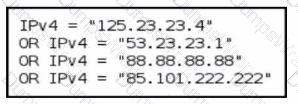
A security analyst receives an alert that host A, which has an IP address of 192.168.5.39, has a new browser extension installed. During an investigation of the SIEM tool logs, the analyst discovers that host A made continuous TCP connections to an IP address of 1.25.241.8 via TCP port 80. The 1.25.241.8 IP address is categorized as a C2 server. Which action should the analyst take to mitigate similar connections in the future?
Refer to the exhibit.

An analyst is evaluating artifacts and logs collected from recent breach. In the logs, ATP established persistency of malware by placing a path to the executable in a specific registry entry. What is the difference between the ATP's approach and using HKEY LOCAL MACHINE\Software\Microsoft\Windows\CurrentVersion\Run instead?
Refer to the exhibit.

A company went through several rounds of restructuring and the previous security team has been let go A new engineer joins and rediscovers all the tools thatthe previous team left behind.One of the tools Is a Bash script related to monitoring AWS accounts for threats What is the purpose of the script?
A threat hunting team wants to ensure hunts are repeatable, scalable, and less dependent on individual analyst intuition. What is the MOST important process improvement?
A SOC team wants to detect lateral movement performed using legitimate administrative tools rather than malware. Which telemetry source provides the MOST reliable visibility for this hunting objective?
Refer to the exhibit.
A threat-hunting team makes an EDR query to detect possible C2 outbound communication across all endpoints. Which level of the Pyramid of Pain is being used?
According to the MITRE ATT&CK framework, how is the password spraying technique classified?
Refer to the exhibit.

A forensic team must investigate how the company website was defaced. The team isolates the web server, clones the disk, and analyzes the logs. Which technique was used by the attacker initially to access the website?
While investigating multiple incidents, analysts notice that attackers consistently use SMB for lateral movement and avoid PowerShell execution. Why is this observation valuable for attribution?
The CISO must improve the threat-hunting strategy to strengthen the organization's security posture and better prepare against sophisticated threats. Which aspect of the Threat Hunting Maturity Model can significantly enhance an organization's ability to address challenges outlined in the Pyramid of Pain?
During multiple intrusions, analysts observe that attackers consistently perform internal reconnaissance before privilege escalation, avoid noisy exploitation, and limit actions to business hours of the victim’s region. Why is this observation important for attribution?
What triggers unstructured threat hunting?
A threat hunter is usingCisco Secure Network Analytics (Stealthwatch)to investigate possible lateral movement inside the network. Which behavior would MOST strongly indicate lateral movement using valid credentials?
