
Fortinet NSE 7 - Public Cloud Security 7.6.4 Architect Questions and Answers
Exhibit.
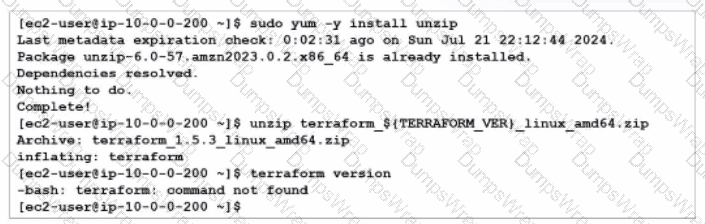
You are tasked with deploying FortiGate using Terraform. When you run the terraform version command during the Terraform installation, you get an error message.
What could you do to resolve the command not found error?
Refer to the exhibit.
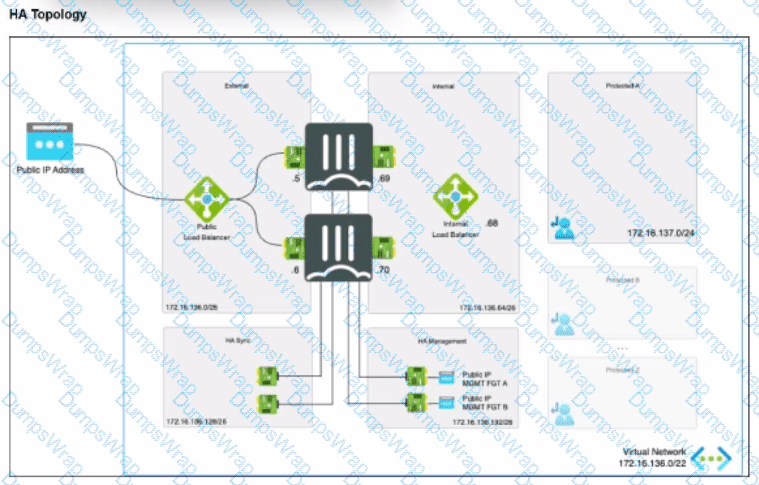
The exhibit shows an active-passive high availability FortiGate pair with external and internal Azure load balancers There is no SDN connector used in this solution.
Which configuration must the administrator implement on each FortiGate?
An administrator decides to use the Use managed identity option on the FortiGate SDN connector with Microsoft Azure. However, the SDN connector is failing on the connection.
What must the administrator do to correct this issue?
You have onboarded the organization’s Microsoft Azure account on FortiCNAPP using the automated configuration approach. However, FortiCNAPP does not appear to be receiving any workload scanning data. How can you remedy this? (Choose one answer)
Refer to the exhibit.
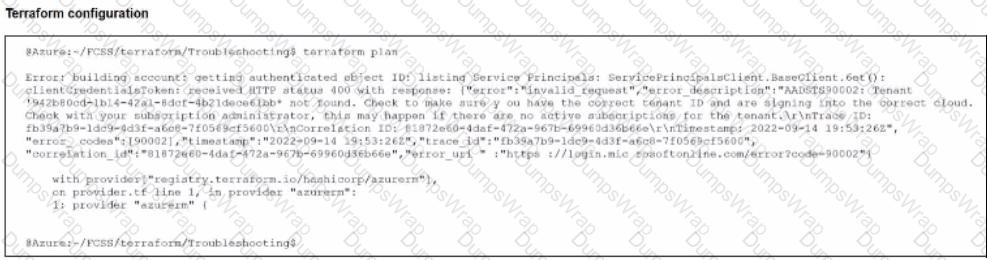
After the initial Terraform configuration in Microsoft Azure, the terraform plan command is run.
Which two statements about running the terraform plan command are true? (Choose two.)
Refer to the exhibit.
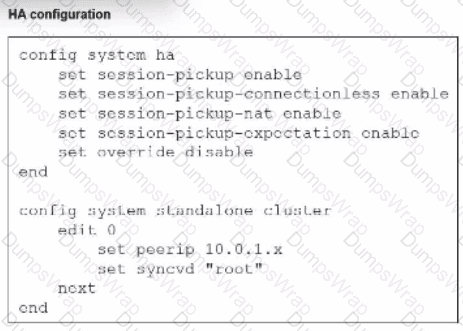
You deployed an HA active-active load balance sandwich with two FortiGate VMs in Microsoft Azure.
After the deployment, you prefer to use FGSP to synchronize sessions, and allow asymmetric return traffic. In the environment, FortiGate port 1 and port 2 are facing external and internal load balancers respectively.
What IP address must you use in the peerip configuration?
Which FortiCNAPP feature correlates findings into a single, contextualized view so that security teams can focus on addressing the most critical threats instead of chasing isolated alerts?
You need a solution to safeguard public cloud-hosted web applications from the OWASP Top 10 vulnerabilities. The solution must support the same region in which your applications reside, with minimum traffic cost.
Which solution meets the requirements?
Refer to the exhibit.
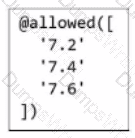
What is the purpose of this section of an Azure Bicep file?
In an SD-WAN TGW Connect topology, which three initial steps are mandatory when routing traffic from a spoke VPC to a security VPC through a Transit Gateway? (Choose three.)
A customer would like to use FortiGate fabric integration with FortiCNP. When adding a FortiGate VM to FortiCNP, which three mandatory configuration steps must you follow on FortiGate? (Choose three answers)
Your monitoring team reports performance issues with a web application hosted in Azure. You suspect that the bottleneck might be due to unexpected inbound traffic spikes.
Which method should you use to identify and analyze the traffic pattern?
Refer to the exhibit.
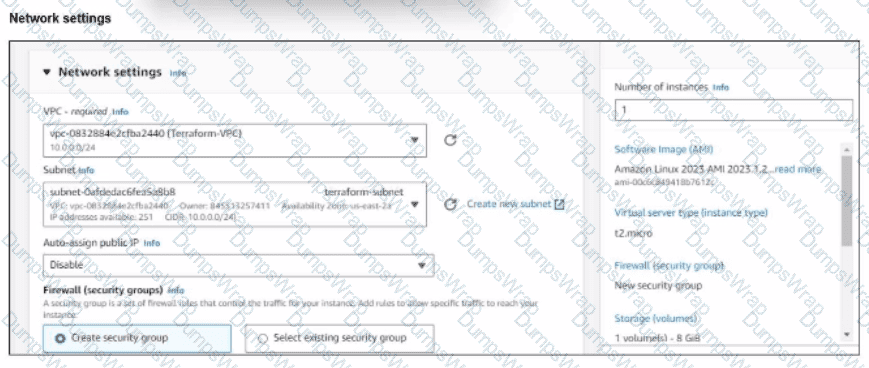
You have deployed a Linux EC2 instance in Amazon Web Services (AWS) with the settings shown on the exhibit.
What next step must the administrator take to access this instance from the internet?
Refer to the exhibit.
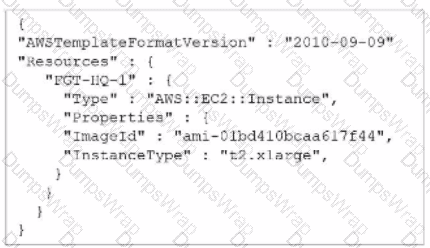
A senior administrator in a multinational organization needs to include a comment in the template shown in the exhibit to ensure that administrators from other regions change the Amazon Machine Image (AMI) ID to one that is valid in their location.
How can the administrator add the required comment in that section of the file?
An organization is deploying FortiDevSec to enhance security for containerized applications, and they need to ensure containers are monitored for suspicious behavior at runtime.
Which FortiDevSec feature is best for detecting runtime threats?
Refer to the exhibit.
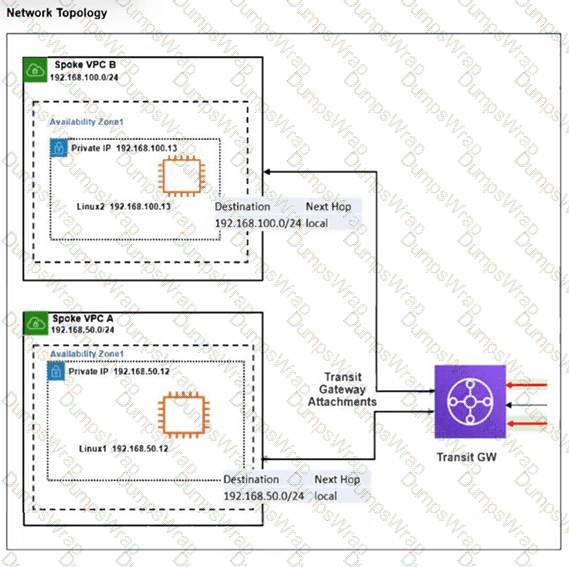
The exhibit shows a customer deployment of two Linux instances and their main routing table in Amazon Web Services (AWS). The customer also created a Transit Gateway (TGW) and two attachments. Which two steps are required to route traffic from Linux instances to the TGW? (Choose two answers)
Refer to the exhibit.
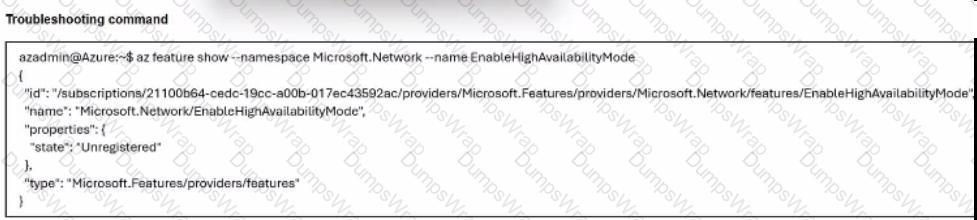
A managed security service provider (MSSP) administration team is trying to deploy a new HA cluster in Azure to filter traffic to and from a client that is also using Azure. However, every deployment attempt fails, and only some of the resources are deployed successfully. While troubleshooting this issue, the team runs the command shown in the exhibit.
What are the implications of the output of the command?
Refer to the exhibit.
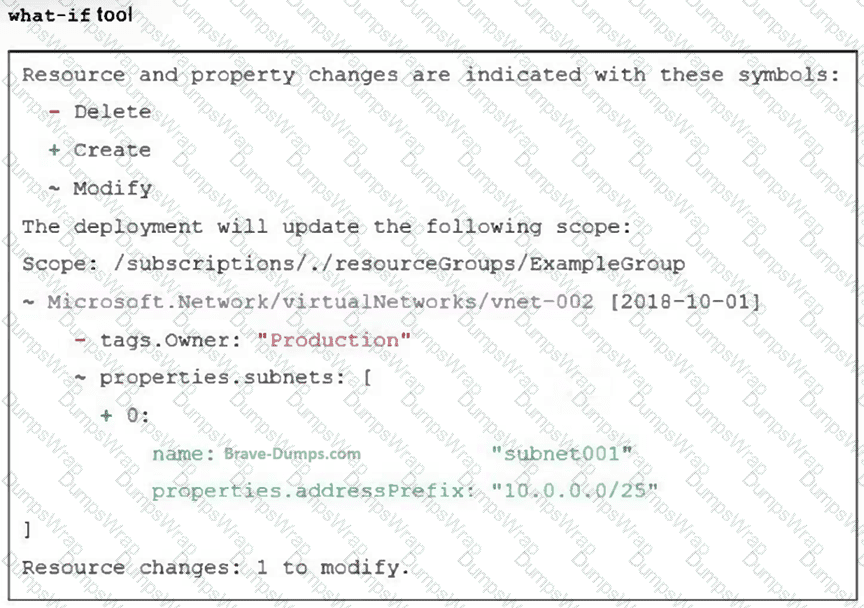
An administrator used the what-if tool to preview the changes to an Azure Bicep file. What will happen if the administrator applies these changes in Azure? (Choose one answer)
Refer to the exhibit.
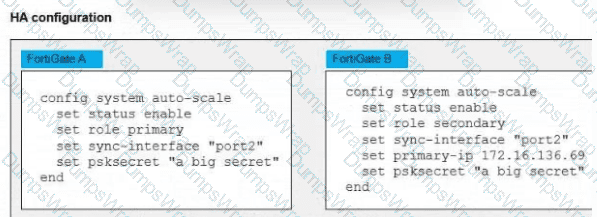
An administrator deployed an HA active-active load balance sandwich in Microsoft Azure. The setup requires configuration synchronization between devices.
What can you conclude from the configured settings shown in the exhibit? (Choose two.)
Refer to the exhibit.
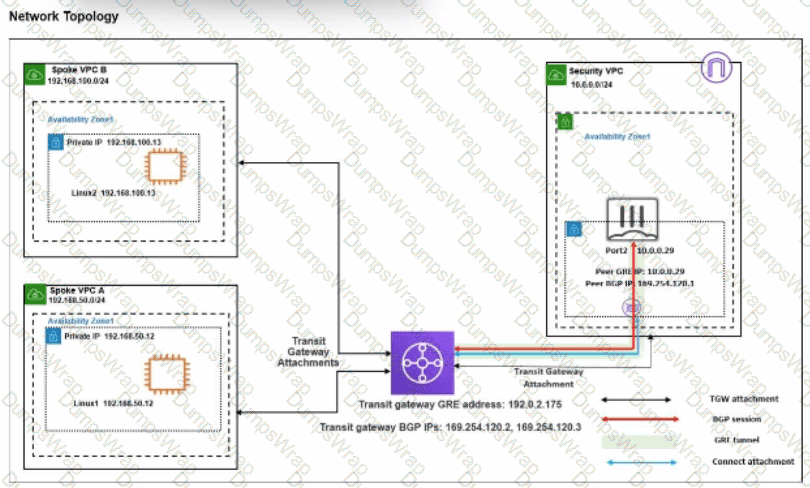
You attempted to access the Linux1 EC2 instance directly from the internet using its public IP address in AWS. However, your connection is not successful.
Given the network topology, what can be the issue?
