Halloween Sale Special - 75% Discount Offer - Ends in 0d 00h 00m 00s - Coupon code: w75best

Fortinet NSE7_FSN_AR-7.6 Dumps

Fortinet NSE 7 - Secure Networking 7.6 Architect Questions and Answers

Question 1

What can cause an IKEv2 tunnel to go down after it was initially brought up successfully?

Options:

A.

Mismatched traffic selectors (phase 2 / “quick-mode selectors”) were detected during the CREATE_CHILD_SA exchange.

B.

A mismatched proposal was detected during the IKE_AUTH exchange.

C.

A mismatched pre-shared key was detected during the IKE_AUTH exchange.

D.

A mismatched Diffie-Hellman group was detected during the IKE_SA_INIT exchange.

Question 2

You want to configure SD-WAN on a few FortiGate devices to optimize the use of WAN links and secure internet access. The devices are standalone FortiGate devices already centrally managed by FortiManager.

Which statement applies?

Options:

A.

You must move the devices to the SD-WAN Manager section and use the SD-WAN standalone wizard.

B.

You can keep the devices in the Device Manager section, but you must place them in a dedicated device group.

C.

You can keep the devices in the Device Manager section. You can configure per-device SD-WAN settings.

D.

You must move the devices to the SD-WAN Manager section before you can configure SD-WAN rules.

Question 3

Refer to the exhibit.

as

Original video exhibit showing a FortiManager ZTP CSV file with device serial numbers, names, branch IDs, gateways, and metadata columns.

For your zero-touch provisioning (ZTP) deployment, you review the CSV file shown in the exhibit and note that it is missing important information.

Which two elements must you change before you can import it into FortiManager? (Choose two.)

Options:

A.

You must define a value for each device and each user-defined metadata variable.

B.

You must define a name for each device.

C.

You must define a value for each device and each metadata variable that defines an IP address.

D.

You must associate a device blueprint with each device.

Question 4

Refer to the exhibit.

as

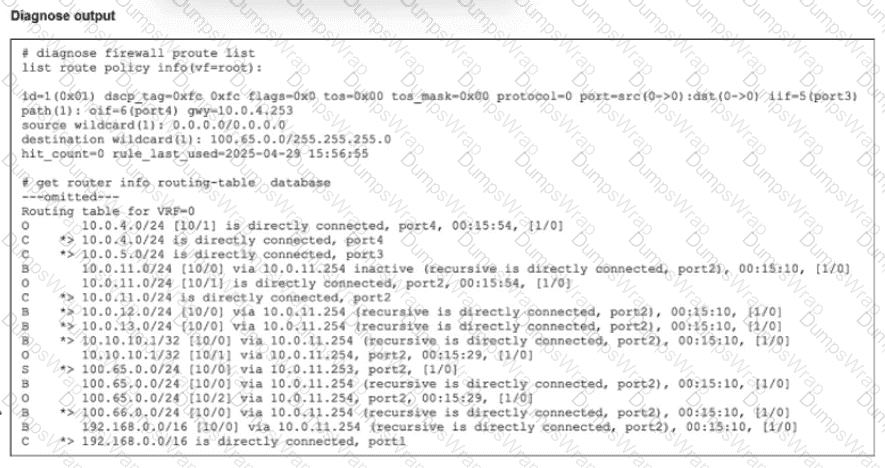
Which route will traffic take to get to the 100.65.0.0/24 network considering the routes are all configured with the same distance?

Options:

A.

The BGP route

B.

The policy route

C.

The static route

D.

The OS PF route

Question 5

Refer to the exhibit.

as

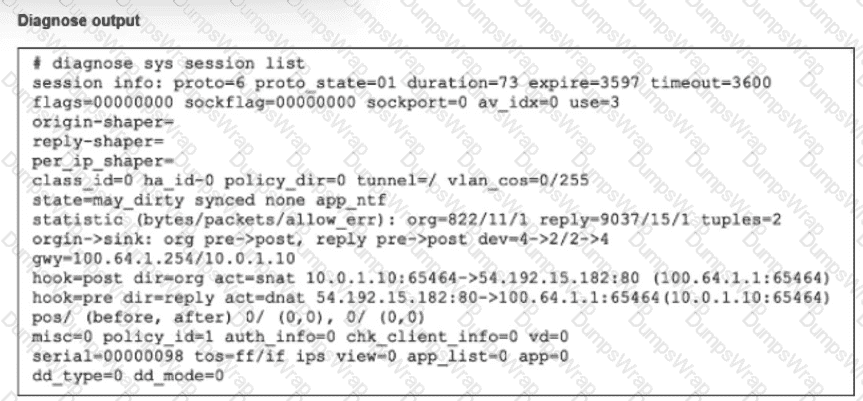
The output of diagnose sys session list command is shown.

If the HA ID for the primary device is 9, what happens if the primary fails and the secondary becomes the primary?

Options:

A.

The session is synchronized with the secondary device, however, because application control is applied. the session is marked dirty and has to be reevaluated after failover.

B.

The session will be removed from the session table of the secondary device because the TCP session is not yet fully established.

C.

The session continues to permit traffic on the new primary device after failover. without requiring the client to restart the session with the server.

D.

The session state is preserved but the kernel will re-evaluate the session because the routing information will be flushed

Question 6

If you configure set tcp-mss-sender and set tcp-mss-receiver in a firewall policy, how does it affect the size and handling of TCP packets in the network?

Options:

A.

Applying the commands in a firewall policy determines the largest payload a device can handle in a single TCP segment.

B.

The maximum segment size permitted in the firewall policy determines whether TCP packets are allowed or denied.

C.

The TCP packet modifies the packet size only if no fragmentation occurs.

D.

The commands affect both the payload size of the packet and the size of the IP header for handling TCP packets.

Question 7

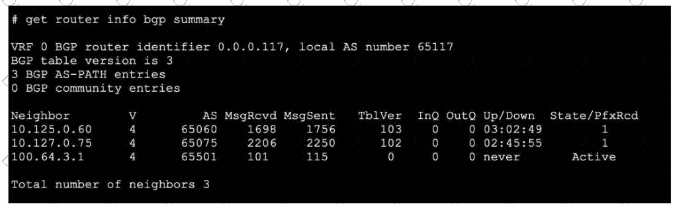
Refer to the exhibit, which shows the output of a BGP debug command.
as

What can you conclude about the router in this scenario?

Options:

A.

The router 100.64.3.1 needs to update the local AS number in its BGP configuration in order to bring up the 8GP session with the local router.

B.

An inbound route-map on local router is blocking the prefixes from neighbor 100.64.3.1.

C.

All of the neighbors displayed are part of a single BGP configuration on the local router with the neighbor-range set to a value of 4.

D.

The BGP session with peer 10.127.0.75 is up.

Question 8

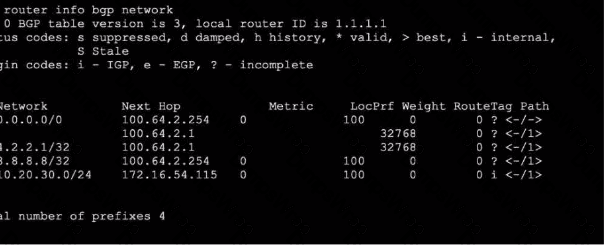
Refer to the exhibit, which shows the output o! the BGP database.
as

Which two statements are correct? (Choose two.)

Options:

A.

The advertised prefix of 10.20.30.0/24 was configured using the network command.

B.

The first four prefixes are being advertised using a legacy route advertisement.

C.

The advertised prefix of 10.20.30.0/24 is being advertised through the redistribution of another routing protocol.

D.

The output shows all prefixes advertised by all neighbors as well as the local router.

Question 9

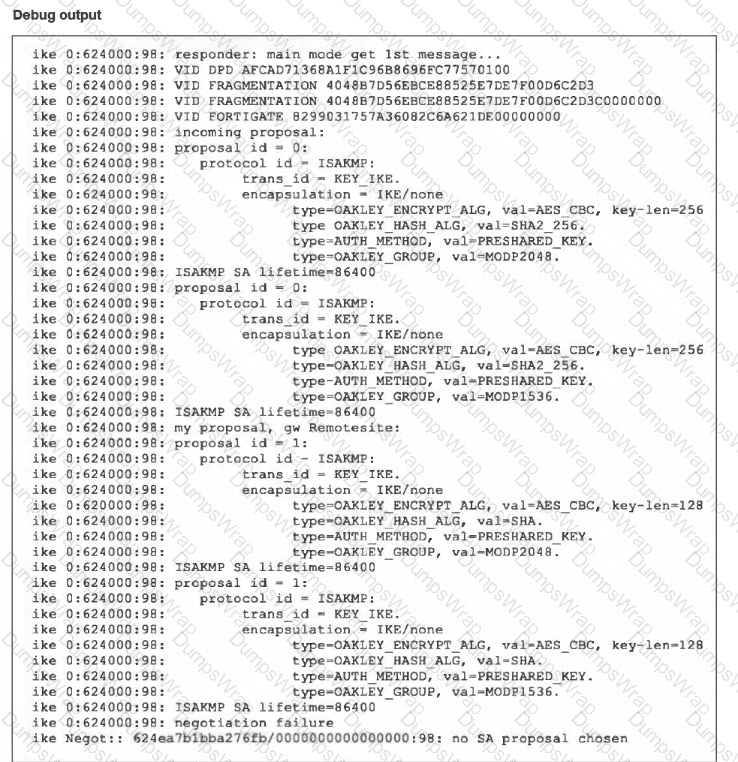
Refer to the exhibit, which contains partial output from an IKE real-time debug.
as

The administrator does not have access to the remote gateway.

Based on the debug output, which configuration change the administrator make to the local gateway to resolve the phase 1 negotiation error?

Options:

A.

In the phase 1 proposal configuration, add AES256-SHA256 to the list of encryption algorithms.

B.

In the phase 1 proposal configuration, add AESCBC-SHA2 to the list of encryption algorithms.

C.

In the phase 1 network configuration, set the IKE version to 2.

D.

In the phase 1 proposal configuration, add AES128-SHA128 to the list of encryption algorithms.

Question 10

Refer to the exhibit.

as

Which two observations can you make about the web filter traffic captured using the flow tool? (Choose two.)

Options:

A.

The session is offloaded to the NPU.

B.

The firewall policy is configured with proxy-based inspection mode.

C.

The web filter profile is configured with proxy-based inspection mode.

D.

The HTTPS port is mapped to 443 in the SSL/SSH Inspection Profile

Question 11

Refer to the exhibits.

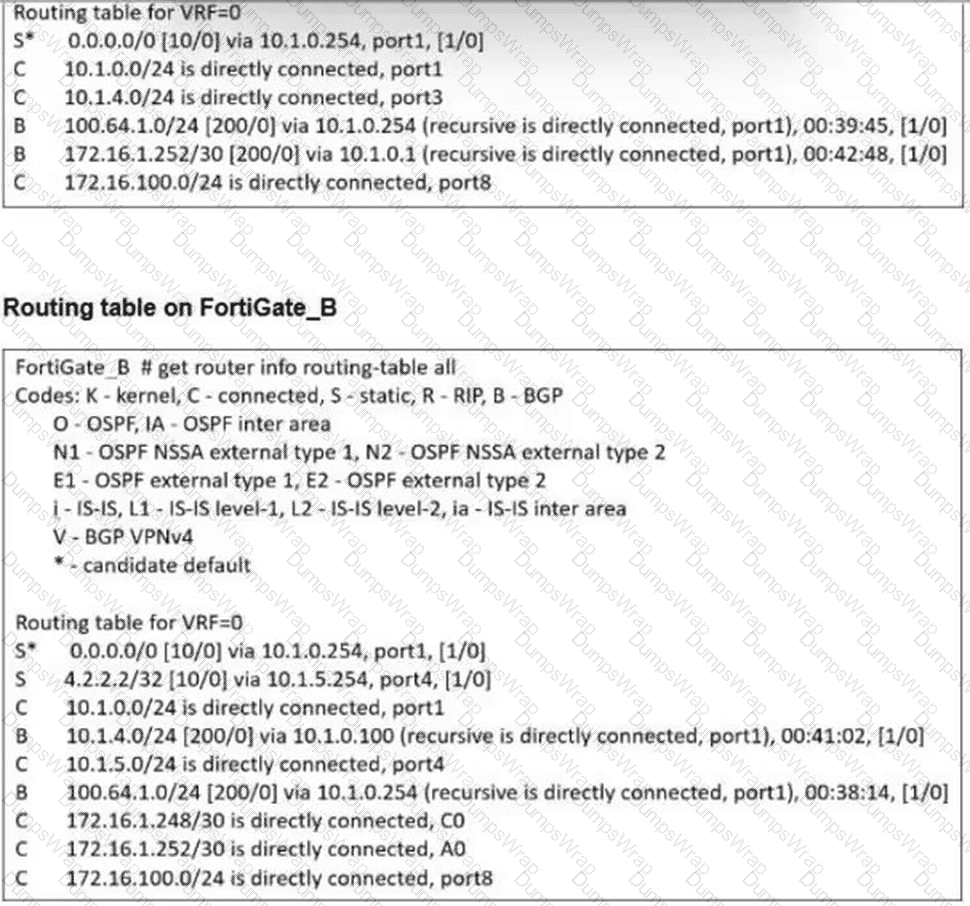
Exhibit — Routing tables of FortiGate_A and FortiGate_B

The routing tables of FortiGate_A and FortiGate_B are shown.

FortiGate_A and FortiGate_B are in the same autonomous system.

You want to add only route 172.16.1.248/30 on FortiGate_A by updating the BGP configuration.

Which configuration must you apply?
as

Options:

A.

A BGP route map in for 172.16.1.248/30 on FortiGate_A.

B.

Enable Redistribute Connected in the BGP section on FortiGate_B.

C.

A BGP route map out for 172.16.1.248/30 on FortiGate_B.

D.

The prefix 172.16.1.248/30 in the BGP Networks section on FortiGate_B.

Question 12

Which two protocol states indicate that traffic is bidirectional? (Choose two.)

Options:

A.

proto_state=01 for a TCP session.

B.

proto_state=01 for a UDP session.

C.

proto_state=05 for a TCP session.

D.

proto_state=00 for an ICMP session.

Question 13

Refer to the exhibit.

as

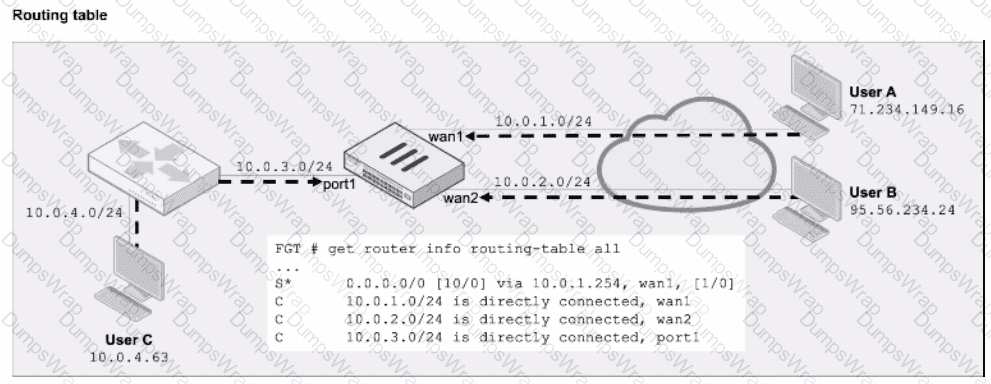
The routing table information is shown.

Assuming a default configuration, which three statements about the RPF check on FortiGate are

correct? (Choose three.)

Options:

A.

User C: Fail. There is no route to 10.0.4.63 using port1 in the routing table.

B.

User B: Pass. FortiGate will use asymmetric routing using want to reply to traffic for 95.56.234.24.

C.

User C: Pass. FortiGate will forward all incoming packets from User C using the default static route.

D.

User B: Fail. There is no route to 95.56.234.24 using wan2 in the routing table.

E.

User A: Pass. The default static route through want passes the RPF check regardless of the source IP address.

Question 14

Refer to the exhibit.

as

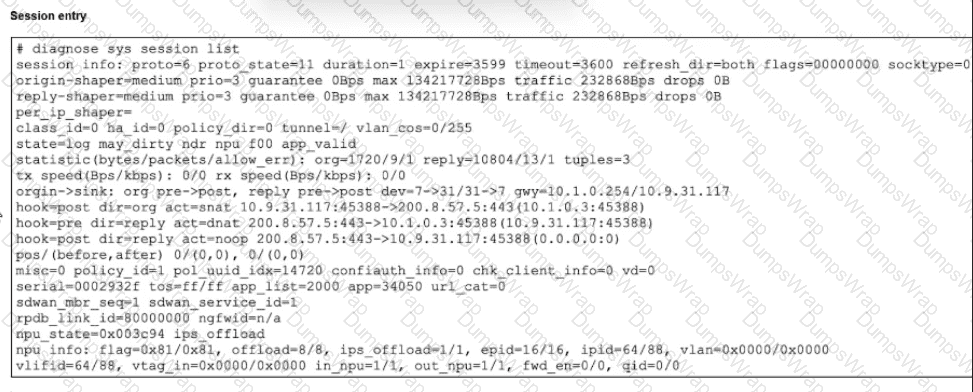
The exhibit shows a session entry. Which statement about this TCP session is true?

Options:

A.

The session will expire in one second.

B.

It is a TCP session from 10.9.31.117 to 10.1.0.3.

C.

The session is offloaded using NPU.

D.

Return traffic to the initiator is sent to 10.9.31.117.

Question 15

During the last network migration, the IT department discovered that all-zero phase selectors in phase 2 IPsec configurations impacted network operations.

What are two valid recommendations to prevent potential invalid paths during future migrations? (Choose two.)

Options:

A.

Configure routing protocols to specify allowed subnets over the tunnel.

B.

Configure an IPsec aggregate to create redundancy between each firewall peer.

C.

Configure an IP address on the IPsec interface of each firewall to establish unique peer connections and avoid impacting network operations.

D.

Configure the VPN with the exact network segments that will be encrypted in the phase 2 selectors.

Question 16

as

The output of a policy route table entry is shown.

Which type of policy route does the output show?

Options:

A.

A regular policy route, which is not associated with an active static route in the FIB

B.

An ISDB route

C.

An SD-WAN rule

D.

A regular policy route, which is associated with an active static route in the FIB

Question 17

In IKEv2, which exchange establishes the first CHILD_SA?

Options:

A.

IKE_SA_INIT

B.

INFORMATIONAL

C.

CREATE_CHILD_SA

D.

IKE_AUTH

Question 18

Exhibit 1.

as

Exhibit 2.

as

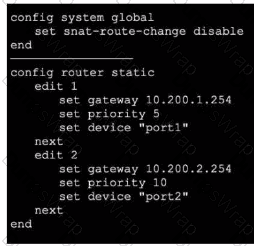
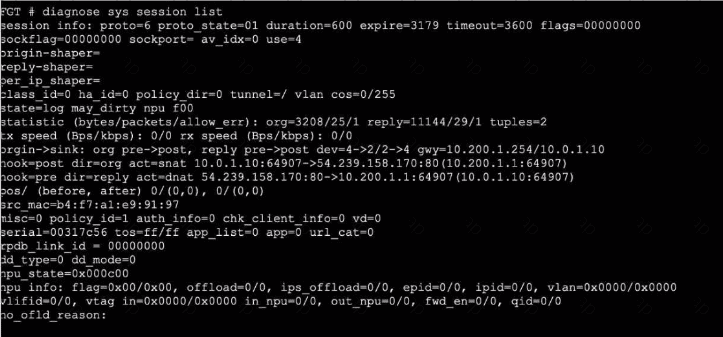
Refer to the exhibits, which show the configuration on FortiGate and partial internet session information from a user on the internal network.

An administrator would like to lest session failover between the two service provider connections.

Which two changes must the administrator make to force this existing session to immediately start using the other interface? (Choose two.)

Options:

A.

Change the priority of the port1 static route to 11.

B.

Change the priority of the port2 static route to 5.

C.

Configure unset snat-route-change to return it to the default setting.

D.

Configure set snat-route-change enable.

Question 19

You manage an SD-WAN topology and you will soon deploy 50 new branches.

Which two tasks can you do in advance to simplify this deployment? (Choose two.)

Options:

A.

Create a zero-touch provisioning (ZTP) template.

B.

Create a policy blueprint.

C.

Define metadata variable values for each device.

D.

Create model devices.

Question 20

During the SAML negotiation process, in which section does the Identity Provider (IdP) provide the SAML attributes used in the authentication process to the Service Provider (SP)?

Options:

A.

Bindings HTTP post

B.

Assertion dump

C.

Authentication request

D.

Authentication response

Question 21

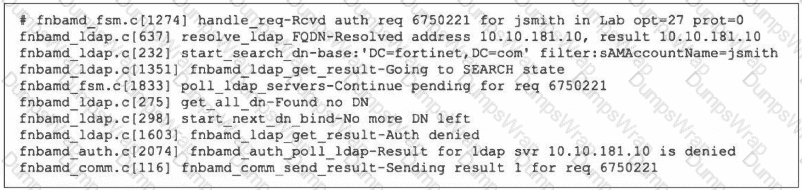
Refer to the exhibit, which shows a partial output of the real-time LDAP debug.
as

What two actions can the administrator take to resolve this issue? (Choose two.)

Options:

A.

Ensure the user logs in using ' John Smith ' not ' jsmith ' .

B.

Ensure the user is providing the correct user credentials.

C.

Ensure the user is a member of at least one AD group to ensure step 4 of the LDAP authentication process is successful.

D.

Ensure the account is active.

Question 22

As an IT manager, you want to delegate the installation and management of your SD-WAN deployment to a managed security service provider (MSSP).

Each site must maintain direct internet access and be secure. You expect significant traffic flow between the sites and want to delegate as much of the network administration and management as possible to the MSSP.

Which two MSSP deployment blueprints address your requirements? (Choose two.)

Options:

A.

Use a shared hub on the MSSP premises with a dedicated VDOM for the customer, and install the spokes on the customer premises.

B.

Install the hub and spokes on the customer premises, and enable the MSSP to manage the SD-WAN deployment using FortiManager with a dedicated ADOM.

C.

Install a dedicated hub on the MSSP premises for the customer, and install the spokes on the customer premises.

D.

Use a shared hub on the MSSP premises and a dedicated hub on the customer premises, and install the spokes on the customer premises.

Question 23

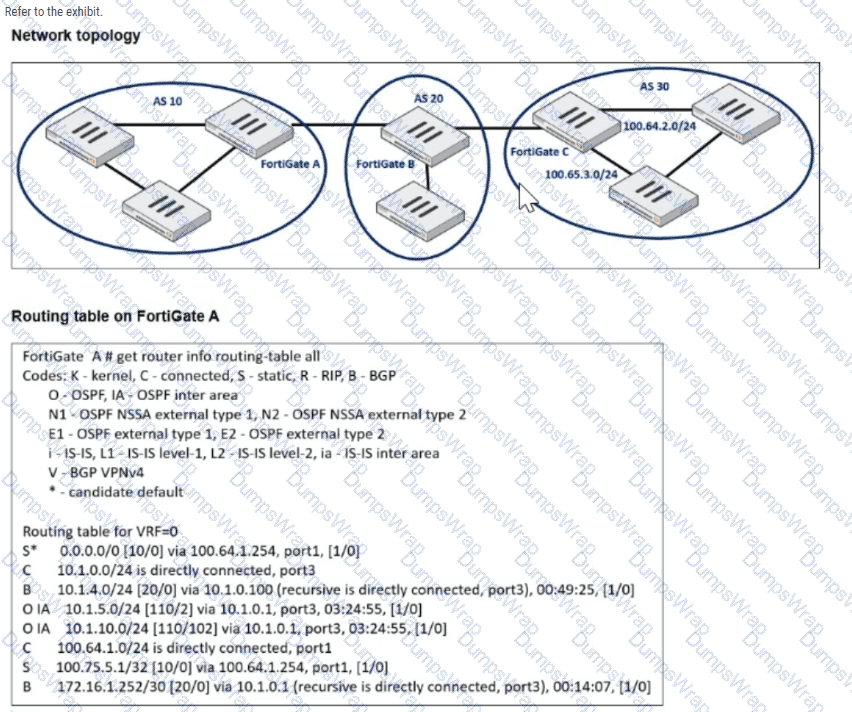
Refer to the exhibit.

as

A network topology and the routing table of a FortiGate device are shown.

What must the administrator configure in the BGP section to add only the subnet 100.64.2.0/24 to the routing table of FortiGate_A? (Choose one answer.)

Options:

A.

The administrator must configure route-map-in on FortiGate_A.

B.

The administrator must configure connected-route redistribution on FortiGate_C.

C.

The administrator must configure the 100.64.2.0/24 network on FortiGate_C.

D.

The administrator must configure BGP route redistribution on FortiGate_B.

Question 24

You have a FortiGate configuration with three user-defined SD-WAN zones and two members in each of these zones. One SD-WAN member is no longer in use in health-check and SD-WAN rules. You want to delete it.

What happens if you delete the SD-WAN member from the FortiGate GUI?

Options:

A.

FortiGate accepts the deletion and places the member in the default SD-WAN zone.

B.

FortiGate displays an error message. SD-WAN zones must contain at least two members.

C.

FortiGate accepts the SD-WAN member deletion with no further action.

D.

FortiGate accepts the deletion and removes static routes as required.

Question 25

Which two statements about Security Fabric communications are true? (Choose two.)

Options:

A.

FortiTelemetry and Neighbor Discovery both operate using TCP.

B.

The default port for Neighbor Discovery can be modified.

C.

FortiTelemetry must be manually enabled on the FortiGate interface.

D.

By default, the downstream FortiGate establishes a connection with the upstream FortiGate using TCP port 8013.

Question 26

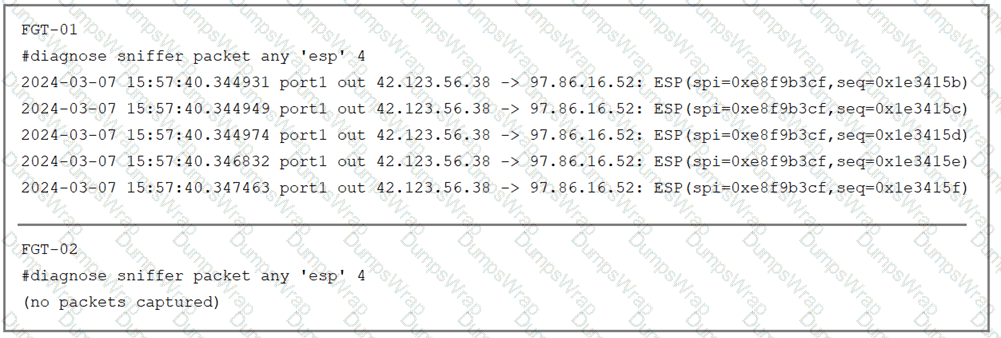
Refer to the exhibit.

as

The sniffer log on two FortiGate devices are shown. Based on the information in the log, which two factors explain the output on FortiGate FGT-02? (Choose two answers)

Options:

A.

A third-party device is blocking protocol 50.

B.

The administrator has not yet configured the VPN tunnel on FGT-02.

C.

The administrator configured the wrong remote peer IP address on FGT-01.

D.

The administrator set the wrong sniffer filter on FGT-02.

Question 27

Refer to the exhibit, which shows a truncated output of a real-time LDAP debug.

as

What two conclusions can you draw from the output? (Choose two.)

Options:

A.

The name of the configured LDAP server is Lab.

B.

The user is authenticating using CN=John Smith.

C.

FortiOS is able to locate the user in step 3 (Bind Request) of the LDAP authentication process.

D.

FortiOS is performing the second step (Search Request) in the LDAP authentication process.

Question 28

Refer to the exhibit.

as

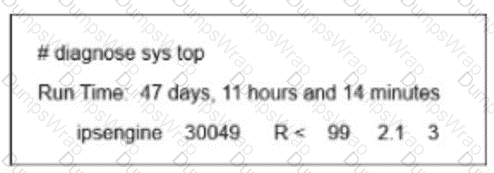
FortiGate is showing continuous high CPU usage During a maintenance window, the CLI command diagnose sys top displays the output shown in the exhibit. The CLI command diagnose twat application ipsmonitor 5 was run. but the CPU usage by daemon ipsengine did not drop Which immediate action can you take to reduce the CPU usage effectively?

Options:

A.

Reduce the number of IPS signatures enabled on the active IPS profiles

B.

Execute diagnose test application ipsMonitor 2inatead.

C.

Disable IPS on all firewall policies.

D.

Bypass all IPS engines

Question 29

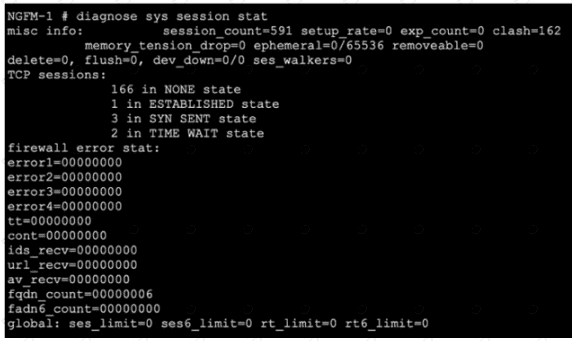
Refer to the exhibit, which shows the output of diagnose sys session stat.
as

Which statement about the output shown in the exhibit is correct?

Options:

A.

All the sessions in the session table are TCP sessions.

B.

162 sessions have been deleted because of memory page exhaustion.

C.

There are 166 TCP sessions waiting to complete the three-way handshake.

D.

There are two sessions that have not been removed in case any out-of-order packets arrive.

Question 30

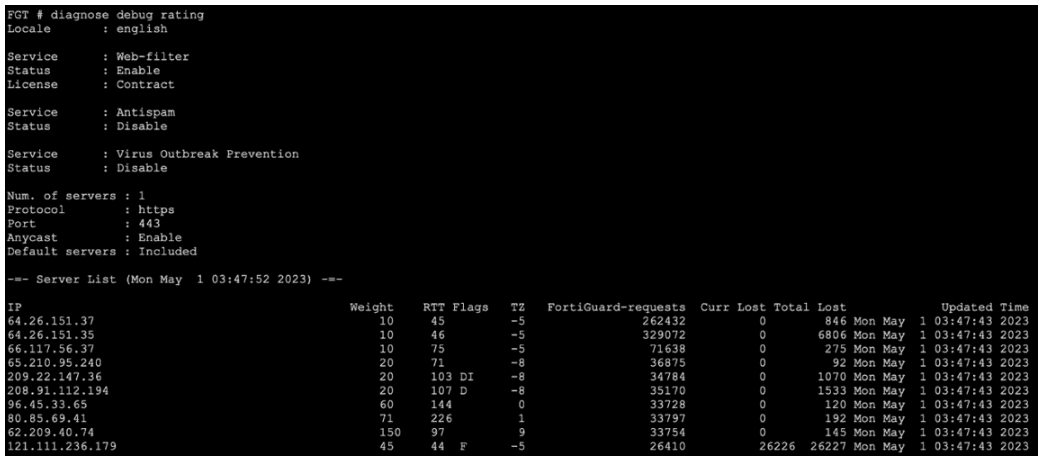
Refer to the exhibit, which shows the output of a diagnose command. What can you conclude from the RTT value?
as

Options:

A.

Its value represents the time it takes to receive a response after a rating request is sent to a particular server.

B.

Its value is incremented with each packet lost.

C.

It determines which FortiGuard server is used for license validation.

D.

Its initial value is statically set to 10.

Question 31

What are two reasons that an OSPF router does not have any type 5 tank-state advertisements (LSAs) In its link-stale database (LSD6)? (Choose two.)

Options:

A.

There is no autonomous system border router (ASBR) in the network,

B.

The peer of the local router is using a prefix-list-out. configuration to prevent all type 5 LSAs to be advertised.

C.

The local router is located in a stub area

D.

IP protocol 89 is blocked between the local router and its peer.

Question 32

Refer to the exhibit, which shows the port1 interface configuration on FortiGate and partial session information for ICMP traffic.

as

What happens to the session information if a routing change occurs that affects this session?

Options:

A.

Only the interface and gateway information for dev=7 will be removed.

B.

The session information will not change unless the current route has been removed from the routing table.

C.

The session will be flagged as dirty but no route lookups will be performed.

D.

Sessions involving port7 or port19 will not have their routing information flushed.

Question 33

Refer to the exhibit.

as

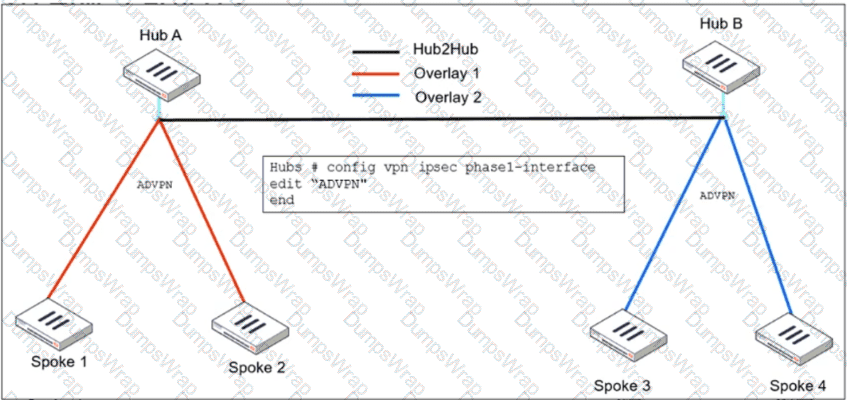
The ADVPN IPsec interface represents the VPN IPsec phase 1 from Hub A to Spoke 1 and Spoke 2, and from Hub B to Spoke 3 and Spoke 4.

You must configure an ADVPN using iBGP and eBGP to connect Overlay 1 with Overlay 2.

Which parameters must you configure in the phase 1 IPsec VPN configuration of the ADVPN tunnels?

Options:

A.

set auto-discovery-receiver enable and set remote-ip x

B.

set auto-discovery-sender enable and set network-id x

C.

set auto-discovery-crossover enable and set enforce-multihop enable

D.

set auto-discovery-forwarder enable and set remote-as x

Question 34

Refer to the exhibit.

as

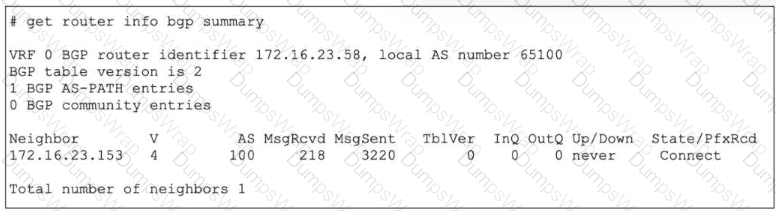
The output of a BGP debug command is shown.

Why has the local router at 172.16.23.58 been unable to establish adjacency with its only neighbor?

Options:

A.

The neighbor router has become unreachable, which is evident by the low ratio of messages received to messages sent.

B.

The local router has not received an OPEN message from the neighbor.

C.

The local router has not received a SYN/ACK packet from the neighbor.

D.

There is no active route to the BGP neighbor.

Question 35

Refer to the exhibit.

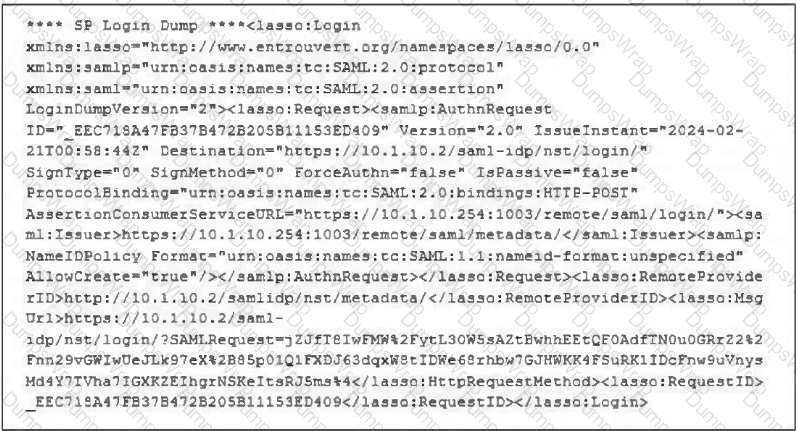
The exhibit shows the output from using the command diagnose debug application samld -1 to diagnose a SAML connection.
as

Based on this output, what can you conclude?

Options:

A.

Active Directory is used for authentication.

B.

The authentication request is for an SSL VPN connection.

C.

The IdP IP address is 10.1.10.254.

D.

The IdP IP address is 10.1.10.2.

Question 36

Which Iwo troubleshooting steps should you perform lf you encounter issues with intermittent web filter behavior? (Choose two.)

Options:

A.

Check that the inspection mode configured for the web filter profile matches that of the firewall policy where it is applied.

B.

Check that FortiGate is not entering conserve mode.

C.

Check that the correct port is mapped to HTTP in the Protocol Options

D.

Check that the communication between FortiGate and FortiGuard is stable

Question 37

Refer to the exhibit.

as

Partial output of the fssod daemon real-time debug command is shown. Which two conclusions can you draw from the output? (Choose two answers)

Options:

A.

FSSO cannot verify if the user is still logged in.

B.

Fortinet Single Sign-On (FSSO) is using DC Agent mode to detect logon events.

C.

FortiGate is frequently polling the workstation in case the user has logged out.

D.

FSSO is using agentless polling mode to detect logon events.

E.

FortiGate polled this event through TCP port 8000.

Question 38

What is the correct order of the IKEv2 request-and-response protocol?

Options:

A.

Create_Child_SA, IKEAUTH, IKESAJNIT

B.

Create_Child_SA, IKE_SA_INIT. IKE_AUTH

C.

IKE SA INIT, IKE AUTH. Create Child SA OIKE AUTH.

D.

IKE_AUTH_IKE_SA_INIT, Create_Child_SA

Question 39

The local OSPF router is unable to establish adjacency with a peer.

Which two things should the administrator do to troubleshoot the issue? (Choose two.)

Options:

A.

Check if both peers have an IP address within the same subnet.

B.

Check if IP protocol 89 is blocked.

C.

Check if TCP port 179 is blocked.

D.

Check if there is an active static route to the peer.

Question 40

Refer to the exhibit.

as

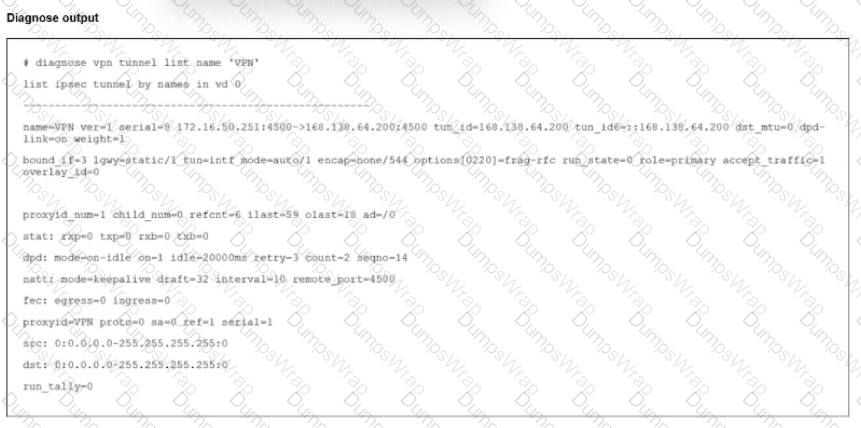
The output of the command diagnose vpn tunnels liar is shown.

Which two statements accurately describe the status of the tunnel? (Choose two.)

Options:

A.

Phase 2 is down

B.

Phase 1 is down.

C.

There is currently no traffic traversing the tunnel

D.

Both Phase 1 and Phase 2 were negotiated successfully.

Question 41

Refer to the exhibit.

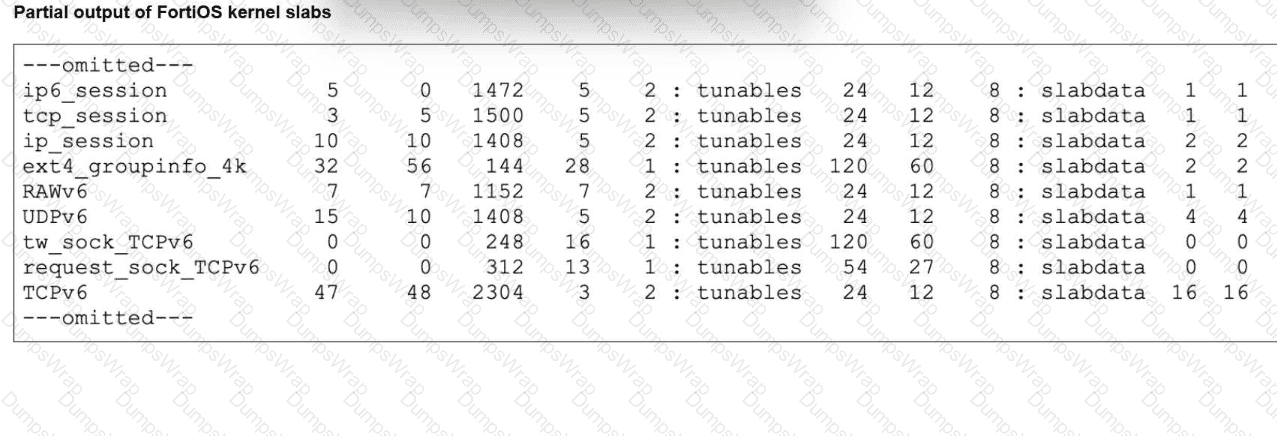
as

The partial output of FortiOS kernel slabs is shown. Which statement about total slab size is true?

Options:

A.

The total slab size of the ip_session Tlab is 14080 kB and is associated with the user space.

B.

The total slab size of the tcp_session slab is 7500 kB and is associated with the kernel.

C.

The total slab size of the ip6_session slab is 1472 kB and is associated with the kernel.

D.

The total slab size of the UDPv6 slab is 14080 kB and is associated with the user space.

Question 42

What are two functions of automation stitches? (Choose two.)

Options:

A.

You can configure automation stitches on any FortiGate device in a Security Fabric environment.

B.

You can configure automation stitches to execute actions sequentially by taking parameters from previous actions as input for the current action.

C.

You can set an automation stitch configured to execute actions in parallel to insert a specific delay between actions.

D.

You can create automation stitches to run diagnostic commands and attach the results to an email message when CPU or memory usage exceeds specified thresholds.

Question 43

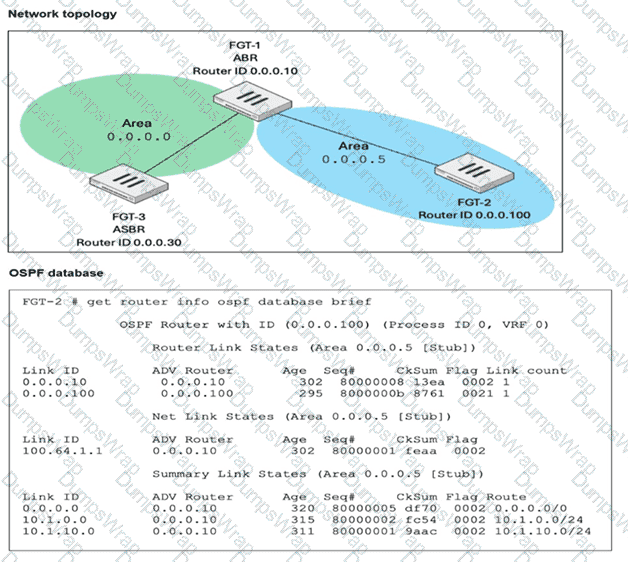
Refer to the exhibits.

as

FGT-1 is an area border router (ABR) that has interfaces in OSPF areas 0.0.0.0 and 0.0.0.5. FGT-3 acts as an autonomous system border router (ASBR), importing static routes into OSPF. FGT-2 is an internal router with all its interfaces belonging to area 0.0.0.5. FGT-1 is receiving all advertised routes from FGT-2, however, FGT-3 is not receiving any of the advertised routes from FGT-1. What is the most likely reason for this? (Choose one answer)

Options:

A.

Area 0.0.0.5 is configured not to propagate type 5 LSAs.

B.

FGT-2 is configured with a distribution list to block all advertised routes from FGT-3.

C.

FGT-3 and FGT-2 have not formed an OSPF adjacency yet.

D.

IP protocol 89 is blocked between FGT-1 and FGT-3.

Question 44

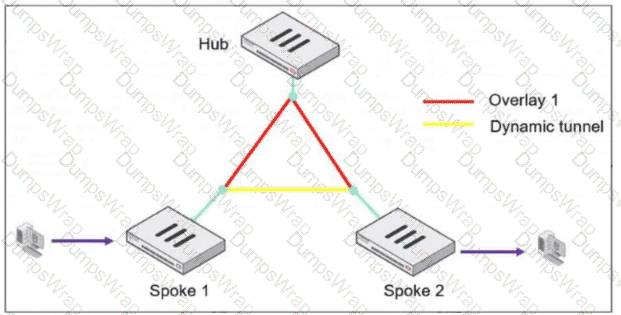
Refer to the exhibit.

as

Based on the exhibit, what is the first message with which Spoke 1 replies to the hub, instructing it to bring up the dynamic tunnel when a client generates traffic destined for Spoke 2? (Choose one answer.)

Options:

A.

Shortcut query

B.

Shortcut reply

C.

Shortcut offer

D.

Shortcut forward

Question 45

Refer to the exhibit.

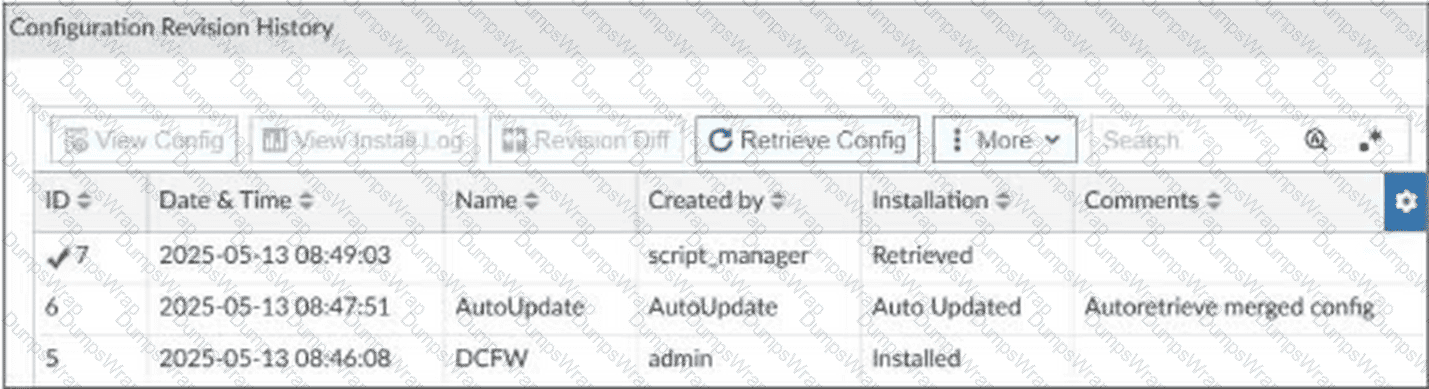
as

A revision history window at the FortiManager device layer is shown.

The IT team is trying to identify the administrator responsible for the most recent update to the FortiGate device database.

What can the IT team conclude?

Options:

A.

The retrieve process was automatically triggered by a Remote FortiGate Directly (via CLI) script.

B.

To identify the user who created the event, they must view it on the Configuration and Installation widget on FortiGate at the FortiManager device layer.

C.

To identify the user who created the event, in the FortiManager system logs, they must use the type=script filter in the user field.

D.

The user script_manager, an API user from the Fortinet Developer Network (FDN), is retrieving a configuration.

Question 46

Refer to the exhibits.

as

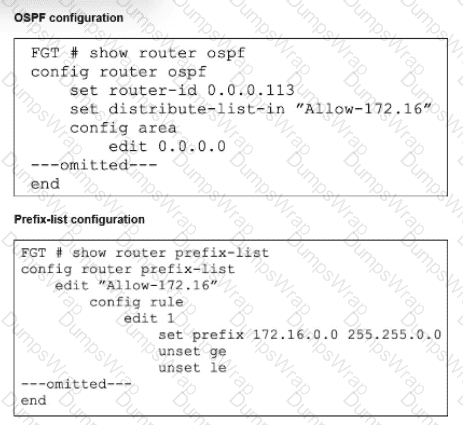
An OSPF peer is advertising route 172.16.52.0/24. The local FortiGate is configured with an inbound distribution list that allows the 172.16.0.0/16 network to be injected into its routing table. However, the 1 ' 2.16.52.0/24 subnet cannot be seen in the FIB.

Which two stops can the administrator of the local FortiGate take to ensure that the advertised 172.16. 52.0/24 subnet will be injected into the routing table? (Choose two.)

Options:

A.

Add another entry to the prefix list to specifically allow the 172.16.52.0/24 network.

B.

Change the ge value to 17.

C.

Change the R- value lo 16.

D.

Modify the default prefix-list behavior from implicit deny to implicit allow.

Question 47

Refer to the exhibit.

as

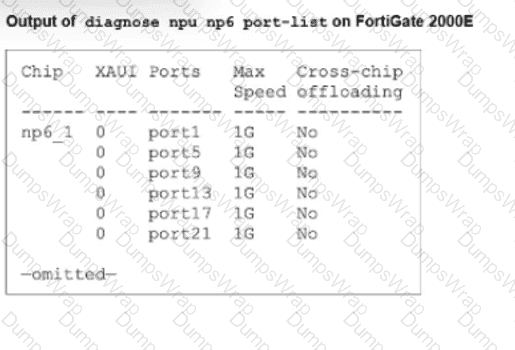
A partial output of diagnose npu up6 port-list on FortiGate 2000E is shown.

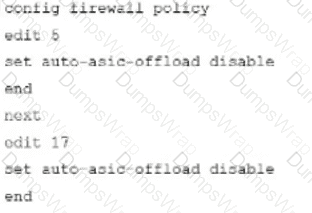
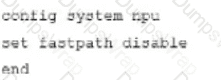
An administrator is unable to analyze traffic flowing between port1 and port17 using the diagnose sniffer command.

Which two commands allow the administrator to view the traffic? (Choose two.)

A)

as

B)

as

C)

as

D)

as

Options:

A.

Option A

B.

Option B

C.

Option C

D.

Option D

Question 48

Refer to the exhibit.

as

Partial output of command diagnose debug rating is shown. Which FDS server will the FortiGate algorithm choose?

Options:

A.

96.45.33.65

B.

208.91.112.194

C.

64.26.151.37

D.

209.22.147.36

Question 49

In which order does FortiGate consider the following elements during the route lookup process?

Options:

A.

Policy routes, SD-WAN rules, Internet Service Database (ISDB) routes, BGP routes.

B.

SD-WAN rules, ISDB routes, policy routes, BGP routes.

C.

SD-WAN rules, policy routes, static routes, ISDB routes.

D.

Policy routes, ISDB routes, SD-WAN rules, static routes.

Question 50

Refer to the exhibit.

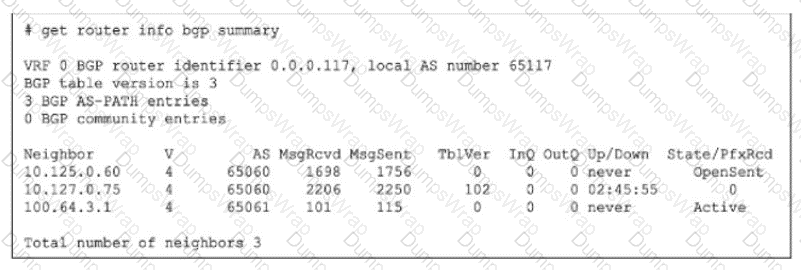
The output of a BGO debug command is shown.
as

What is the most likely reason that the local FortiGate is not receiving any prefixes from its neighbors?

Options:

A.

The local router is waiting for the keepalive message from the router 10.125.0.60.

B.

None of the three neighbors has successfully established the TCP three-way handshake with the local router.

C.

The router 100.64.3.1 is waiting for the OPEN message from the local router.

D.

The RIB-OUT configuration for router 10.127.0.75 prevents any route advertisement to the local router.

Question 51

Which statement about IKEv2 is true?

Options:

A.

Both IKEv1 and IKEv2 share the feature of asymmetric authentication.

B.

IKEv1 and IKEv2 have enough of the header format in common that both versions can run over the same UDP port.

C.

IKEv1 and IKEv2 use the same TCP port but run on different UDP ports.

D.

IKEv1 and IKEv2 share the concept of phase1 and phase2.

Question 52

Refer to the exhibits.

as

as

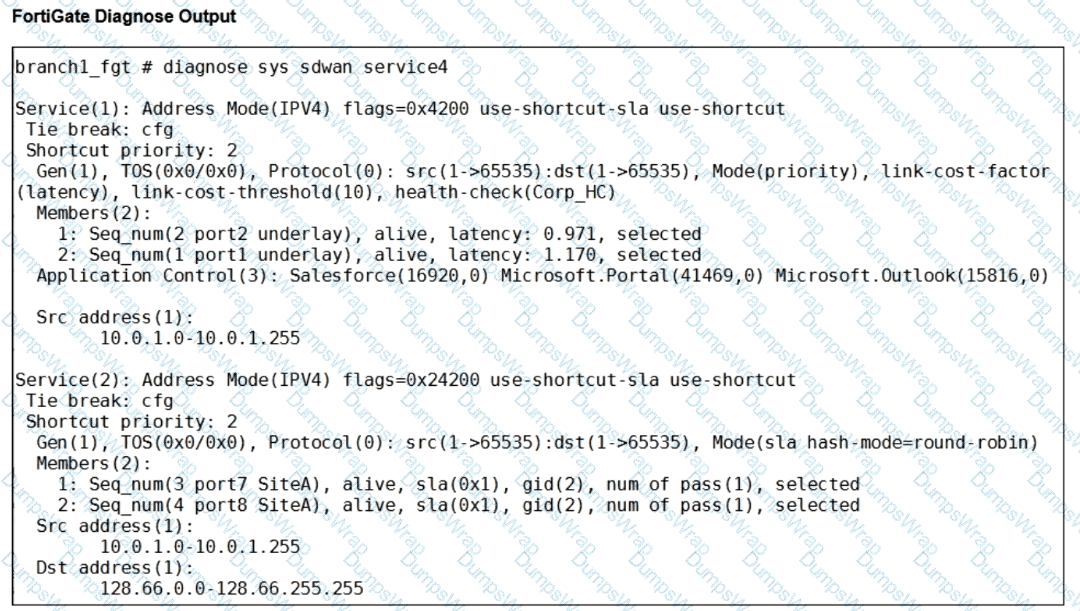
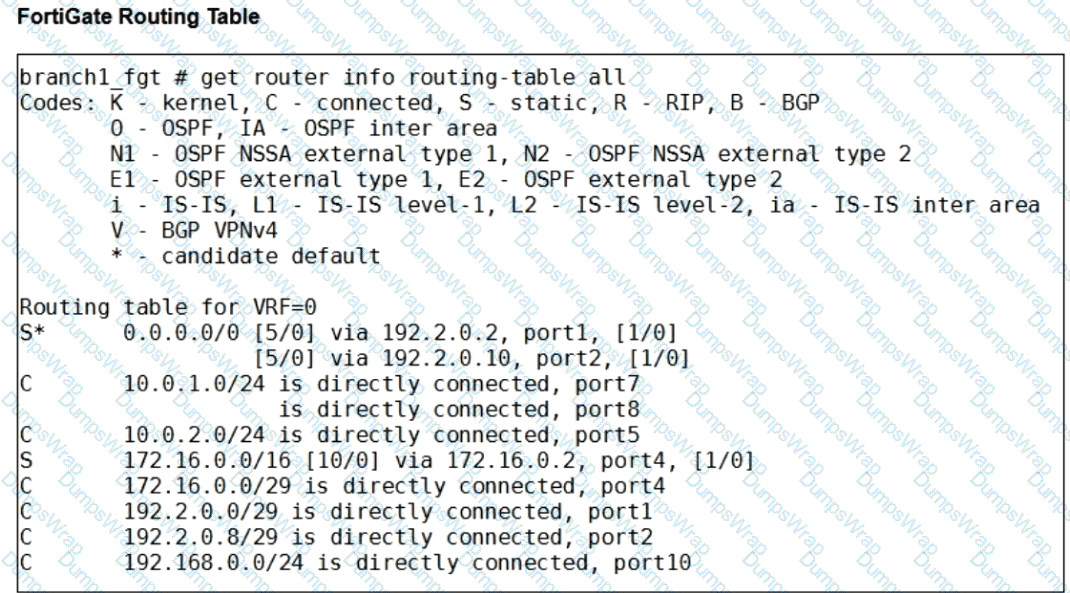
How does FortiGate handle traffic with the source IP address 10.0.1.125 and the destination IP address 128.66.0.125?

Options:

A.

FortiGate routes the traffic flow according to the forwarding information base (FIB).

B.

FortiGate steers the traffic flow through port7.

C.

FortiGate load balances the traffic flow through port7 and port8.

D.

FortiGate drops the traffic flow.

Question 53

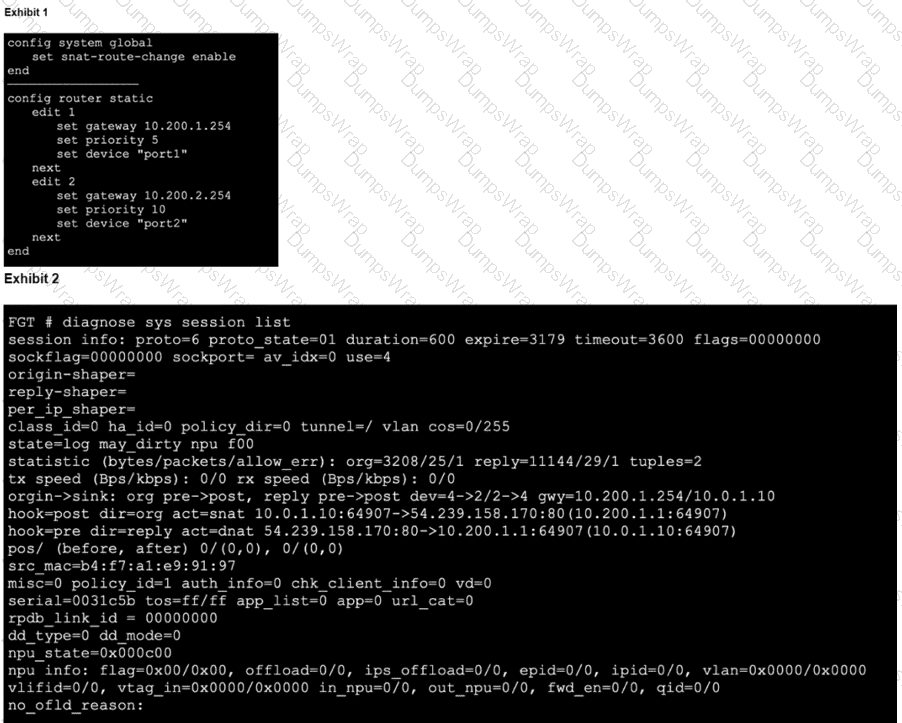
Refer to the exhibits,

as

which show the configuration on FortiGate and partial session information for internet traffic from a user on the internal network. If the priority on route ID 2 were changed from 10 to 0, what would happen to traffic matching that user session? (Choose one answer)

Options:

A.

The session would be deleted, and the client would need to start a new session.

B.

The session would remain in the session table, but its traffic would now egress from both port1 and port2.

C.

The session would remain in the session table, and its traffic would egress from port2.

D.

The session would remain in the session table, and its traffic would egress from port1.

Page: 1 / 18
Total 177 questions