Designing and Implementing Multi-Agent AI Solutions Questions and Answers
You need to modify claim Approval to prevent the prompt injection issue. Which guardrail should you use?
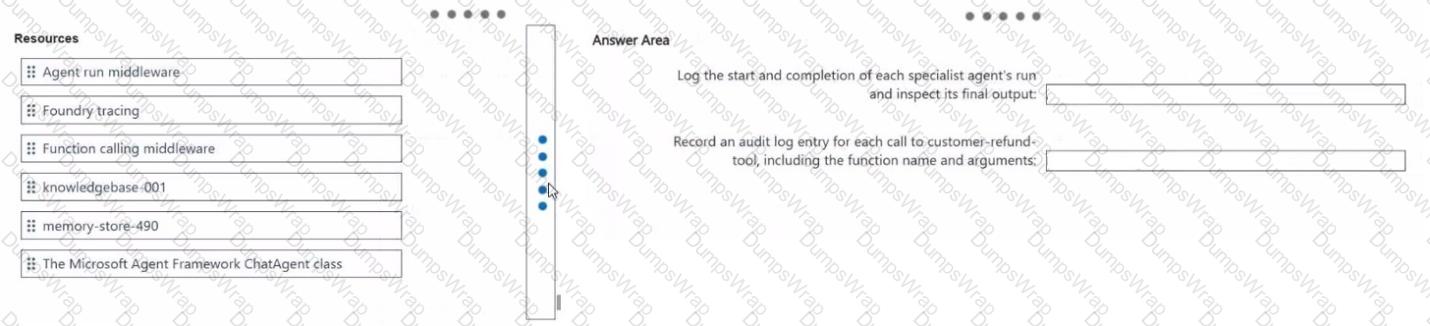
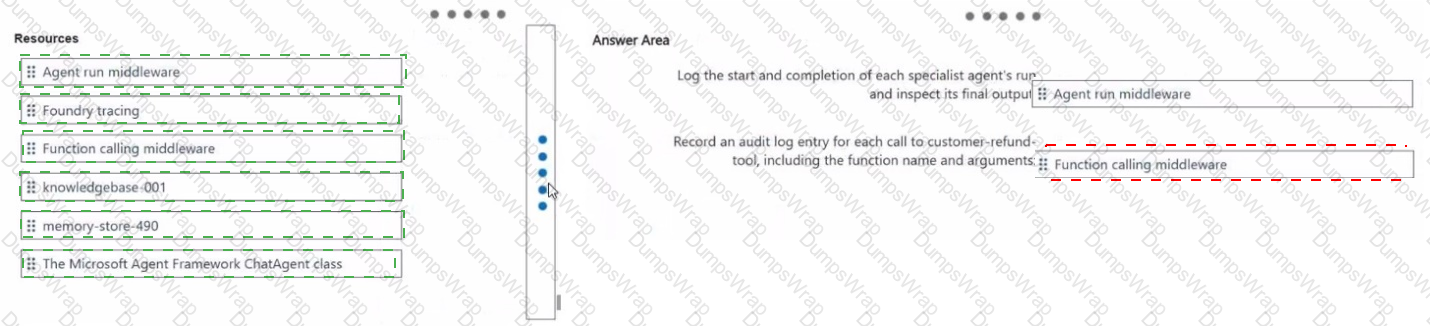
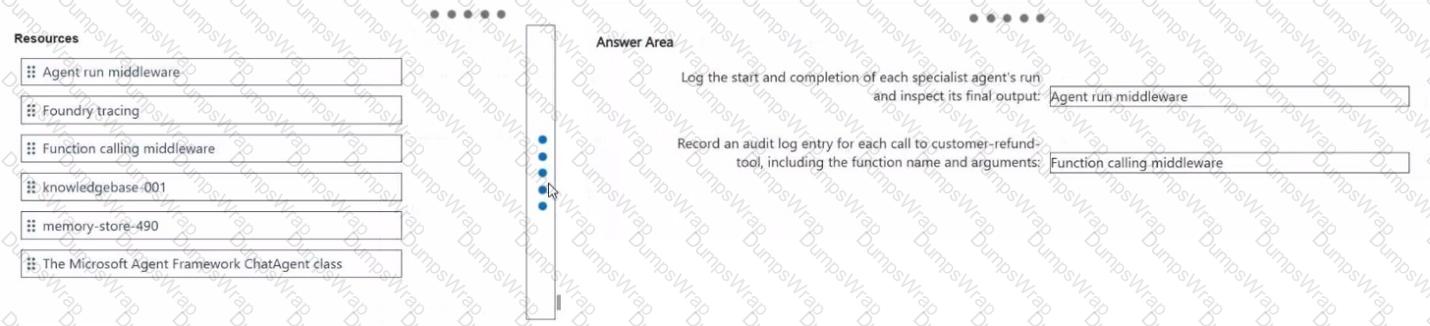
You need to implement a logging solution for claim Approval.
What should you use for each process? To answer, drag the appropriate resources to the correct processes. Each resource may be used once, more than once, or not at all. You may need to drag the split bar between panes or scroll to view content.
NOTE: Each correct selection is worth one point.
You need to recommend changes to decrease the Claim Approval duration without breaking any existing functionality.
What should you recommend?
You need to implement the business rule for claim Approval. Which workflow node should you use?
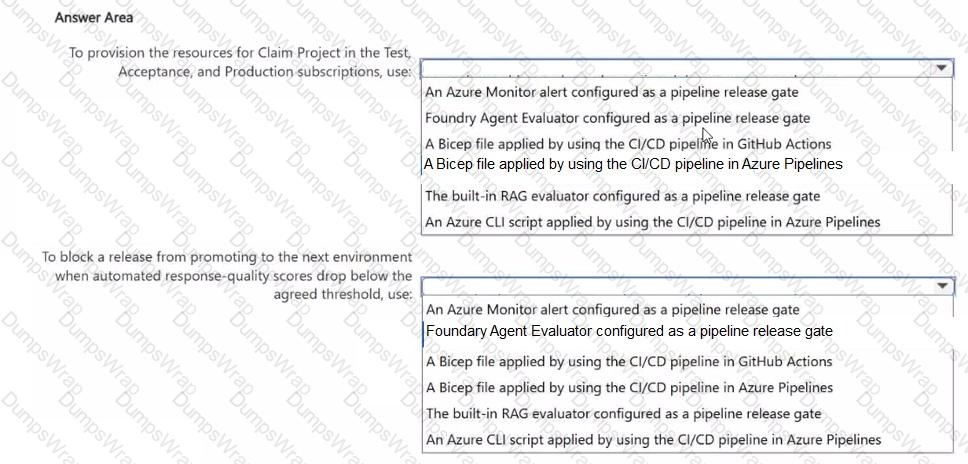
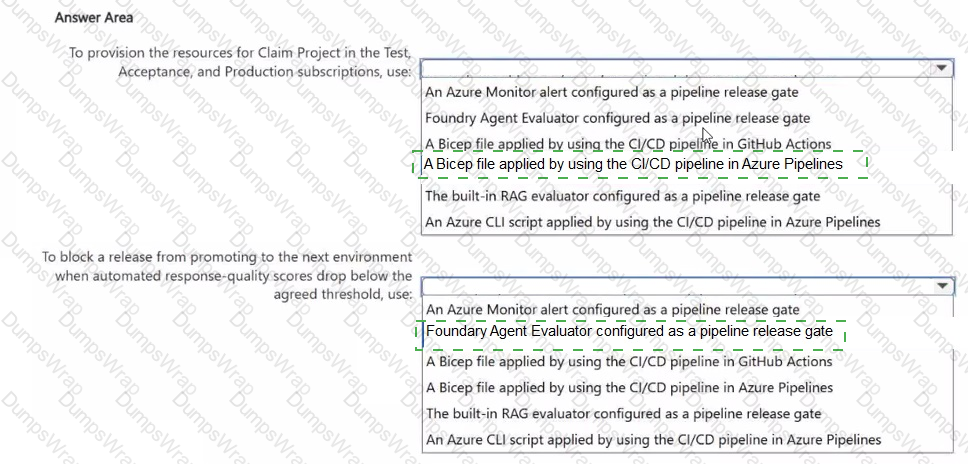
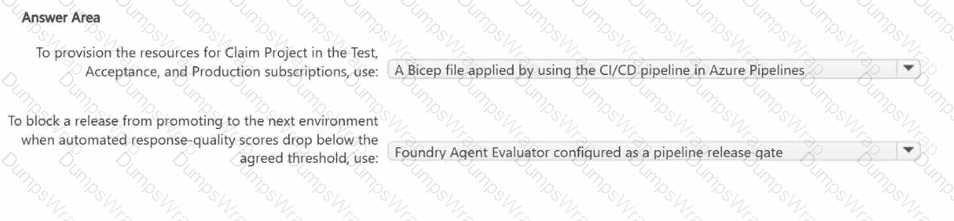
You need to recommend an end-to-end release lifecycle for claim Approval. The solution must meet the technical requirements.
What should you recommend for each requirement? To answer, drag the appropriate recommendations to the correct requirements. Each recommendation may be used once, more than once, or not at all. You may need to drag the split bar between panes or scroll to view content.
NOTE: Each correct selection is worth one point.
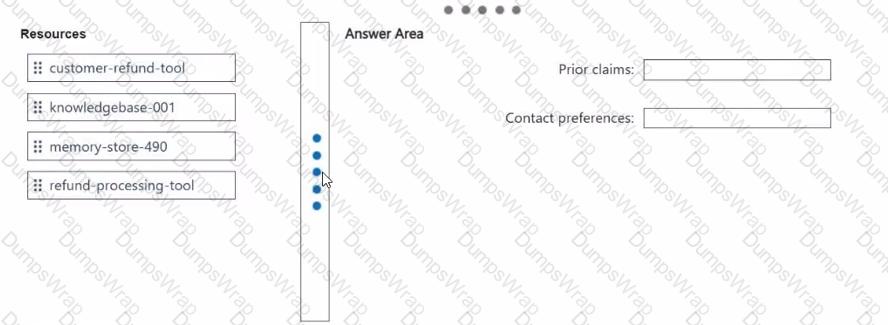
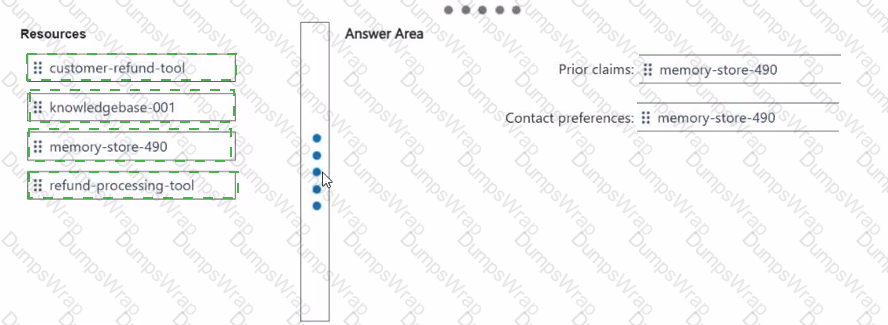
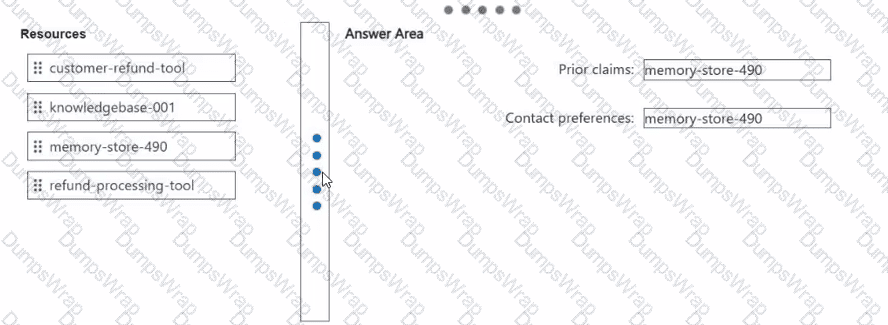
You need to recommend a memory retrieval strategy to support the planned changes for claim Approval.
What should you recommend? To answer, drag the appropriate resources to the correct requirements. Each resource may be used once, more than once, or not at all. You may need to drag the split bar between panes or scroll to view content.
NOTE: Each correct selection is worth one point.
You need to design a solution to resolve the Scheduling agent issue.
What should you include in the design?
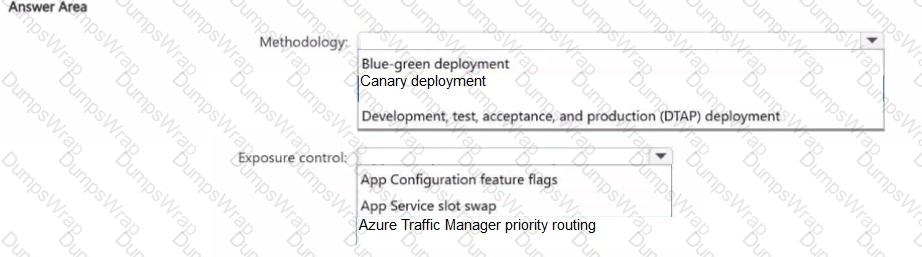
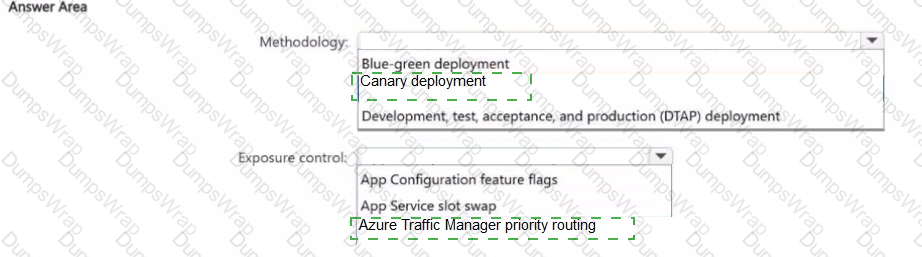
You have a multi-agent solution hosted in an Azure App Service plan.
You use Azure App Configuration to store runtime settings.
A release adds a new planner agent and changes the prompt routing
You need to recommend a release plan that meets the following requirements:
• Slowly rolls out the release to users
• Uses end-user health alerts as rollout gates
• Increases exposure without redeploying the application
• Limits production exposure until the health metrics remain green
• Implements the solution without deploying a second environment
What should you recommend? To answer, select the appropriate options in the answer area. NOTE: Each correct selection is worth one point.

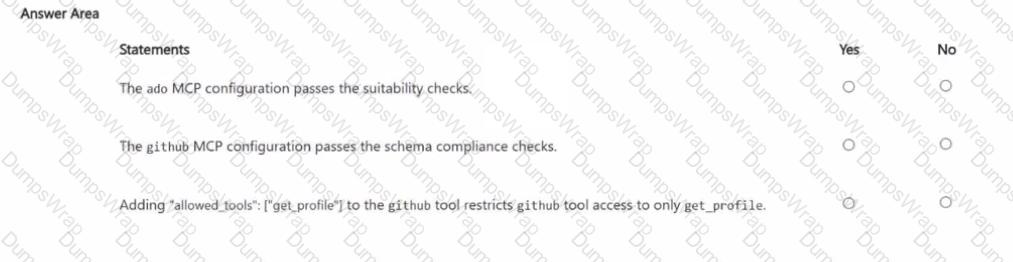
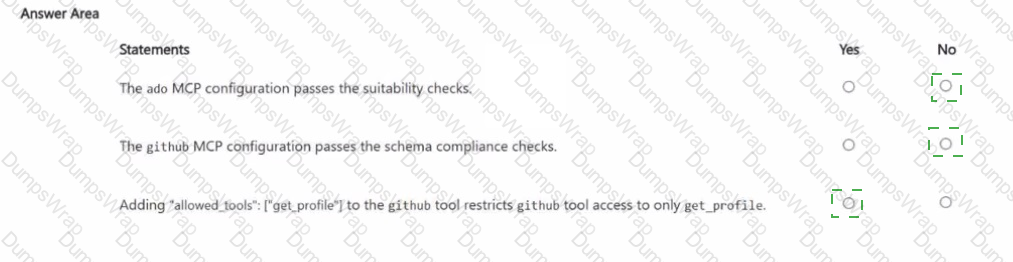
You have a production-readiness review that includes the following Microsoft Foundry Agent Service Model Context Protocol (MCP) tool configuration, discovered MCP tool metadata, and quality-gate rules.
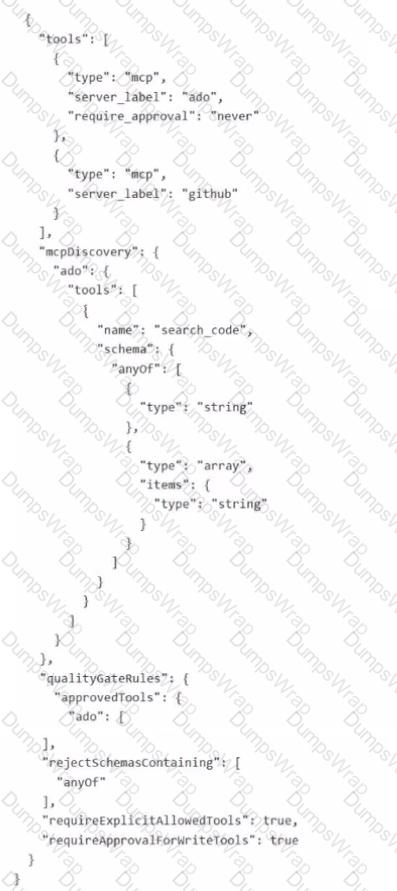
For each of the following statements, select Yes if the statement is true Otherwise, select No.
NOTE: Each correct selection is worth one point.
You have a Microsoft Foundry agent named Agent1.
You open Agent1 in the playground and update the instructions.
You need to run a full evaluation against the updated instructions. The solution must meet the following requirements:
• Test the changes by using a synthetic dataset.
• Ensure that the changes are available only for the development team that has access to Agent1.
What should you do first?
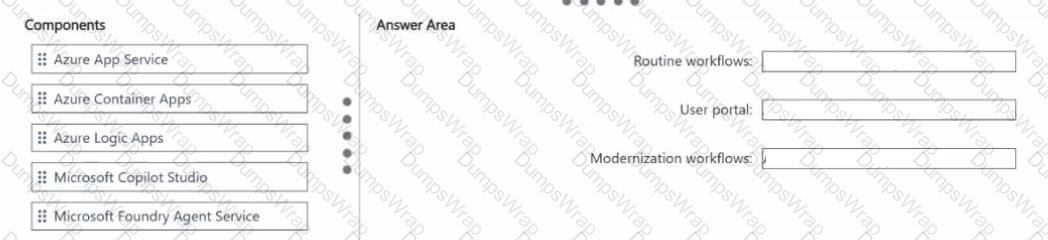
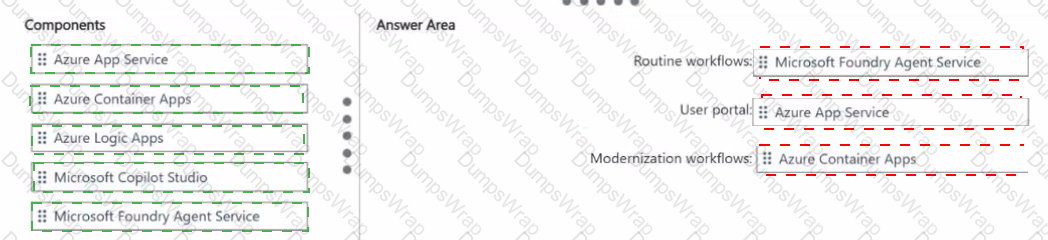
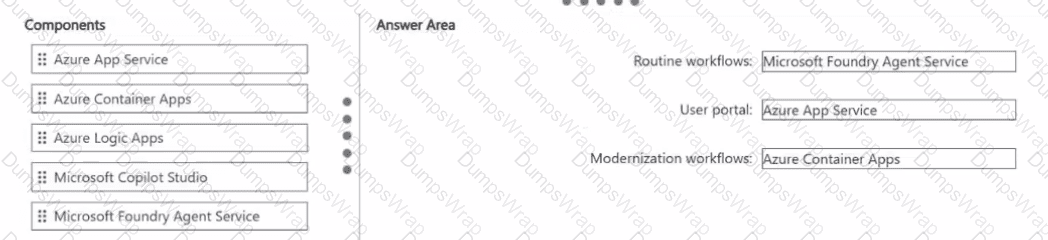
You are designing an enterprise automation solution that has a web portal for users and the following types of workflows:
• Routine workflows that use prompt-defined agents, approved knowledge stores, and HTTPS tools
• Modernization workflows that use custom Microsoft Agent Framework code packaged as container images with predefined handoffs and task states
You need to recommend Azure services that meets the following requirements:
• The routine workflows must run agents in a fully managed environment.
• The user portal must be deployed as a managed platform as a service (PaaS) web app
• The modernization workflows must run agents in serverless containers that support automatic scaling
What should you recommend for each requirement? To answer, drag the appropriate services to the correct components. Each service may be used once, more than once, or not at all. You may need to drag the split bar between panes or scroll to view content.
NOTE: Each correct selection is worth one point.
You have a Microsoft Foundry project that processes customer requests through several stages: A routing agent receives investigation requests, delegates calculations to a data analysis agent that can use Code Interpreter, and delegates source-grounded summaries to a literature review agent.
You discover the following issues:
• Tasks are sometimes routed to the incorrect agent.
• The format of the final response is inconsistent.
You need to ensure that compound requests are routed consistently, and the final response is in a consistent format. The solution must meet the following requirements:
• Minimize changes to the application code.
• Apply to every future conversation handled by the agents.
• Clarify the expected behavior for representative compound inputs.
Which prompt design should you implement?
You have a Microsoft Foundry multi-agent solution that includes a orchestrator and agents named Agent1 and Agent2. The solution has the following characteristics:
• The orchestrator routes tasks to both agents.
• The agents invoice Model Context Protocol (MCP)-hosted tools.
• Agent? sends model-generated JSON parameters directly to tool endpoints.
• The agents use a shared managed identity that has contributor access to the resource group that contains the tool-backed Azure resources.
You need to implement a guardrail strategy for tool calls. The solution must meet the following requirements:
• Prevent invalid or out-of-range tool parameters from reaching the tool endpoints.
• Scope each agent ' s permissions to its assigned tools
• Limit Agent? to refund-processing tools only.
• Log tool invocations for audit purposes.
What should you do?
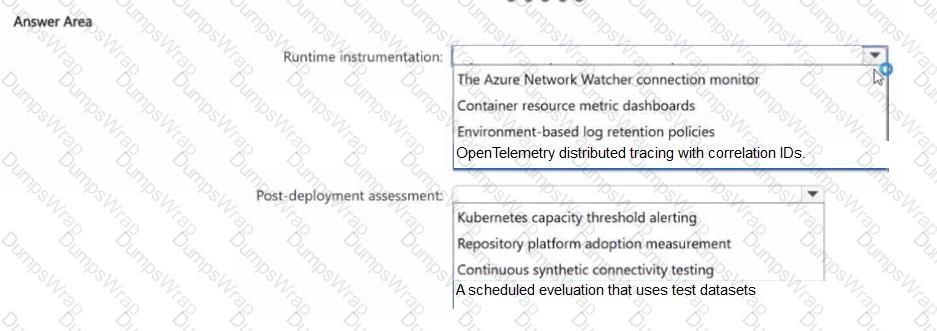
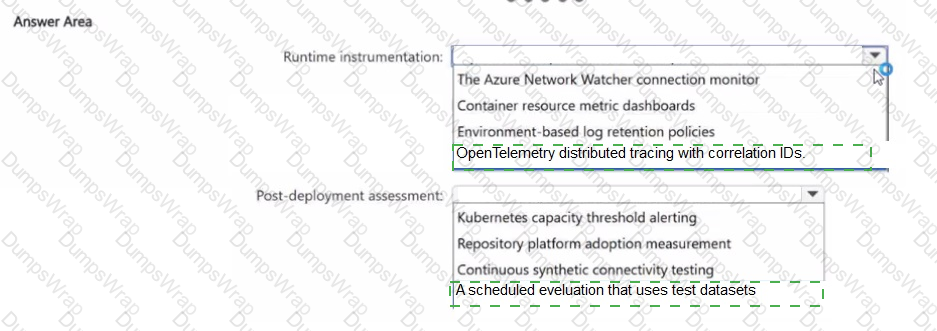
You have a Microsoft Foundry multi-agent solution that uses Microsoft Agent Framework and LangGraph. Telemetry from the workload is sent to Application Insights.
You need to implement observability components to meet the following requirements:
• Support the investigation of user interactions across agents, models, tools, functions, and API boundaries without relying on verbose production logs.
• Produce recurring and comparable measurements of deployed response quality and safety over time.
What should you use? To answer, select the appropriate options in the answer area. NOTE: Each correct selection is worth one point.