
Developing AI Cloud Solutions on Azure Questions and Answers
You are developing several microservices to deploy to a new Azure Kubernetes Service cluster The microservices manage data stored m Azure Cosmos DB and Azure Blob storage. The data is secures by using customer managed keys stored in Azure Key Vault.
You must automate key rotation for all Azure Key Vault keys and allow for manual key rotation. Keys must rotate every three months. Notifications of expiring keys must be sent before key expiry.
You need to configure key rotation and enable key expiry notifications.
Which two actions should you perform? Each correct answer presents part of the solution.
NOTE: Each correct selection is worth one point.
You plan to deploy a web application to AKS.
The solution must:
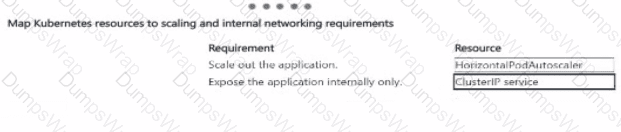
• Scale out the application by adding more pods during peak CPU usage
• Expose the application internally within the cluster only
You need to configure a Kubernetes resource for each requirement
Which resources should you configure? To answer, move the appropriate resources to the correct requirements You may use each resource once, more than once, or not at all. You may need to move split bar between .. or scroll to view content.


An AI platform uses App Configuration for feature flags and endpoint routing.
The platform stores secrets alongside configuration data and does NOT support dynamic configuration refresh.
You need to redesign the configuration approach so that:
configuration supports dynamic refresh;
secrets are stored outside App Configuration;
the application can securely access both App Configuration and Key Vault.
You need to enable secure dynamic configuration management for the platform.
Which three actions should you perform? Each correct answer presents part of the solution. Choose three.
NOTE: Each correct selection is worth one point.
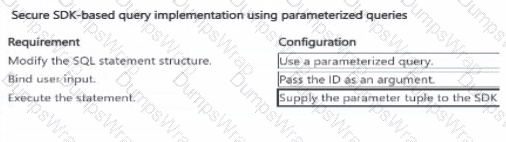
A Python API retrieves a document from Azure Database for PostgreSQL by using a SQL statement. The API accepts the document ID from user input. The current implementation inserts the document ID directly into the SQL statement.
You need to secure the SQL statement execution by using a parameterized query. You must minimize the possibility of SQL injection.
How should you update the implementation to execute the SQL statement safely? To answer, move the appropriate configurations to the correct requirements. You may use each configuration once, more than once, or not at all. you may need to move the split bar between panes or scroll to view content.
NOTE: Each correct selection is worth one point.


You are implementing an application by using Azure Event Grid to push near-real-time information to customers.
You have the following requirements:
• You must send events to thousands of customers that include hundreds of various event types.
• The events must be filtered by event type before processing.
• Authentication and authorization must be handled by using Microsoft Entra ID.
• The events must be published to a single endpoint
You need to implement Azure Event Grid
Solution: Publish events to a system topic. Create an event subscription for each customer.
Does the solution meet the goal?
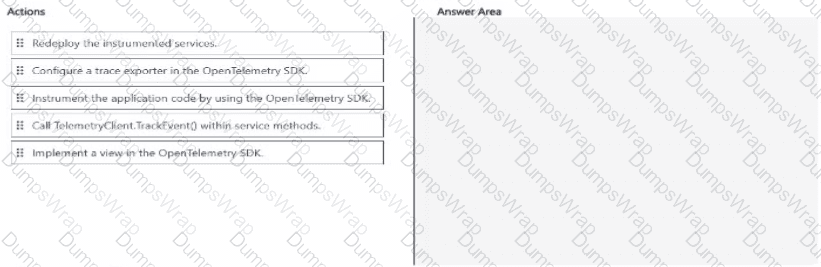
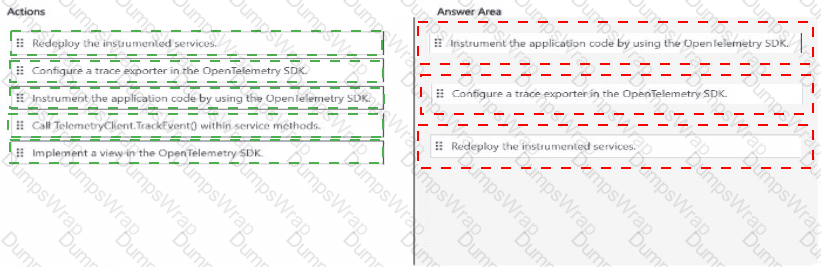
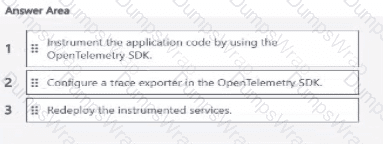
A Python API running in ACA must send distributed traces to Azure Monitor.
The API creates spans. However, no traces appear in Azure Monitor.
You need to configure the OpenTelemetry SDK pipeline to export traces to Azure Monitor.
What should you do? To answer, move the appropriate actions to the correct requirements. You may use each action once, more than once, or not at all. You may need to move the split bar between panes or scroll to view content.
NOTE: Each correct selection is worth one point.


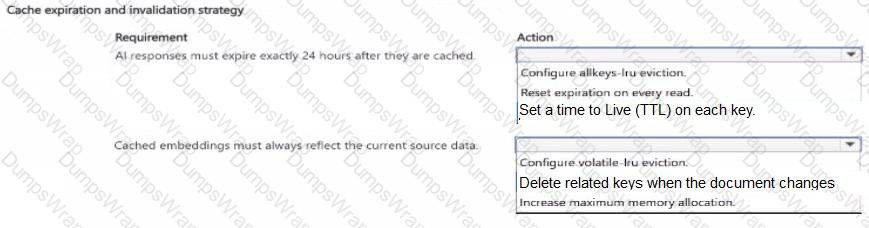
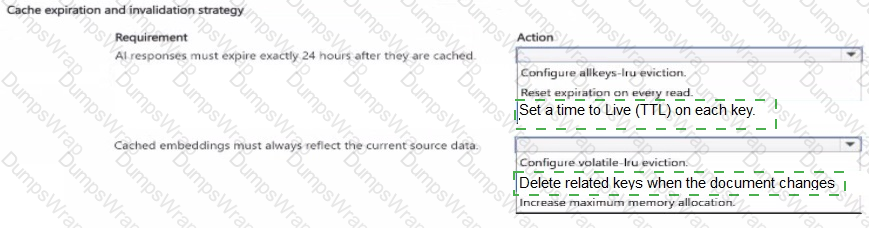
You are developing a Retrieval-Augmented Generation (RAG) solution for a company. AI responses and embedding vectors are cached in Redis. The solution must meet the following requirements.
• AI responses must expire exactly 24 hours after they are cached
• Cached embeddings must always reflect the current source data.
You need to configure Redis to meet the requirements.

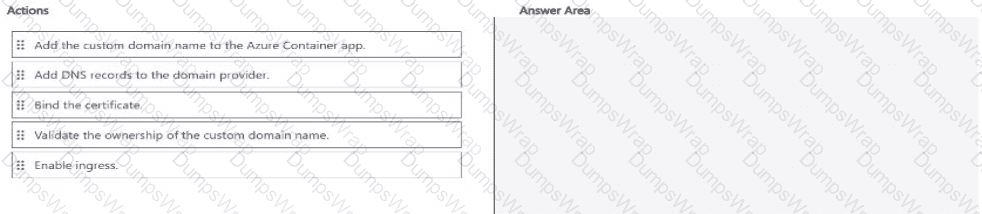
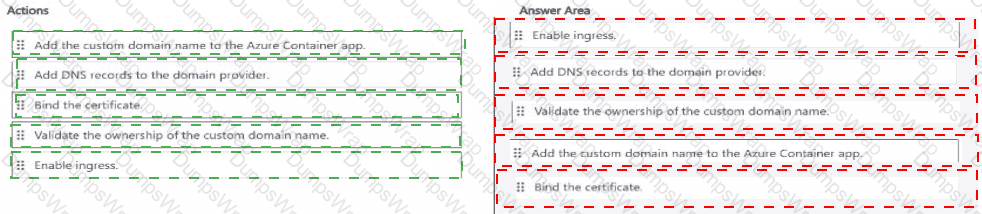
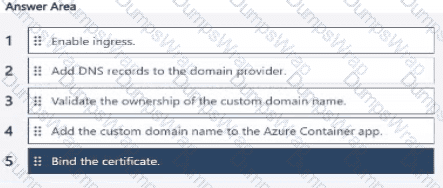
You are developing several microservices to run on Azure Container Apps.
The microservices must allow HTTPS access by using a custom domain.
You need to configure the custom domain in Azure Container Apps.
In which order should you perform the actions? To answer, move all actions from the list of actions to the answer area and arrange them in the correct order.
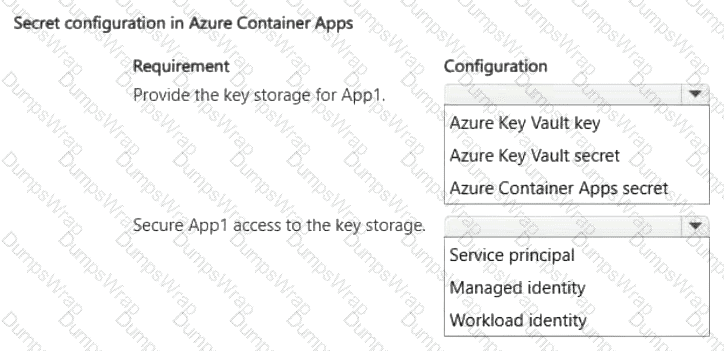
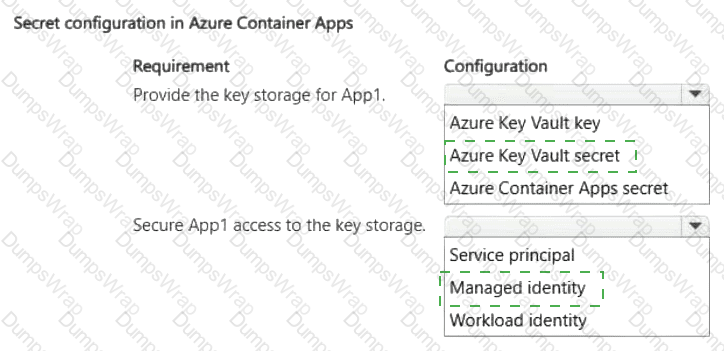
You plan to deploy an Azure Container Apps app named App1. App1 will use an access key to connect to a backend API.
The solution must store the key outside of the App1 environment and minimize maintenance efforts.
You need to configure secure key storage for App1.
Which configurations should you use? To answer, select the appropriate options in the answer area.
NOTE: Each correct selection is worth one point.
You deploy multiple instances of a change feed processor to handle a high ingestion rate within Azure Cosmos DB for NoSQL.
Each processor instance must process a different subset of partitions.
You need to ensure the workload is load-balanced across all processor instances.
What should you configure?
You are reviewing an Azure Function app that processes incoming order requests for a company. The function must:
• Accept order submissions from an external client application.
• Require controlled access for security
• Return a response containing the processed request payload.
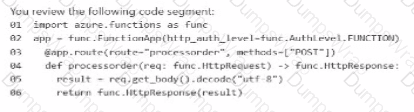
For each of the following statements, select Yes if the statement is true. Otherwise, select No.
NOTE: Each correct selection is worth one point.



A large retail company operates online and physical stores. The company tracks inventory levels in real time to manage stock efficiently across all locations. You develop an Azure Event Grid solution to handle events generated by the inventory management system deployed to Azure.
You need to implement a subscription filter that dynamically adjusts to seasonal changes in product demand.
Which event filter should you use?
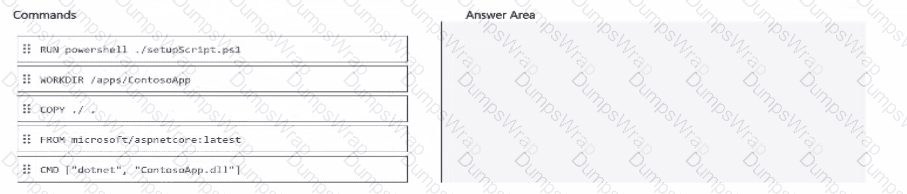
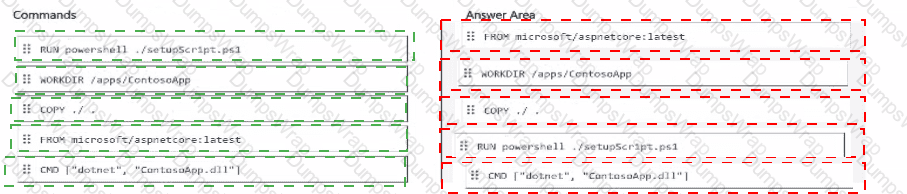
You plan to create a Docker image that runs an ASP.NET Core application named ContosoApp. You have a setup script named setupScript.psl and a series of application files including ContoscApp.dll.
You need to create a Dockerfile document that meets the following requirements:
• Call SQiupScript.psI when the container is built.
• Run CantosoApp.dill when the container starts.
The Dockerfile document must be created in the same folder where ContosoApp.dll and setupScnpt.ps! are stored.
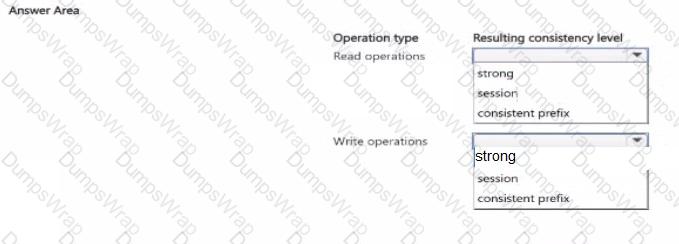
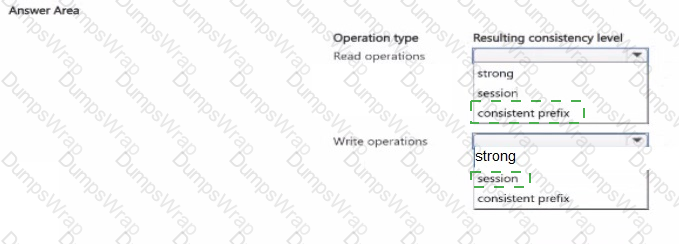
You provisioned an Azure Cosmos DB for NoSQL account named account1 with the default consistency level.
You plan to configure the consistency level on a per request basis. You plan to request Consistent Prefix consistency on a per-request basis.
You need to identify the resulting consistency level for read and write operations.
Which levels result from this configuration? To answer, select the appropriate options in the answer a rea.
NOTE: Each correct selection is worth one point.

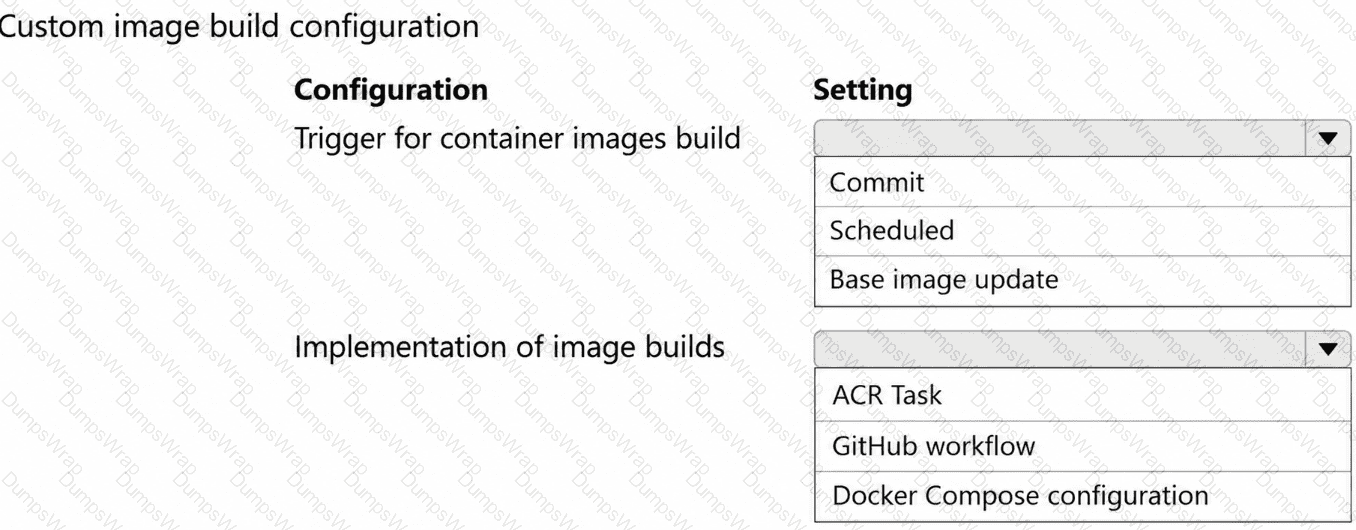
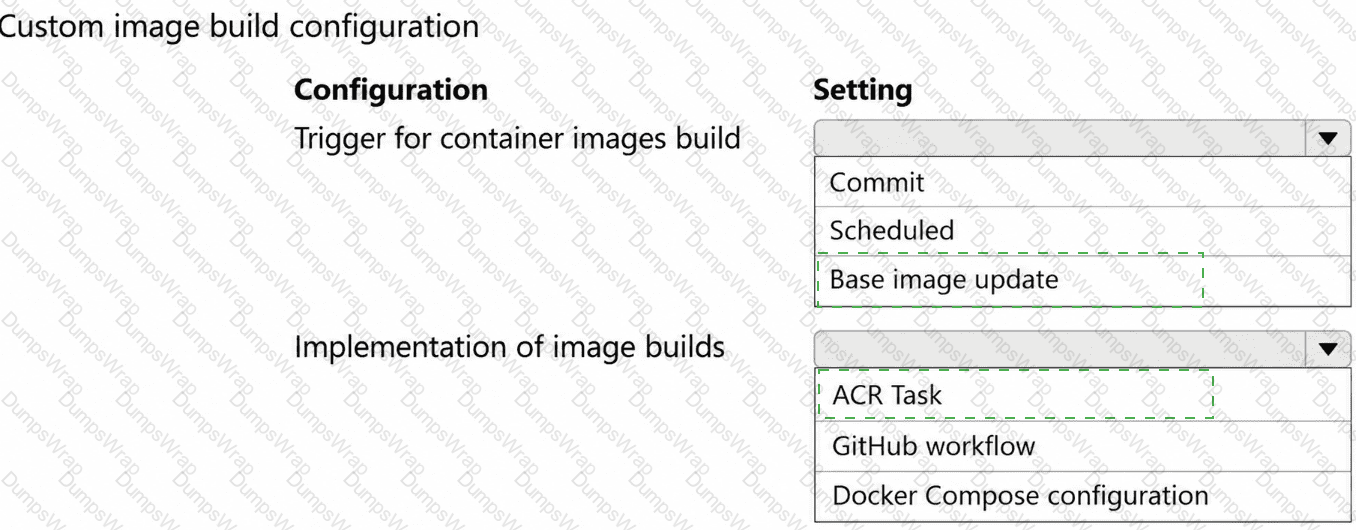
You need to configure image build automation based on the technical requirements.
Which settings should you configure? To answer, select the appropriate options in the answer area.
NOTE: Each correct selection is worth one point.
You need to implement trace correlation according to the business requirements.
Which three actions should you perform in sequence? To answer, move the appropriate actions from the list of actions to the answer area and arrange them in the correct order.
NOTE: More than one order of answer choices is correct. You will receive credit for any of the correct orders you se lect.
You need to deploy Azure function resources and apps by using an automated, version-controlled CI/CD pipeline that supports declarative infrastructure deployment. What should you use?
You need to address the known issue resulting from vector similarity queries.
Which two actions should you perform? Each correct answer presents part of the solution. Choose two.
NOTE: Each correct selection is worth one point.
You need to deploy Azure Function resources and apps to meet the business and technical requirements.
What should you use?
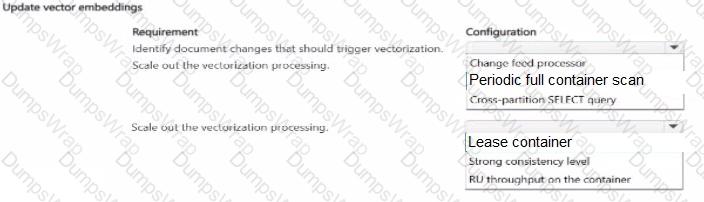
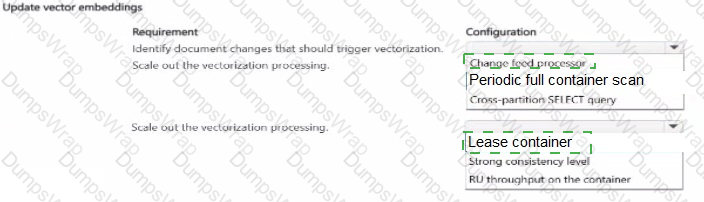
You need to configure vector embedding updates according to the business and technical requirements.
Which information should you use? To answer, select the appropriate option in the answer area.
NOTE: Each correct selection is worth one point.

You need to configure a connection string for the partner-facing service according to the technical requirements.
What should you use?
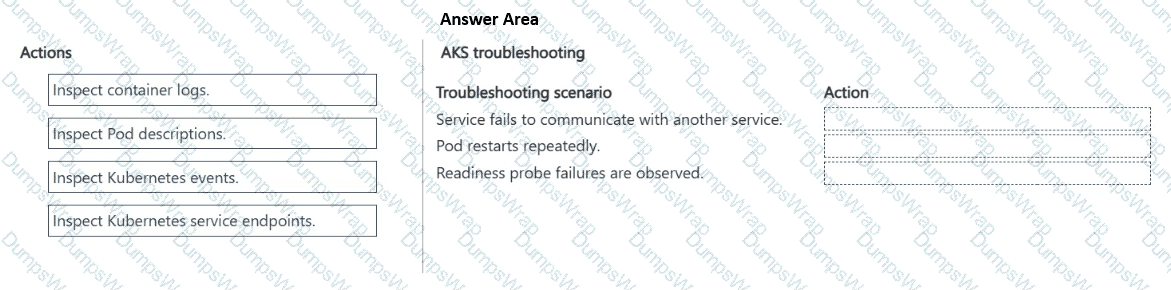
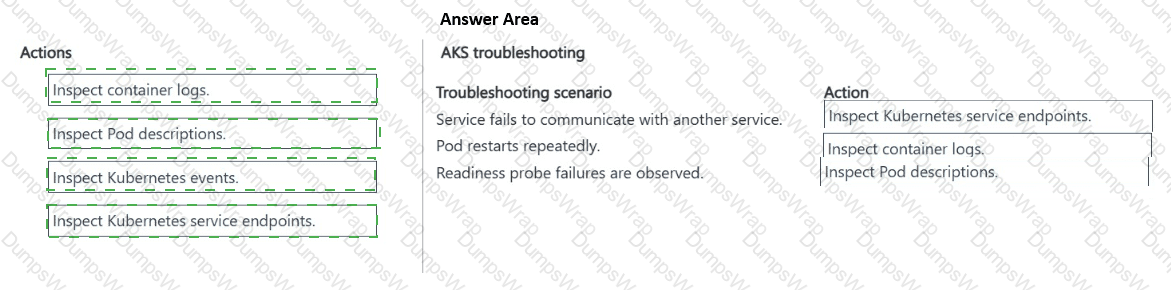
You need to troubleshoot connectivity failures between microservices running in AKS.
Which troubleshooting actions should you perform? To answer, move the appropriate action to the correct troubleshooting scenario. You may use each action once, more than once, or not at all. You may need to move the split bar between panes or scroll to view content.
NOTE: Each correct selection is worth one point.

You need to deploy a batch embedding workload according to the planned application architecture.
What should you use?
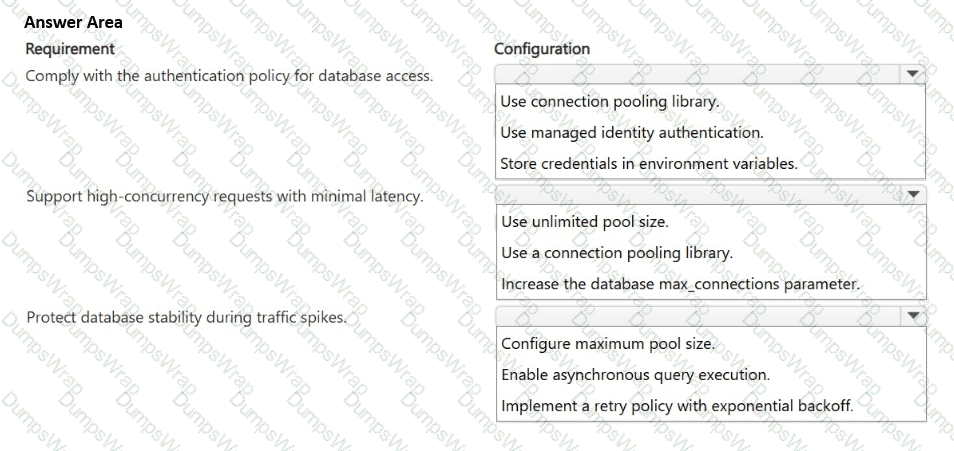
You need to optimize secure database connectivity from the containerized Recommendation API.
How should you configure the application?

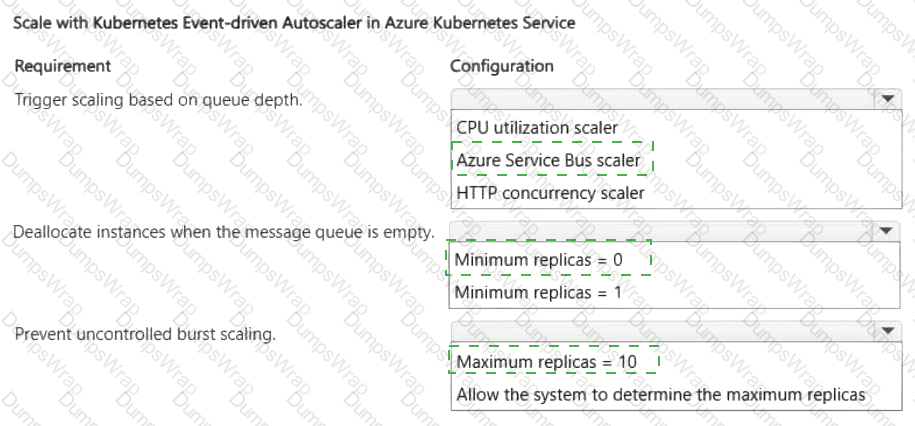
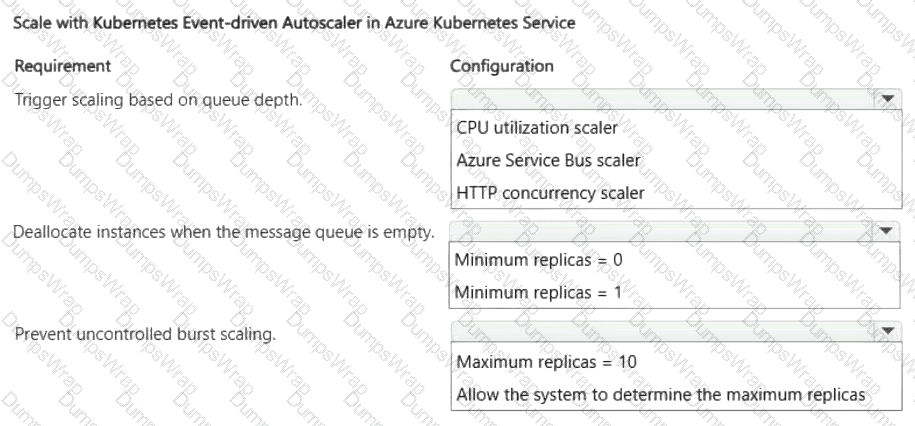
You need to deploy a batch retraining workload.
How should you complete the scaling configuration? To answer, select the appropriate options in the answer area.
NOTE: Each correct selection is worth one point.
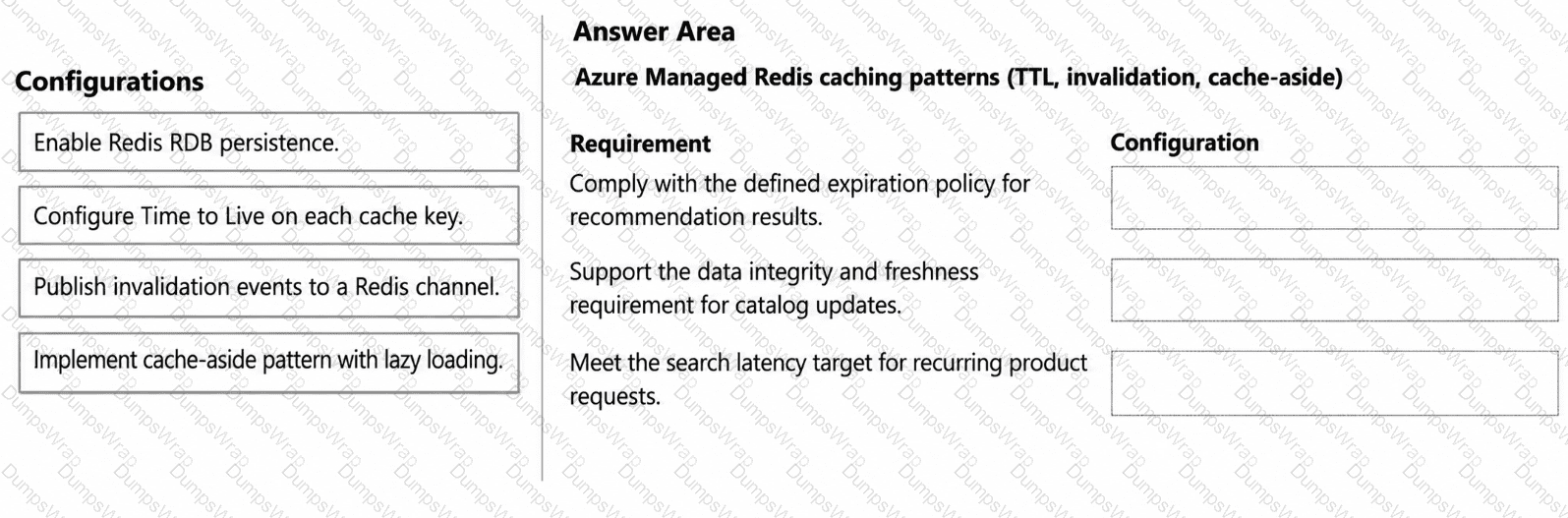
You need to configure the Redis integration for the Recommendation API.
Which configurations should you use? To answer, move the appropriate configurations to the correct requirements. You may use each configuration once, more than once, or not at all. You may need to move the split bar between panes or scroll to view content.
NOTE: Each correct selection is worth one point.
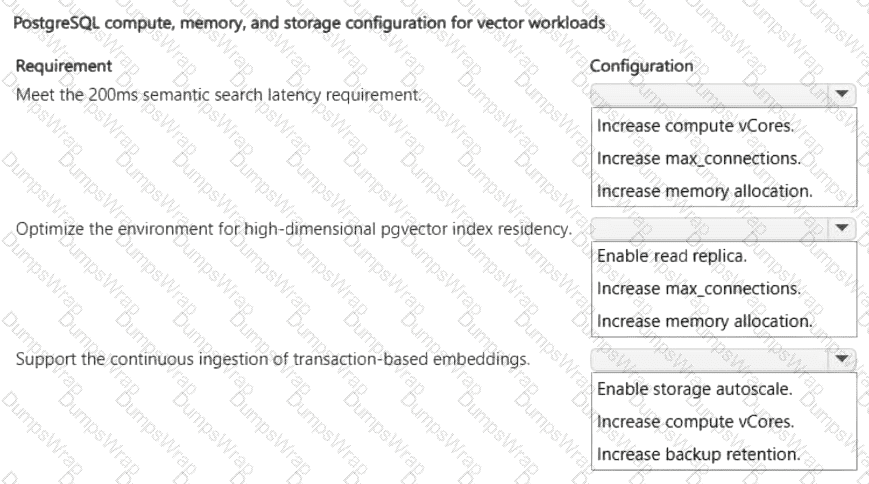
You need to configure the database resources for the Azure Database for PostgreSQL instance.
How should you complete the configuration to meet the business and technical requirements? To answer, select the appropriate options in the answer area.
NOTE: Each correct selection is worth one point.
You need to improve throughput for concurrent application requests to PostgreSQL.
What should you implement?
