Configuring and Operating Microsoft Azure Virtual Desktop Questions and Answers
You have an Azure Virtual Desktop deployment.
You deploy and configure Azure Virtual Desktop in a secondary location.
You plan to perform a test failover to the secondary location, but discover existing user sessions to the primary location.
You need to sign out users from the session hosts in the primary location.
Which PowerShell cmdlet should you run?
You have an Azure subscription.
You need to deploy an Azure Virtual Desktop host pool that will contain 20 Windows 11 session hosts. The solution must meet the following requirements:
• Each session host must have a Windows client license applied.
• Administrative effort must be minimized.
What should you use to deploy the session hosts?
You have an Azure subscription that contains two users named User1 and User2 and the Microsoft Entra groups shown in the following table.
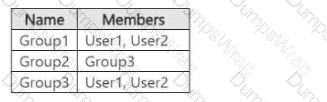
You have an Azure Virtual Desktop host pool named Pool! that contains two session hosts named Host1 and Host2. The session hosts use FSLogix user profiles.
Host1 contains the local groups shown in the following table.
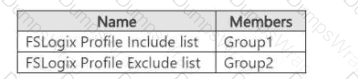
Host2 contains the local groups shown in the following table.
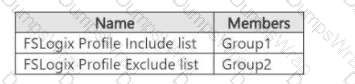
User1 connects to Pool1 and modifies his desktop.
User1 reports that when he reconnects to Pool1, the desktop modifications fail to appear.
You need to ensure that User1 sees the modified desktop when he connects to Pool1. The solution must minimize the impact on other user profiles.
What should you do?
You have an Azure Virtual Desktop host pool named Pool1 in the East US region.
You have a storage account named storage1 that contains FSLogix profile containers. In the East US region, you have a shared image gallery named SIG1 that contains a virtual machine image named Image1. Image1 is used to create new session hosts in Pool1.
You plan to deploy a new Azure Virtual Desktop host pool named Pool2 to the South India region.
You need to implement a session host deployment solution for Pool2 that meets the following requirements:
Image1 must replicate in the South India region.
The session hosts in Pool2 must be based on Image1.
Changes to Image1 must be available in the South India and East US regions.
What should you include in the solution?
You have an A2ure subscription that contains the resources shown in the following table.
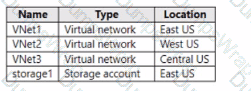
You have a virtual machine named Sever 1 that runs Windows Server and is connected to VNet3.
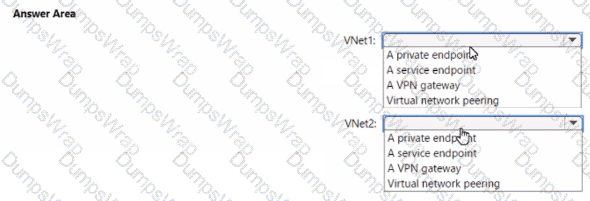
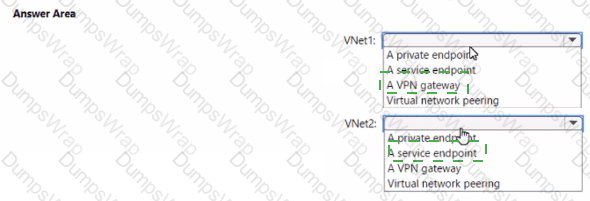
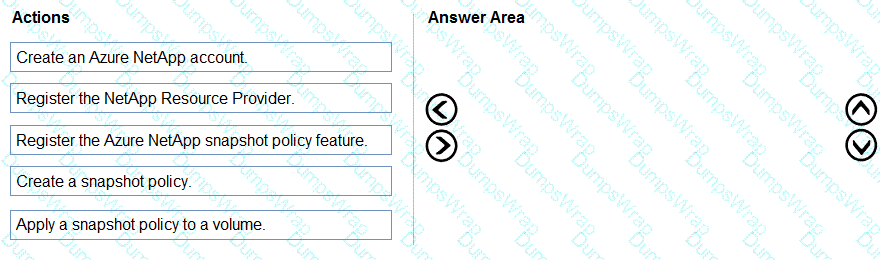
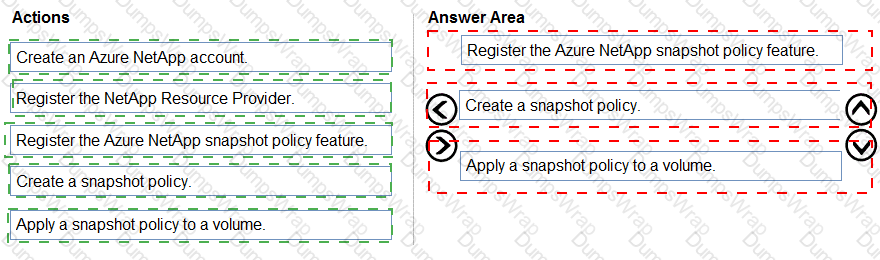
You have a Windows Virtual Desktop host pool named Pool1. Pool1 contains session hosts that use FSLogix profile containers hosted in Azure NetApp Files volumes.
You need to back up profile files by using snapshots.
Which three actions should you perform in sequence? To answer, move the appropriate actions from the list of actions to the answer area and arrange them in the correct order.
-
You have an Azure Virtual Desktop deployment that contains the resources shown in the following table.
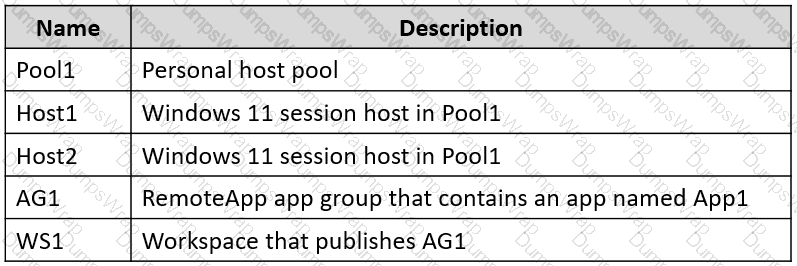
You need to perform the following configurations:
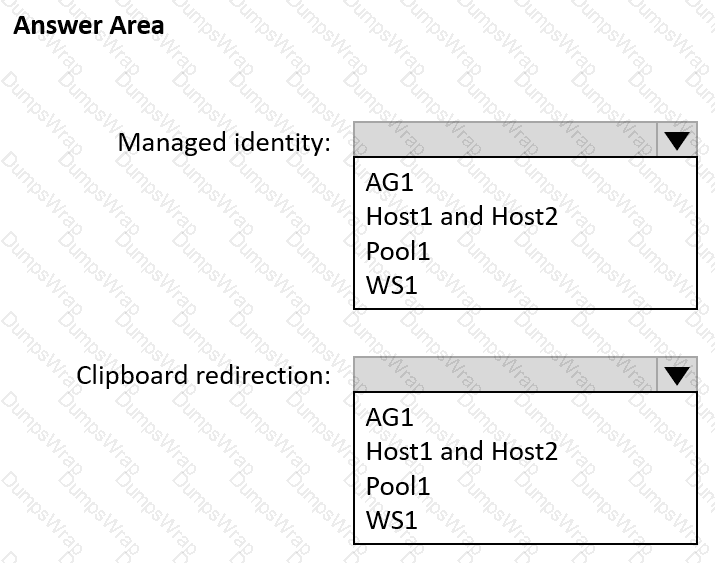
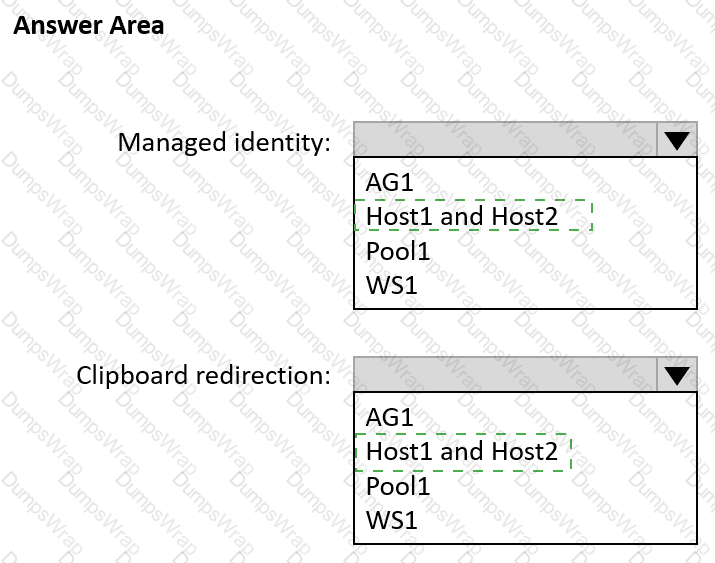
• Enable a managed identity for App1.
• Enable Clipboard redirection for App1.
On which resources should you perform the configurations? To answer, select the appropriate options in the answer area.
NOTE: Each correct selection is worth one point.
-
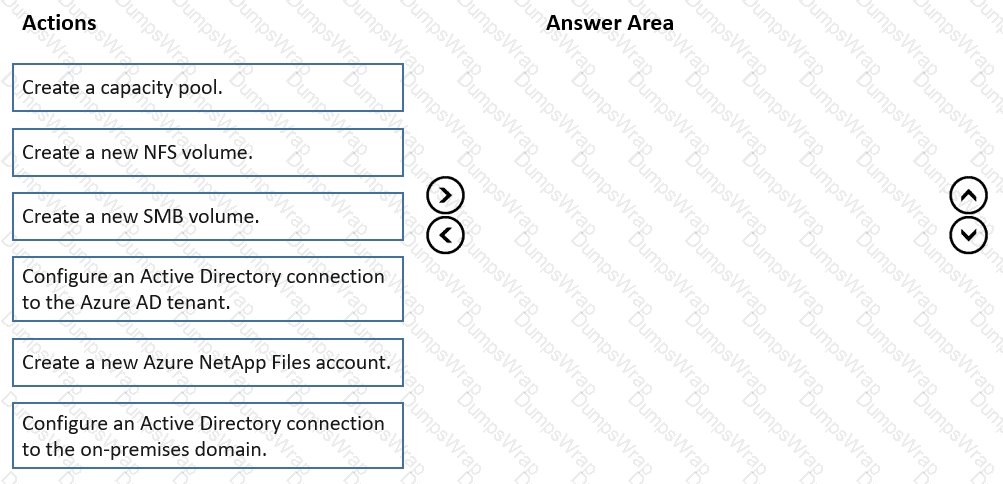
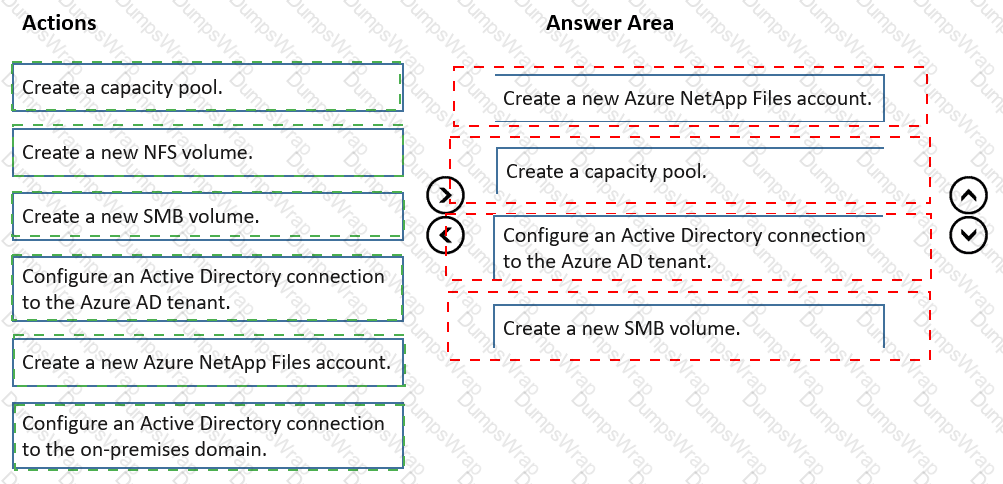
Your on-premises network contains an Active Directory domain that syncs with an Azure AD tenant.
You have an Azure Virtual Desktop host pool that contains Windows 11 session hosts joined to the domain.
You need to configure Azure NetApp Files to store user profile containers.
Which four actions should you perform in sequence? To answer, move the appropriate actions from the list of actions to the answer area and arrange them in the correct order.
NOTE: More than one order of answer choices is correct. You will receive credit for any of the correct orders you select.
You have a Windows Virtual Desktop host pool.
You need to install Microsoft Antimalware for Azure on the session hosts.
What should you do?
You have an Azure Virtual Desktop deployment that contains a host pool named HostPool1.
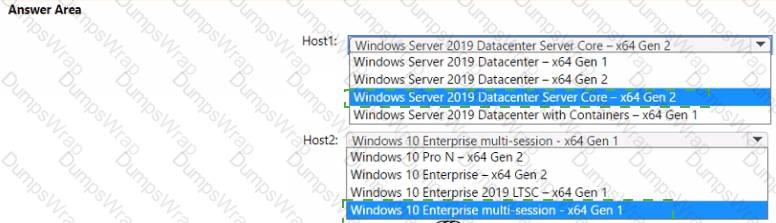
You plan to deploy session hosts to HostPool1 as shown in the following table.
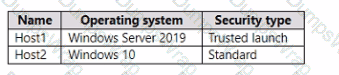
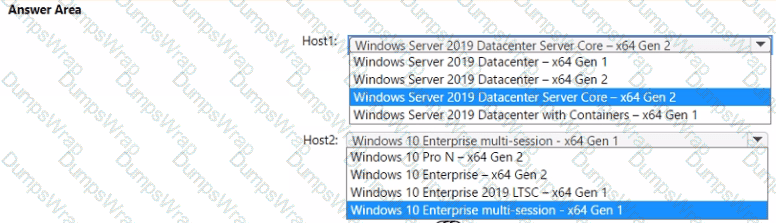
Each session host must support up to 15 concurrent users.
You need to recommend which operating system version to deploy from Azure Marketplace to the session hosts.
What should you recommend for each session host? To answer, select the appropriate options in the answer area.
Your network contains an on-premises Active Directory domain named contoso.com.
You have an Azure subscription that contains the resources shown in the following table.
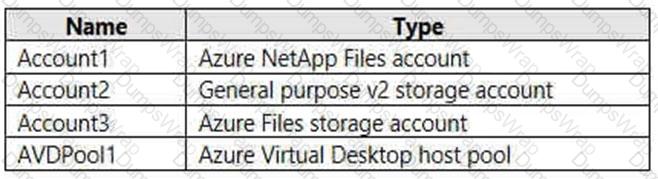
You need to create a share that will host FSLogix profiles for AVDPool1. The solution must meet the following requirements:
* Maximize read and write performance for the profiles.
* Control access to the SMB share by using the users and groups stored in contoso.com.
Which account should you use to host the share?
You have an Azure Virtual Desktop deployment.
You plan to deploy the host pools shown in the following table.
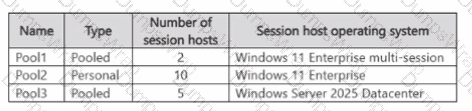
For which host pools can you configure a load-balancing algorithm?
You have an Azure Active Directory Domain Services (Azure AD D5) domain named contoso.com.
You have an Azure Storage account named storage1. Storage1 hosts a file share named share1 that has share and file system permissions configured. Share1 is configured to use contoso.com for authentication,
You create an Azure Virtual Desktop host pool named Pool1. Pool1 contains two session hosts that use the Windows 10 multi-session + Microsoft 365 Apps image.
You need to configure an FSLogix profile container for Pool1.
What should you do next?
You have an Azure Virtual Desktop host pool named Pooll. All the session hosts in Pooll are assigned private IP addresses only.
You need to ensure that administrators can connect remotely to the session hosts. The solution must ensure that the administrators can connect to the session hosts by using Azure Command-Line Interface (CLI) and the Remote Desktop client for Windows.
What should you include in the solution?
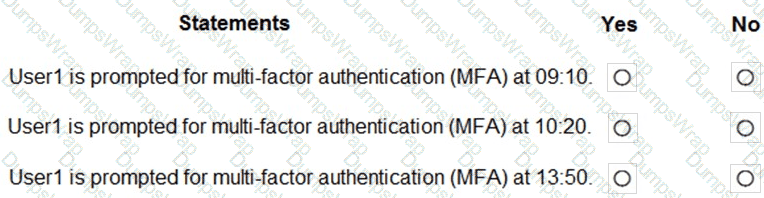
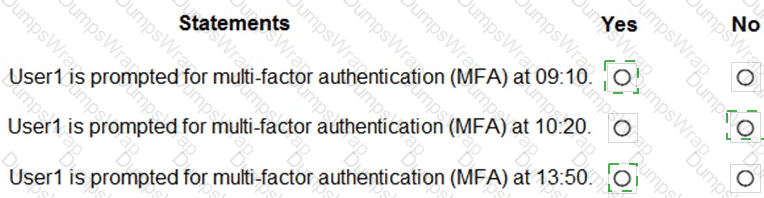
You have an Azure Virtual Desktop Deployment that contains a workspace named Workspace1 and a user named User1. Workspace1 contains a Desktop application group named Pool1Desktop.
At 09:00, you create a conditional access policy that has the following settings:
Assignments:
- Users and groups: User1
- Cloud apps or actions: Azure Virtual Desktop
- Conditions: 0 conditions selected
Access controls
- Grant: Grant access, Require multi-factor authentication
- Sessions: Sign-in frequency 1 hour
User1 performs the actions shown in the following table.
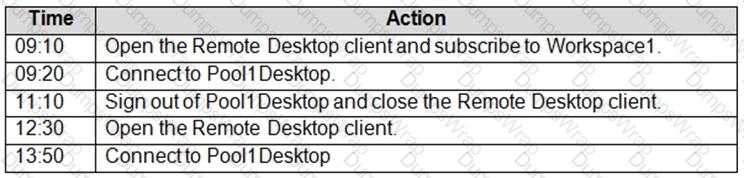
For each of the following statements, select Yes if the statement is true. Otherwise, select No.
NOTE: Each correct selection is worth one point.
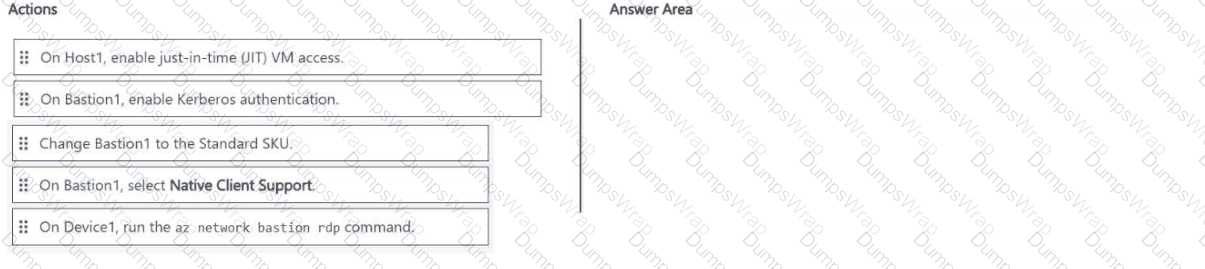
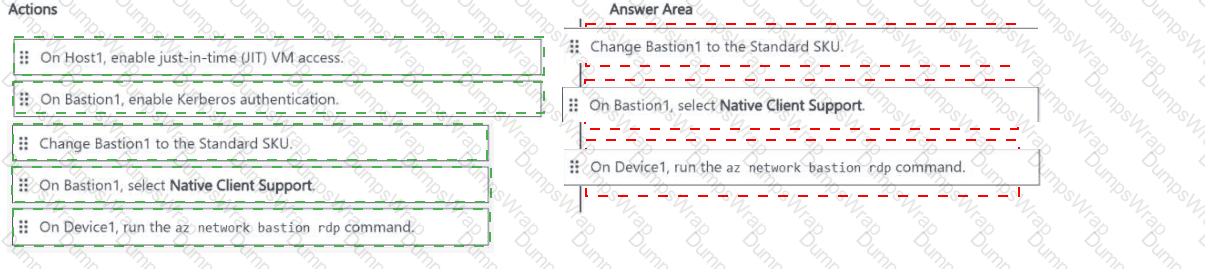
You have an Azure Virtual Desktop deployment that contains the resources shown in the following table.

You have a Windows 11 device named Device1 that has Azure Command-Line Interface (CLI) installed.
You need to use Remote Desktop Connection (mstsc.exe) on Device1 to connect to Host1.
Which three actions should you perform in sequence? To answer, move the appropriate actions from the list of actions to the answer area and arrange them in the correct order.
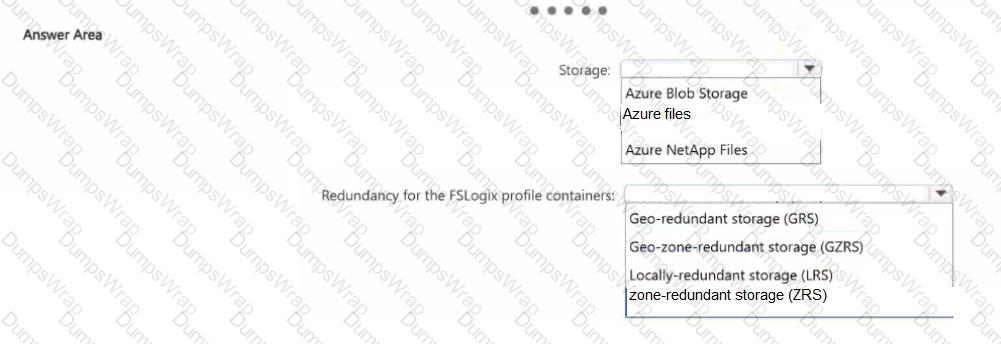
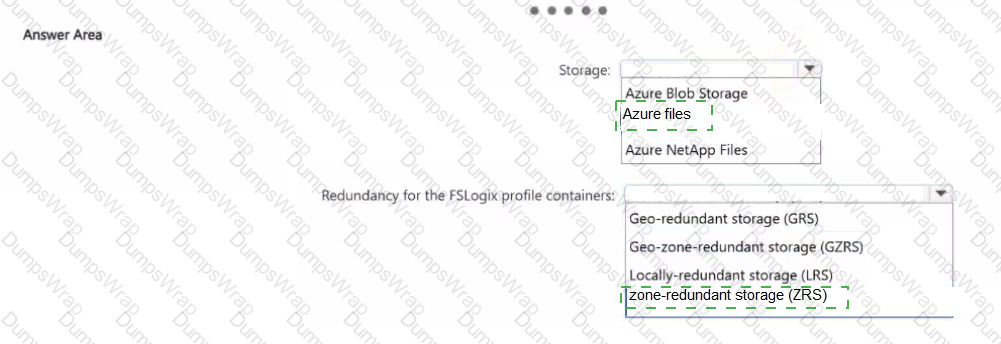
You have an Azure subscription that contains a virtual machine named Seiver1 and an Azure Virtual Desktop pooled host pool named Pool1 Pool1 uses FSLogix profile containers stored on an SMB file share on Server1
When Server1 is unavailable, users cannot sign in to Pool1.
You need to prevent the sign-in failures caused by Server1 outages The solution must meet the following requirements:
• Maintain the availability of Pool1 in the event of an Azure datacenter outage.
• Replace Server1.
• Minimize costs.
What should you include in the solution? To answer, select the appropriate options in the answer area. NOTE: Each correct selection is worth one point
You have an Azure subscription that contains a user named User1 and an Azure Virtual Desktop host pool named Pool1. Pool1 contains Microsoft Entra joined session hosts. User1 has the devices shown in the following table.
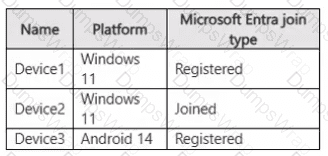
You need to ensure that User! can connect to the session hosts in Pool! from each device. The solution must minimize administrative effort
What should you do?
Note: This question is part of a series of questions that present the same scenario. Each question in
the series contains a unique solution that might meet the stated goals. Some question sets might have more than one correct solution, while others might not have a correct solution.
After you answer a question in this section, you will NOT be able to return to it. As a result, these
questions will not appear in the review screen.
You have a Windows Virtual Desktop host pool that contains five session hosts. The session hosts run Windows 10 Enterprise multi-session.
You need to prevent users from accessing the internet from Windows Virtual Desktop sessions. The session hosts must be allowed to access all the required Microsoft services.
Solution: You configure rules in the network security group (NSG) linked to the subnet of the session hosts.
Does that meet the goal?
You have a hybrid Azure Active Directory (Azure AD) tenant named contoso.com that contains the users shown in the following table.
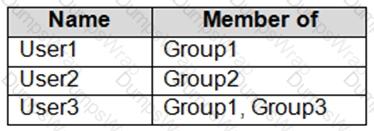
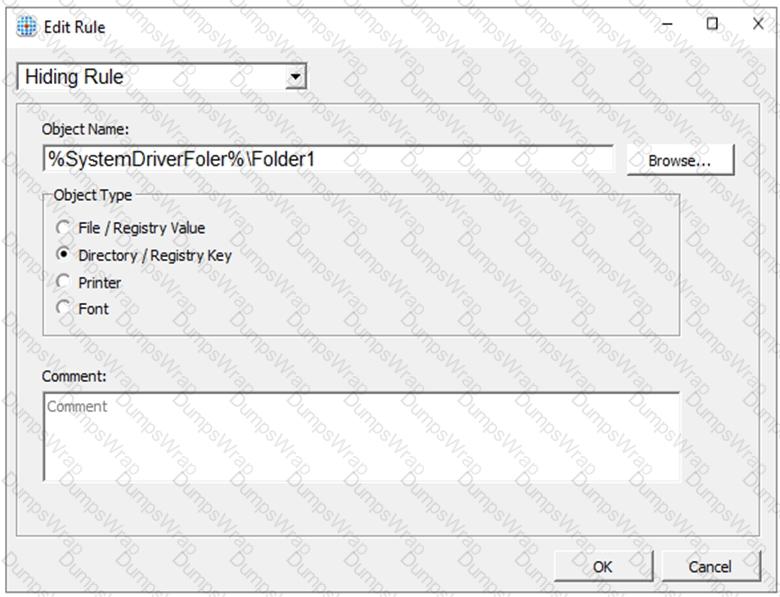
You have an Azure Virtual Desktop host pool. All the session hosts have a folder named C:\Folder1.
You create an FSLogix Application Masking rule as shown in the following exhibit.
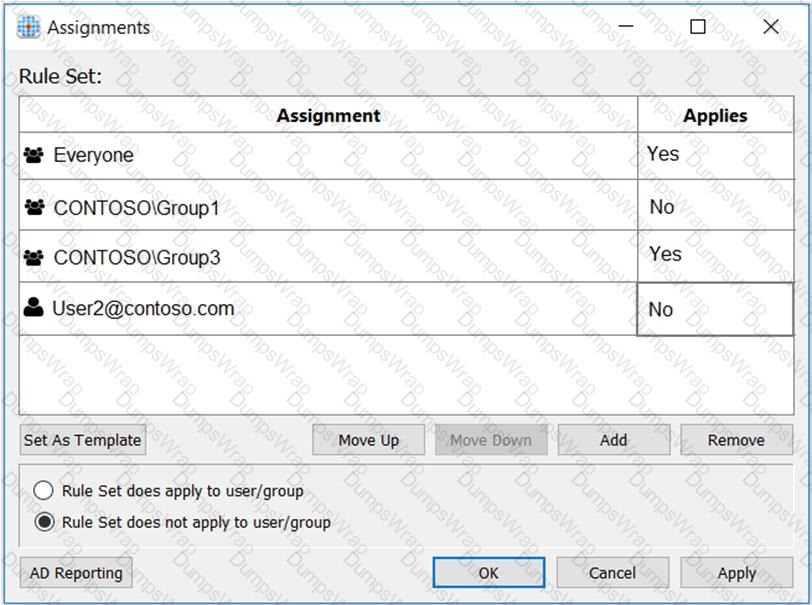
You create assignments for the Application Masking rule as shown in the following exhibit.
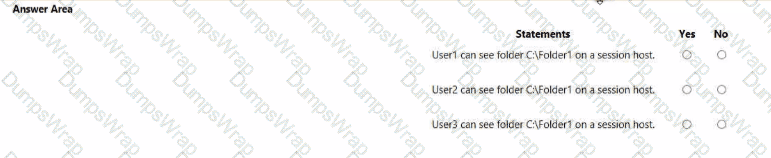
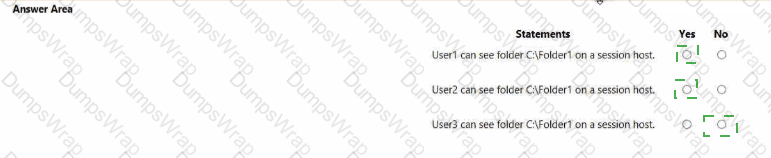
For each of the following statements, select Yes if the statement is true. Otherwise, select No.
NOTE: Each correct selection is worth one point.
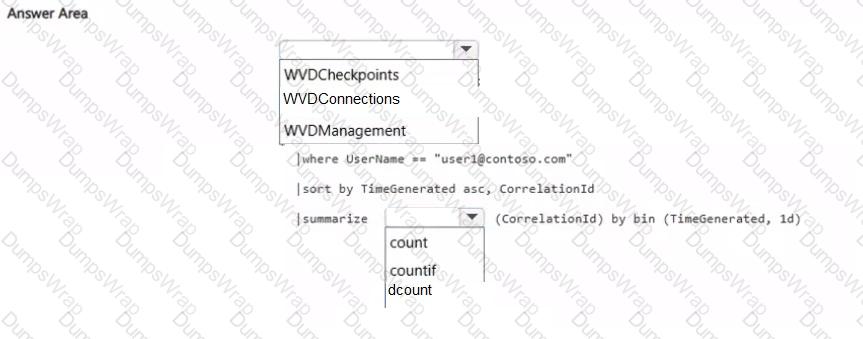
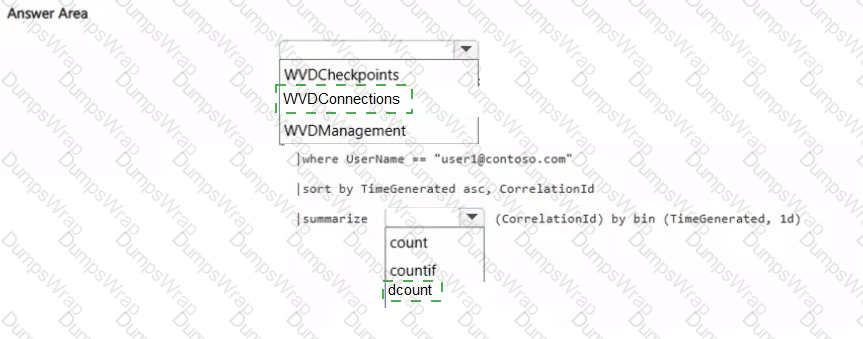
You have an Azure subscription that contains an Azure Virtual Desktop host pool named Pool1 and a Log Analytics workspace named Workspace1. Pool1 forwards diagnostic data to Workspace 1.
You need to query Workspace1 to identify how many times a user named user1@contoso.com connected to the session hosts in Pool1 per day.
How should you complete the query? To answer, select the appropriate options in the answer area.
NOTE: Each correct selection is worth one point.
You have a Windows Virtual Desktop deployment.
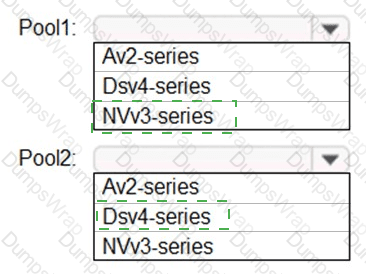
You plan to create the host pools shown in the following table.
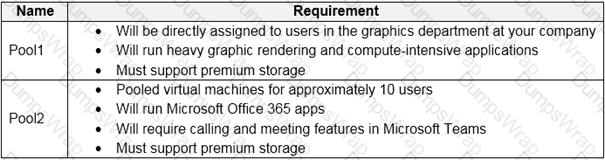
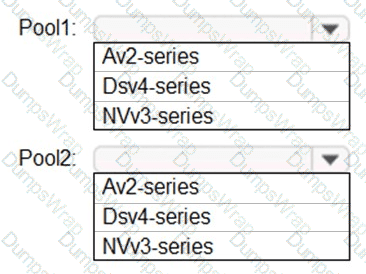
You need to recommend the virtual machine size for each host pool. The solution must minimize costs.
Which size should you recommend for each pool? To answer, select the appropriate options in the answer area.
NOTE: Each correct selection is worth one point.
You have an Azure Virtual Desktop host pool named Pool1. Pool1 contains session hosts that have a third-party application named App1. App1 is published by using a RemoteApp group.
A new MSI-based version of App1 is installed each month to each host. The name of the executable file is different for each version of App1.
You need to automate the process of making a new version of App1 available via RemoteApp. The process must ensure that the user experience remains the same when launching the application from the Windows Desktop client.
Which two cmdlets should you run? Each correct answer presents part of the solution.
NOTE: Each correct selection is worth one point.
You have a Azure Virtual Desktop deployment that contains multiple host pools.
You need to create a PowerShell script to sign users out of a specific session host before you perform a maintenance task.
Which PowerShell module should you load in the script?
You need to modify the custom virtual machine images to meet the deployment requirements.
What should you install?
Which two roles should you assign to Admin2 to meet the security requirements? Each correct answer presents part of the solution.
NOTE: Each correct selection is worth one point.
You need to recommend an authentication solution that meets the performance requirements.
Which two actions should you include in the recommendation? Each correct answer presents part of the solution.
NOTE: Each correct selection is worth one point.
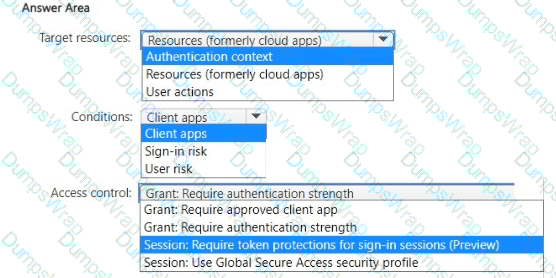
You need to configure a conditional access policy to meet the authentication requirements.
What should you include in the policy configuration? To answer, select the appropriate options in the answer area.
NOTE Each correct selection is worth one point.


You need to ensure that you can implement user profile shares for the Boston office users. The solution must meet the user profile requirements.
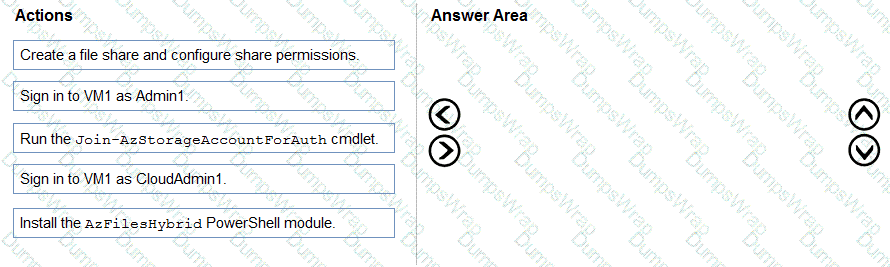
Which four actions should you perform in sequence? To answer, move the appropriate actions from the list of actions to the answer area and arrange them in the correct order.

You need to recommend a DNS infrastructure that meet the performance requirements. What should you recommend? To answer, select the appropriate options in the answer area. NOTE: Each correct selection is worth one point.

You need to configure the user settings of Admin1 to meet the user profile requirements.
What should you do?
You need to deploy the session hosts to meet the deployment requirements Which PowerShell cmdlel should you run first?
You need to ensure the resiliency of the user profiles for the Boston office users. The solution must meet the user performance requirements.
What should you do?
You need to implement network security to meet the security requirements and the performance requirements.
Which two actions should you perform? Each correct answer presents a complete solution.
NOTE: Each correct selection is worth one point.
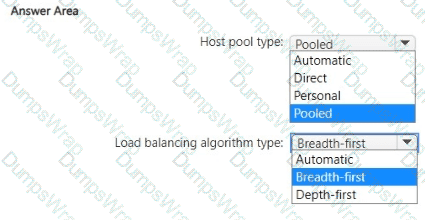
Which type of host pool and load balancing algorithm should you configure to meet the performance requirements? To answer, select the appropriate options in The answer area.
NOTE: Each correct selection is worth one point.
What should you do to meet the user profile requirements?
Which settings should you configure to meet the performance requirements?
Which monitoring solution should you configure to meet the security requirements?
What should you do to ensure that the session hosts meet the application requirements for App1?
What should you configure to meet the networking requirements?
You need to prepare the disk on VM1 for use with the Azure Virtual Desktop deployment. Which two actions should you perform? Each correct answer presents part of the solution. NOTE: Each correct selection is worth one point.
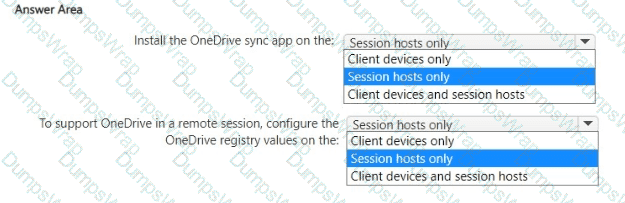
What should you do to meet the application requirements? To answer, select the appropriate options in the answer area.
NOTE: Each correct selection is worth one point.

You need to create a Conditional Access policy to meet the security require-ments.
How should you configure the policy? To answer, select the appropriate options in the answer area.

Which two actions should you perform to meet the security requirements for Defender for Endpoint? Each correct answer presents a complete solution.
NOTE: Each correct selection is worth one point.
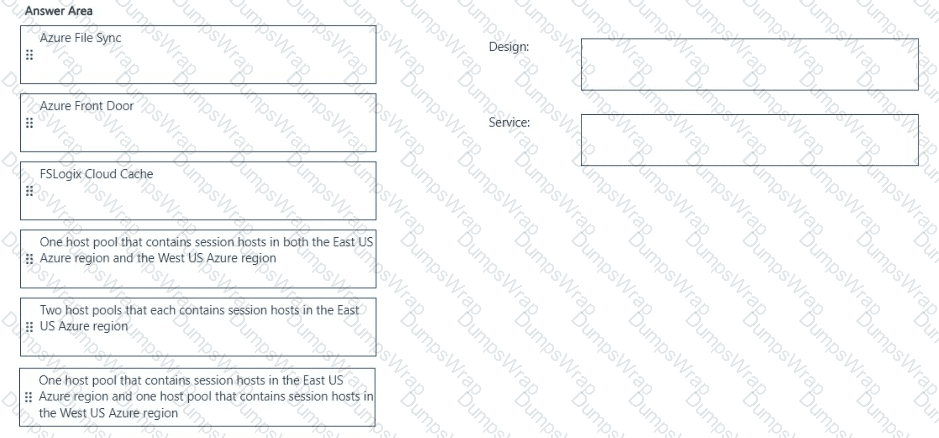
Which host pool design and which service should you configure to meet the disaster recovery requirements? To answer, drag the appropriate solution to the correct requirements. Each solution may be used once, more than once, or not at all. You may need to drag the split bar between panes or scroll to view content
NOTE: Each correct selection is worth one point.

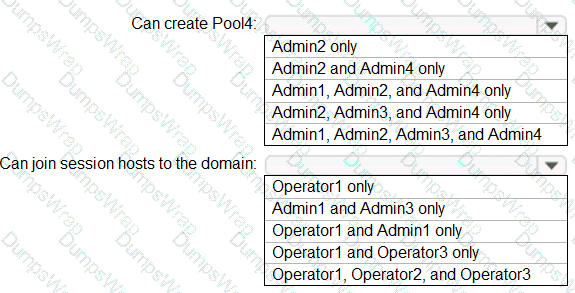
Which users can create Pool4, and which users can join session hosts to the domain? To answer, select the appropriate options in the answer area.
NOTE: Each correct selection is worth one point.

You need to configure the device redirection settings. The solution must meet the technical requirements.
Where should you configure the settings?
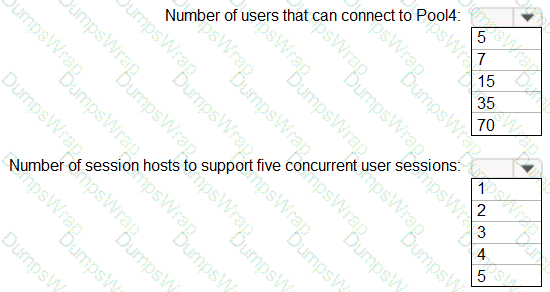
You are planning the deployment of Pool4.
What will be the maximum number of users that can connect to Pool4, and how many session hosts are needed to support five concurrent user sessions? To answer, select the appropriate options in the answer area.
NOTE: Each correct selection is worth one point.