Administering Relational Databases on Microsoft Azure Questions and Answers
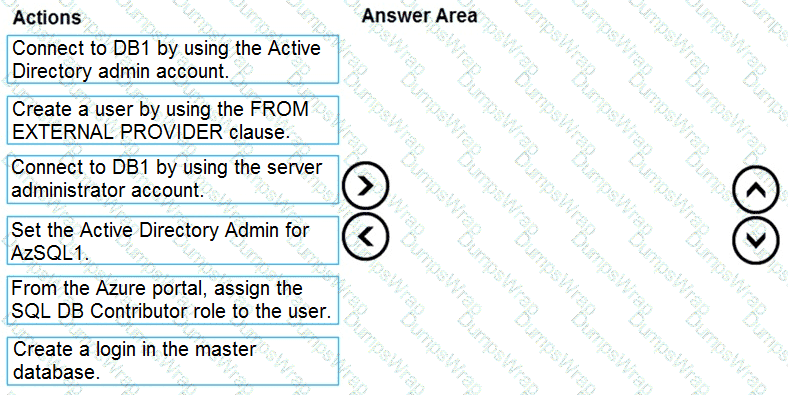
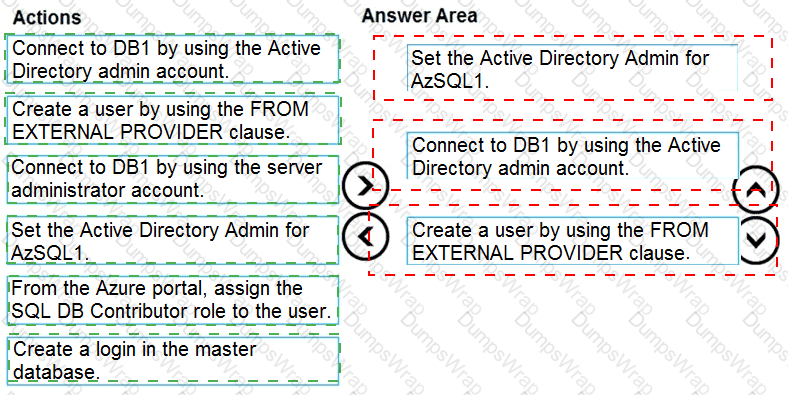
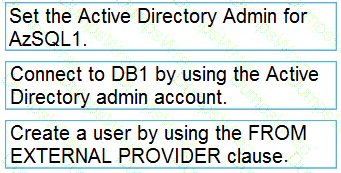
You have a new Azure SQL database named DB1 on an Azure SQL server named AzSQL1.
The only user who was created is the server administrator.
You need to create a contained database user in DB1 who will use Azure Active Directory (Azure AD) for authentication.
Which three actions should you perform in sequence? To answer, move the appropriate actions from the list of actions to the answer area and arrange them in the correct order.
You have an Azure subscription that contain an Azure SQL managed instance named SQLMI1 and a Log Analytics workspace named Workspace1.
You need to collect performance metrics for SQLMI1 and stream the metrics to Workspace1.
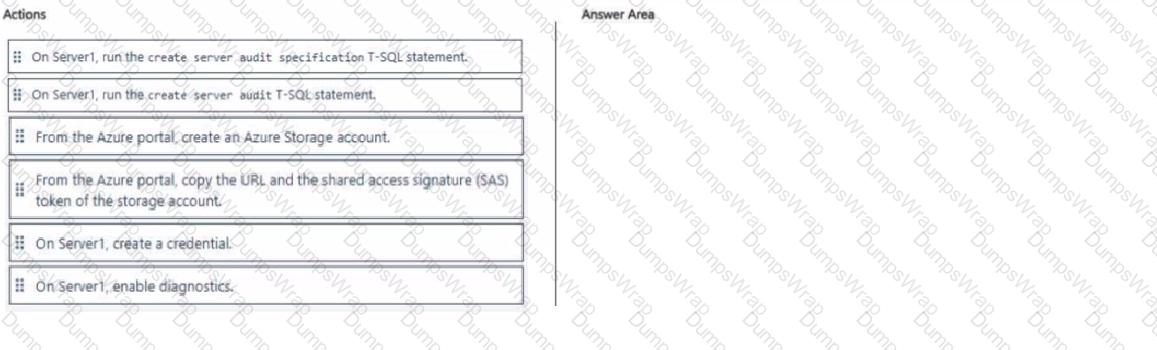
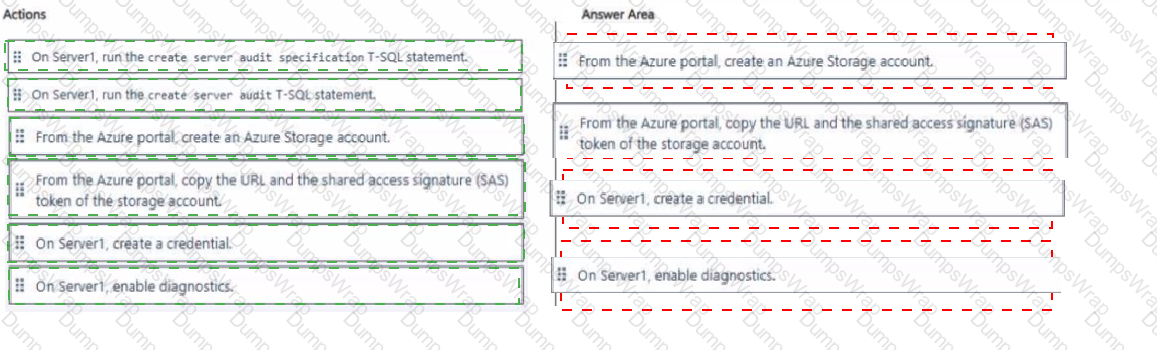
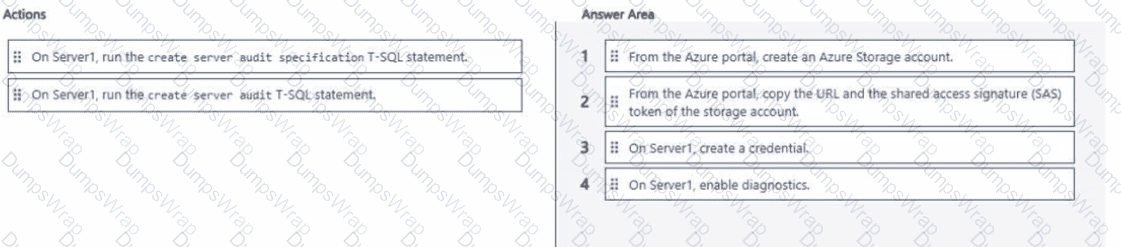
You have an Azure subscription that contains an Azure SQL managed instance named Server1.
You need to enable auditing for Server 1. The solution must minimize administrative effort.
Which four actions should you perform in sequence? To answer, move the appropriate actions from the list of actions to the answer area and arrange them m the correct order.
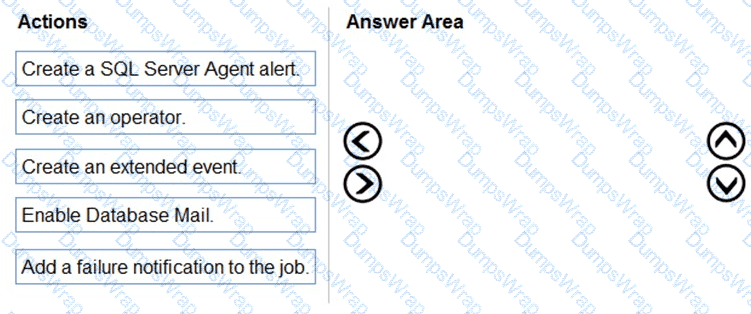
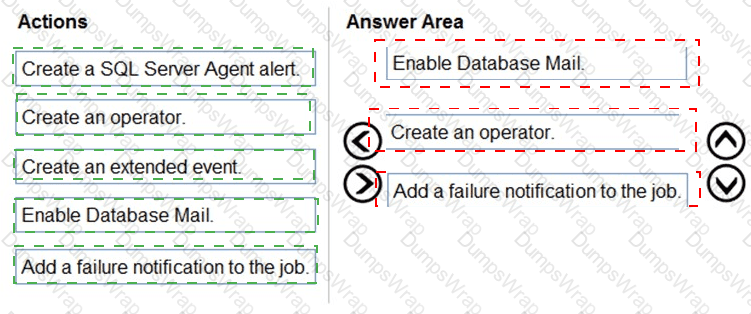
You have an Azure subscription that contains an Azure SQL managed instance named SQLMi1 and a SQL Agent job named Backupdb. Backupdb performs a daily backup of the databases hosted on SQLMi1.
You need to be notified by email if the job fails.
Which three actions should you perform in sequence? To answer, move the appropriate actions from the list of actions to the answer area and arrange them in the correct order.
NOTE: More than one order of answer choices is correct. You will receive credit for any of the correct orders you select.
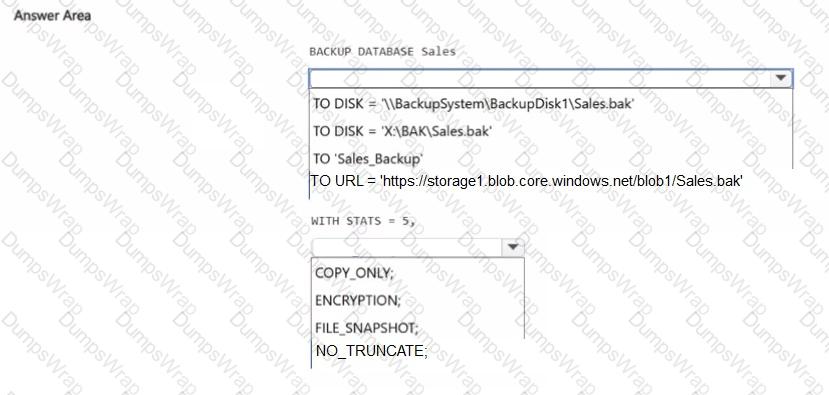
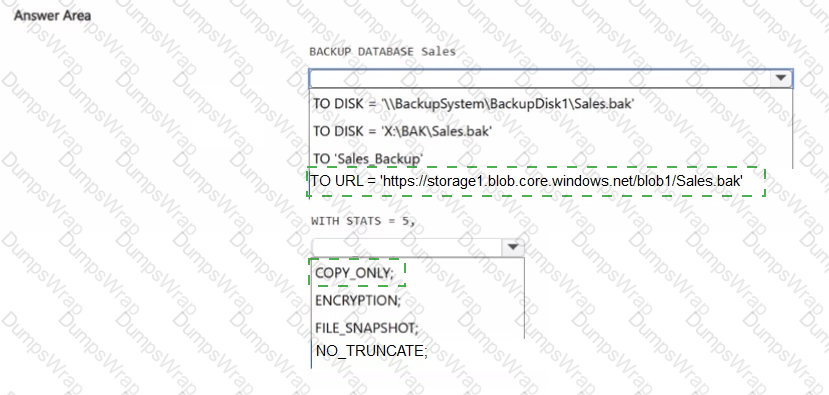
You have an Azure SQL managed instance named sqldbmi1 that contains a database name Sales.
You need to initiate a backup of Sales.
How should you complete the Transact-SQL statement? To answer, select the appropriate options in the answer area.
NOTE: Each correct selection is worth one point.

You have a Microsoft SQL Server 2017 server.
You need to migrate the server to Azure. The solution must meet the following requirements:
• Ensure that the latest version of SQL Server is used.
• Support the SQL Server Agent service.
Minimize administrative effort.
What should you use?
You have an on-premises Microsoft SQL Server 2019 server that hosts a database named DB1.
You have an Azure subscription that contains an Azure SQL managed instance named SQLMI1 and a virtual network named VNET1. SQLMI1 resides on VNET1. The on-premises network connects to VNET1 by using an ExpressRoute connection.
You plan to migrate DB1 to SQLMI1 by using Azure Database Migration Service.
You need to configure VNET1 to support the migration.
What should you do?
Note: This question is part of a series of questions that present the same scenario. Each question in the series contains a unique solution that might meet the stated goals. Some question sets might have more than one correct solution, while others might not have a correct solution.
After you answer a question in this section, you will NOT be able to return to it. As a result, these questions will not appear in the review screen.
You have an Azure Data Lake Storage account that contains a staging zone.
You need to design a daily process to ingest incremental data from the staging zone, transform the data by executing an R script, and then insert the transformed data into a data warehouse in Azure Synapse Analytics.
Solution: You use an Azure Data Factory schedule trigger to execute a pipeline that executes an Azure Databricks notebook, and then inserts the data into the data warehouse.
Does this meet the goal?
You have an on-premises Microsoft SQL Server 2022 instance named SQL1. You have an Azure subscription that contains an Azure SQL managed instance named SQLMI1. You need to configure a bidirectional disaster recovery solution between SQL1 and SQLMH. What should you include in the solution?
You manage an enterprise data warehouse in Azure Synapse Analytics.
Users report slow performance when they run commonly used queries. Users do not report performance changes for infrequently used queries.
You need to monitor resource utilization to determine the source of the performance issues.
Which metric should you monitor?
You are designing an enterprise data warehouse in Azure Synapse Analytics that will contain a table named Customers. Customers will contain credit card information.
You need to recommend a solution to provide salespeople with the ability to view all the entries in Customers.
The solution must prevent all the salespeople from viewing or inferring the credit card information.
What should you include in the recommendation?
You are designing a streaming data solution that will ingest variable volumes of data.
You need to ensure that you can change the partition count after creation.
Which service should you use to ingest the data?
You have an Azure subscription that contains an Azure SQL managed instance named SQLMI1. You need to configure SQLMI1 to use the Business Critical service tier Which PowerShell cmdlet should you run?
You have a SQL pool in Azure Synapse that contains a table named dbo.Customers. The table contains a column name Email.
You need to prevent nonadministrative users from seeing the full email addresses in the Email column. The users must see values in a format of aXXX@XXXX.com instead.
What should you do?
You have an Azure subscription that uses a domain named contoso.com.
You have two Azure VMs named DBServer1 and DBServer2. Each of them hosts a default SQL Server instance. DBServer1 is in the East US Azure region and contains a database named DatabaseA. DBServer2 is in the West US Azure region.
DBServer1 has a high volume of data changes and low latency requirements for data writes.
You need to configure a new availability group for DatabaseA. The secondary replica will reside on DBServer2.
What should you do?
You have an Azure SQL database named db1 on a server named server1.
You need to modify the MAXDOP settings for db1.
What should you do?
You need to recommend an availability strategy for an Azure SQL database. The strategy must meet the
following requirements:
Support failovers that do not require client applications to change their connection strings.
Replicate the database to a secondary Azure region.
Support failover to the secondary region.
What should you include in the recommendation?
You have an Always On availability group deployed to Azure virtual machines. The availability group contains a database named DB1 and has two nodes named SQL1 and SQL2. SQL1 is the primary replica.
You need to initiate a full backup of DB1 on SQL2.
Which statement should you run?
You have an on-premises Microsoft SQL Server 2022 instance that hosts a database named DB1. You have an Azure subscription that contains an Azure SQL database named SQLDB1. You need to replicate DB1 to SQLDB1. Which type of replication should you use?
Note: This question is part of a series of questions that present the same scenario. Each question in the series contains a unique solution that might meet the stated goals. Some question sets might have more than one correct solution, while others might not have a correct solution.
After you answer a question in this section, you will NOT be able to return to it. As a result, these questions will not appear in the review screen.
You have SQL Server 2019 on an Azure virtual machine.
You are troubleshooting performance issues for a query in a SQL Server instance.
To gather more information, you query sys.dm_exec_requests and discover that the wait type is PAGELATCH_UP and the wait_resource is 2:3:905856.
You need to improve system performance.
Solution: You create additional tempdb files.
Does this meet the goal?
You have an Azure subscription that contains two Azure SQL managed instances named SQLMI1 and SQLMI2 . SQLM2 contains a database named DB1 and a user named User1.
User1 drops DB1.
You need to perform a point-in-time restore of DB1 to SQLMI2.
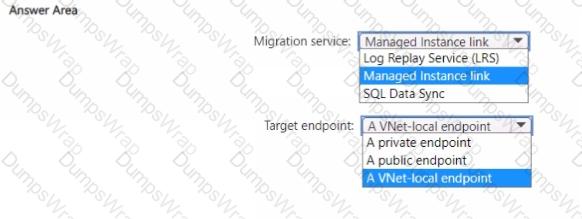
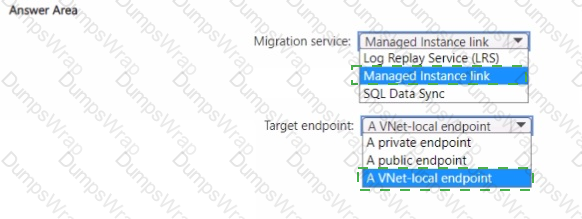
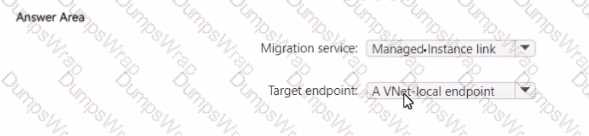
You need to recommend which service and target endpoint to use when migrating the databases from SVR1 to Instance1. The solution must meet the availability requirements.
What should you recommend? To answer, select the appropriate options in the answer area.
NOTE Each correct selection is worth one point.
You need to recommend a solution to meet the security requirements and the business requirements for DB3. What should you recommend as the first step of the solution?
You plan to deploy Instance1 by using the following script.
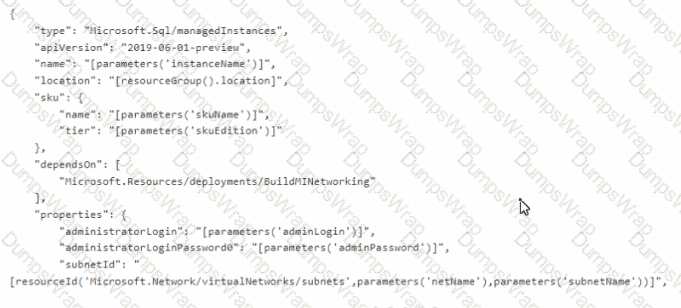
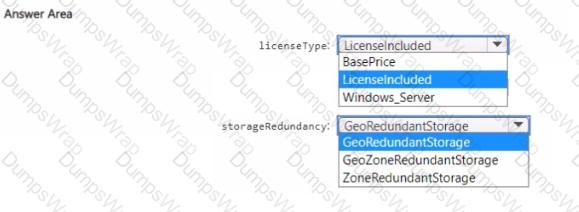
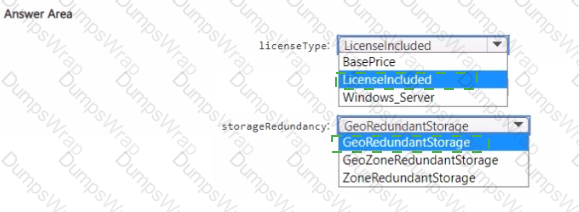
You need to specify the licenseType and storagenedundancy parameters. The deployment must meet the availability requirements and the business requirements for DB1 and DB2.
To what should you set each parameter? To answer, select the appropriate options in the answer area.

You need to recommend a solution that will enable remote developers to access DB1 and DB2. The solution must support the planned changes and meet the secunty requirements.
What should you include in the recommendation?
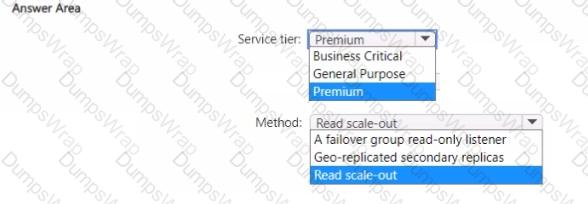
You need to recommend a service tier and a method to offload analytical workloads for the databases migrated from SVR1. The solution must meet the availability and business requirements.
What should you recommend? To answer, select the appropriate options in the answer area.
NOTE: Each correct selection is worth one point.
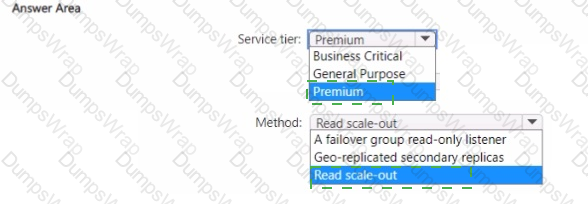

You need to recommend a solution to ensure that the performance of DB3 is optimized after the migration to Azure SQL Database. The solution must meet availability requirements.
What should you include in the recommendation?
You need to recommend which configuration to perform twice to enable access to the primary and secondary replicas of DB3. The solution must meet the availability requirements.
What should you recommend?
You need to recommend a backup solution to restore DB3. The solution must meet the availability requirements. Which type of backup should you use?
You need to recommend a process to automate the management of DB3. The solution must meet the management requirements. What should be the first step of the process?
Which counter should you monitor for real-time processing to meet the technical requirements?
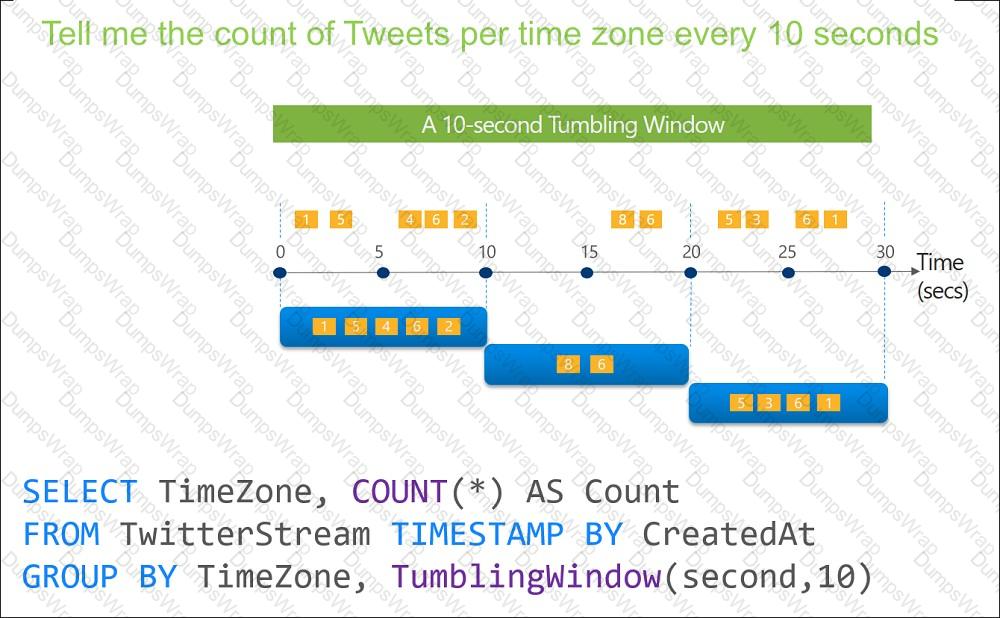
Which windowing function should you use to perform the streaming aggregation of the sales data?
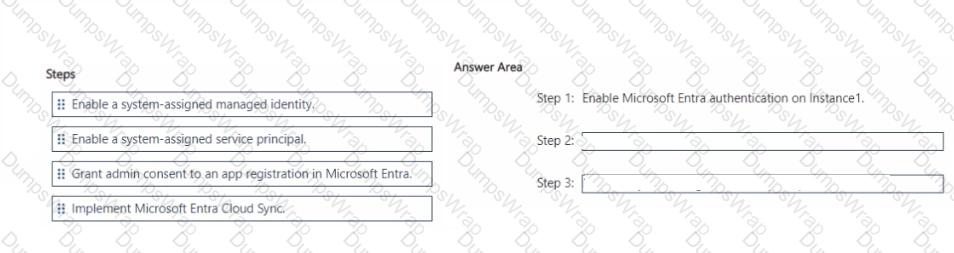
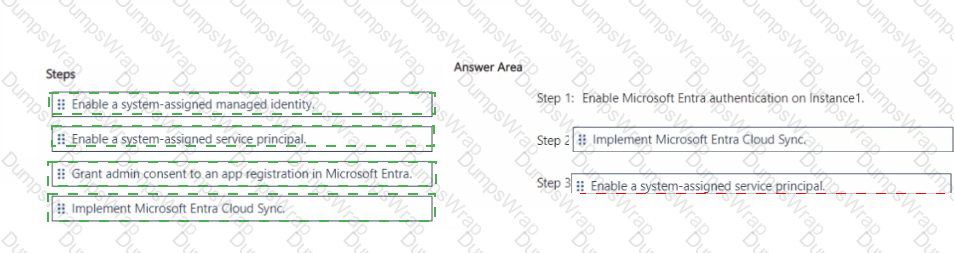
You need to recommend an authentication solution for App1 access to DB1 and DB2 after their migration to Instance1. The solution must meet the availability requirements.
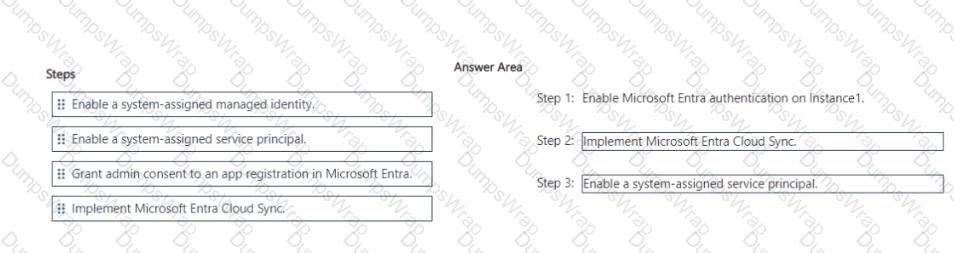
Which actions should you perform in sequence? To answer, drag the appropriate actions to the correct order. Each action may be used once, more than once, or not at all. You may need to drag the split bar between panes or scroll to view content.
NOTE: Each correct selection is worth one point.
You need to identify the event_file target for monitonng DB3 after the migration to Azure SQL Database. The solution must meet the management requirements.
What should you use as the event_file target?
You need to identify the event_flle target for monitonng DB3 after the migration to Azure SQL Database. The solution must meet the management requirements,
What should you use as the event_file target?
Task 5
You need to generate an email alert for db1 if the average CPU percentage utilization is greater than 50 percent for five minutes sampled at one-minute intervals. The alert must be sent to admin@contoso.com.
You may need to use SQL Server Management Studio and the Azure portal.
Task 6
You need to ensure that any enhancements made to the Query Optimizer through patches are available to dbl and db2 on sql37006895.
Task 5
You need to configure a disaster recovery solution for db1. When a failover occurs, the connection strings to the database must remain the same. The secondary server must be in the West US 3 Azure region.
Task 2
You need to configure your user account as the Azure AD admin for the server named sql3700689S.
Task 11
You have a legacy application written for Microsoft SQL Server 2012. The application will be the only application that accesses db1 You need to ensure that db1 is compatible with all the features and syntax of SQL Server 2012.
Task 7
You need to capture the following information for all the databases on sql60l 52867;
• Queries to the databases
• Users that executed the queries
The captured information must be stored in sa60152867.
You may need to use SQL Server Management Studio and the Azure portal.
You need to implement a solution to notify the administrators. The solution must meet the monitoring requirements.
What should you do?
What should you use to migrate the PostgreSQL database?
What should you implement to meet the disaster recovery requirements for the PaaS solution?
Based on the PaaS prototype, which Azure SQL Database compute tier should you use?
Which audit log destination should you use to meet the monitoring requirements?
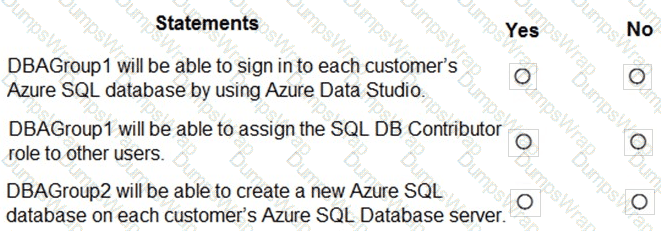
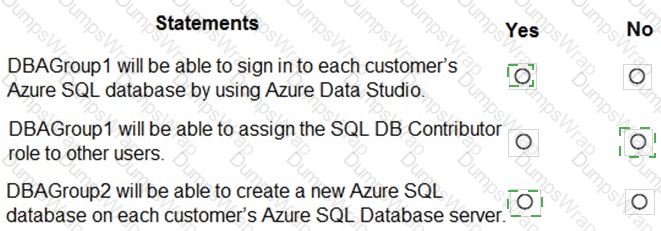
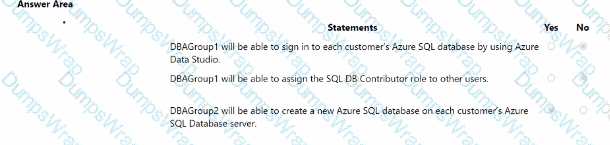
You are evaluating the role assignments.
For each of the following statements, select Yes if the statement is true. Otherwise, select No.
NOTE: Each correct selection is worth one point.
You need to implement the surrogate key for the retail store table. The solution must meet the sales transaction dataset requirements.
What should you create?
You need to design an analytical storage solution for the transactional data. The solution must meet the sales transaction dataset requirements.
What should you include in the solution? To answer, select the appropriate options in the answer area.
NOTE: Each correct selection is worth one point.
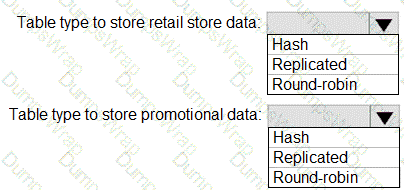
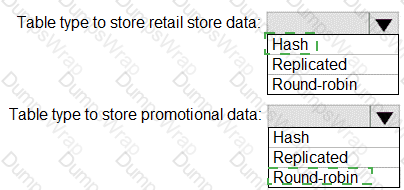
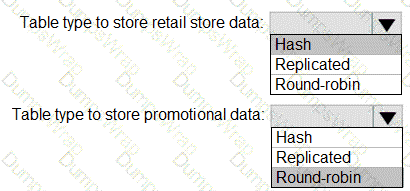
You need to design a data retention solution for the Twitter feed data records. The solution must meet the customer sentiment analytics requirements.
Which Azure Storage functionality should you include in the solution?
You need to recommend a configuration for ManufacturingSQLDb1 after the migration to Azure. The solution must meet the business requirements.
What should you include in the recommendation? To answer, select the appropriate options in the answer area.
NOTE: Each correct selection is worth one point.
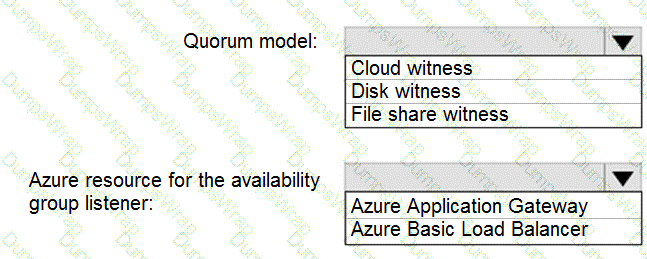
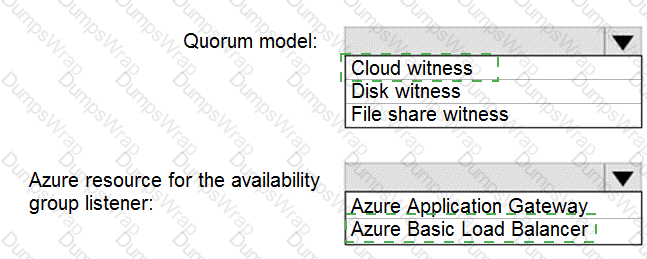
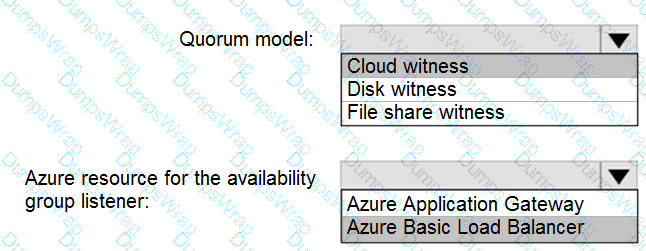
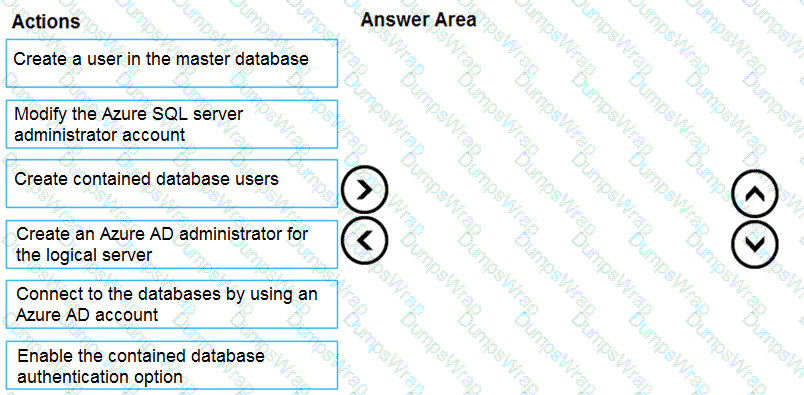
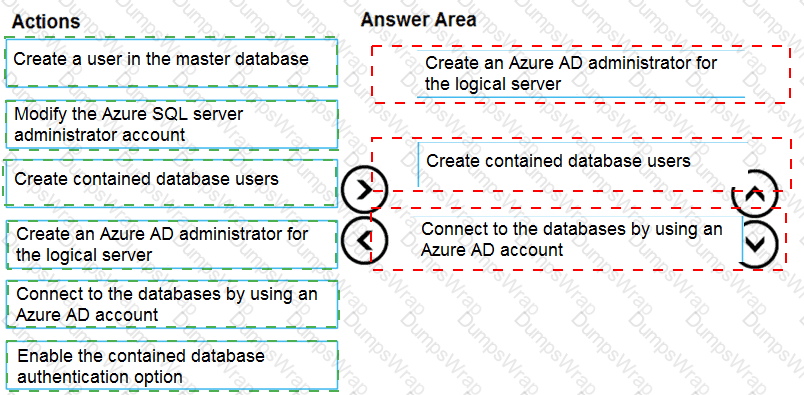
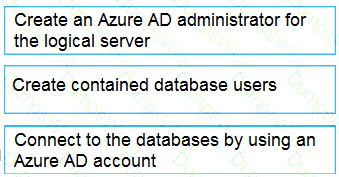
You need to configure user authentication for the SERVER1 databases. The solution must meet the security and compliance requirements.
Which three actions should you perform in sequence? To answer, move the appropriate actions from the list of actions to the answer area and arrange them in the correct order.
You need to identify the cause of the performance issues on SalesSQLDb1.
Which two dynamic management views should you use? Each correct answer presents part of the solution.
NOTE: Each correct selection is worth one point.
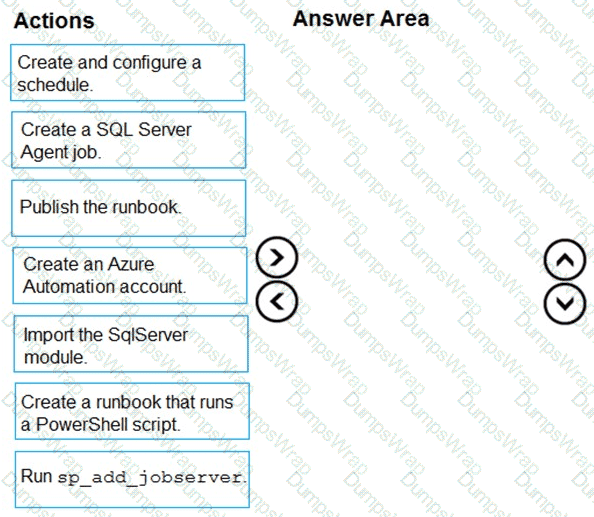
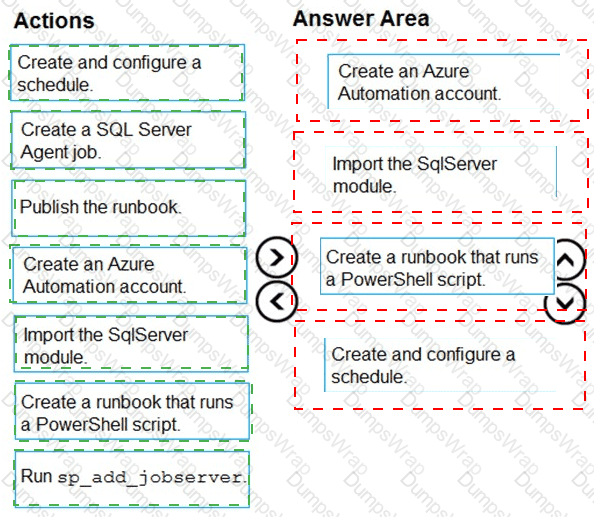
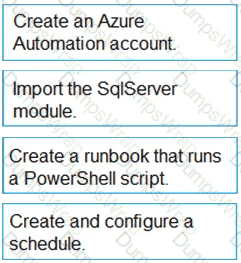
You need to implement statistics maintenance for SalesSQLDb1. The solution must meet the technical requirements.
Which four actions should you perform in sequence? To answer, move the appropriate actions from the list of actions to the answer area and arrange them in the correct order.
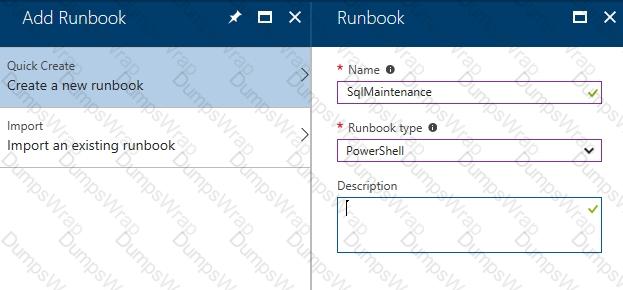
You create all of the tables and views for ResearchDB1.
You need to implement security for ResearchDB1. The solution must meet the security and compliance requirements.
Which three actions should you perform in sequence? To answer, move the appropriate actions from the list of actions to the answer area and arrange them in the correct order.
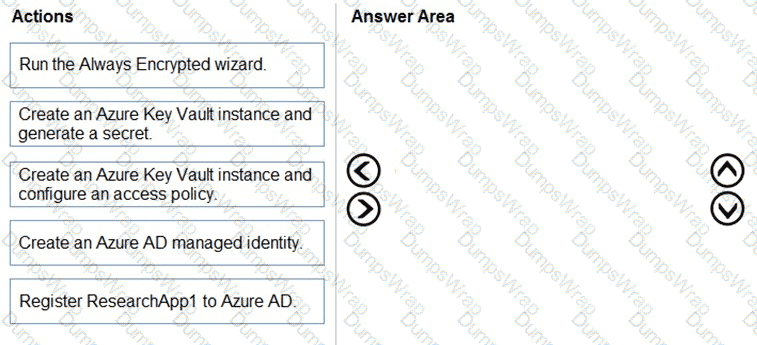
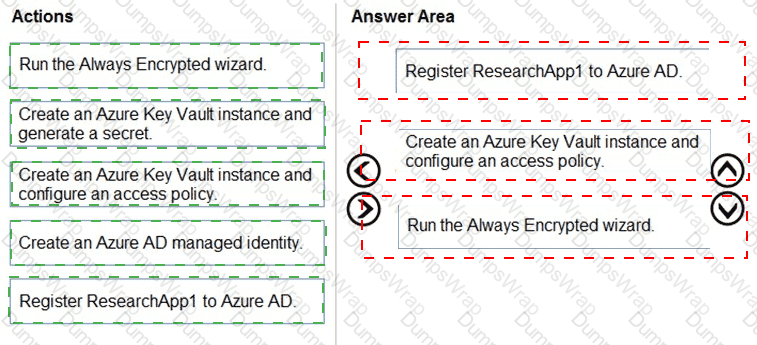
You need to implement authentication for ResearchDB1. The solution must meet the security and compliance requirements.
What should you run as part of the implementation?
You need to recommend a solution to ensure that the customers can create the database objects. The solution must meet the business goals.
What should you include in the recommendation?
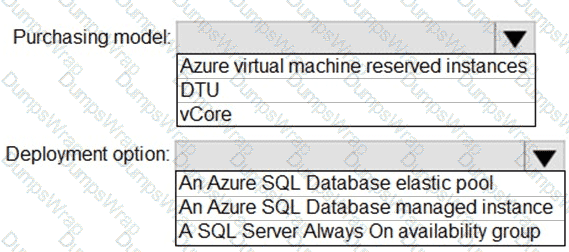
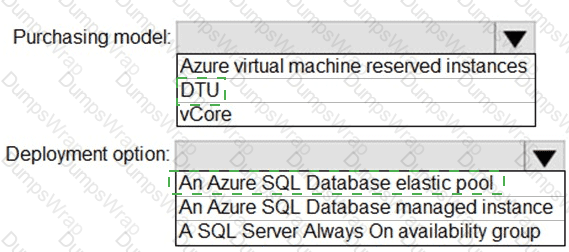
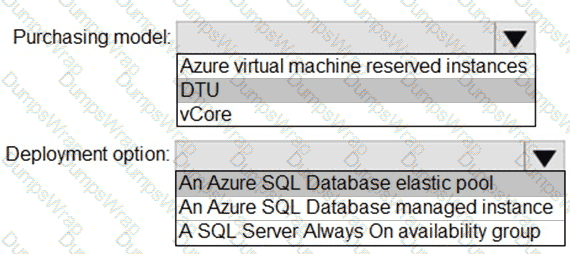
You need to recommend the appropriate purchasing model and deployment option for the 30 new databases. The solution must meet the technical requirements and the business requirements.
What should you recommend? To answer, select the appropriate options in the answer area.
NOTE: Each correct selection is worth one point.
You are evaluating the business goals.
Which feature should you use to provide customers with the required level of access based on their service agreement?
What should you do after a failover of SalesSQLDb1 to ensure that the database remains accessible to SalesSQLDb1App1?
You need to provide an implementation plan to configure data retention for ResearchDB1. The solution must meet the security and compliance requirements.
What should you include in the plan?
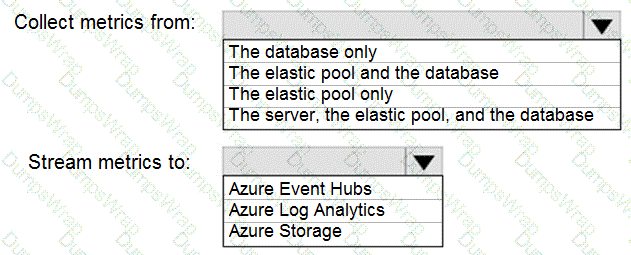
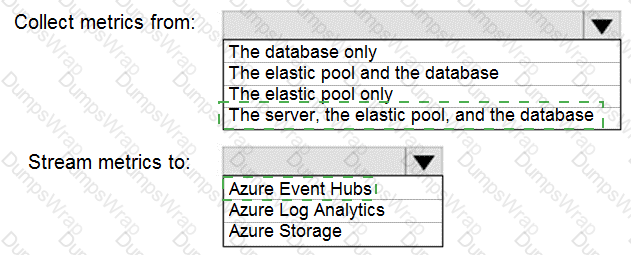
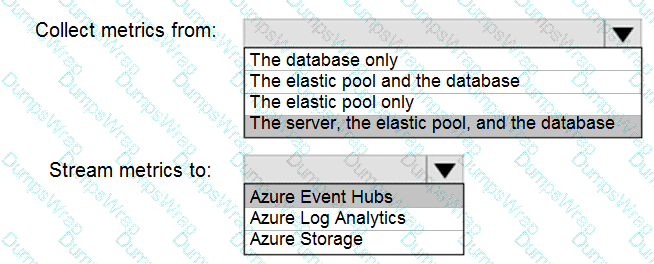
You need to implement the monitoring of SalesSQLDb1. The solution must meet the technical requirements.
How should you collect and stream metrics? To answer, select the appropriate options in the answer area.
NOTE: Each correct selection is worth one point.