
Implementing Data Engineering Solutions Using Azure Databricks Questions and Answers
You have an Azure Databricks workspace that is enabled for Unity Catalog and contains a Delta table named Orders.
You load the Orders table into an Apache Spark DataFrame named df.
You need to create a DataFrame that excludes rows where the order amount is null.
Solution: You run the following expression.
df.filter(df.order_amount.isNotNull())
Does this meet the goal?
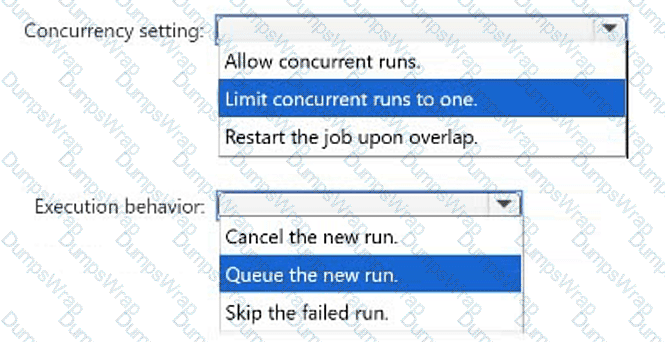
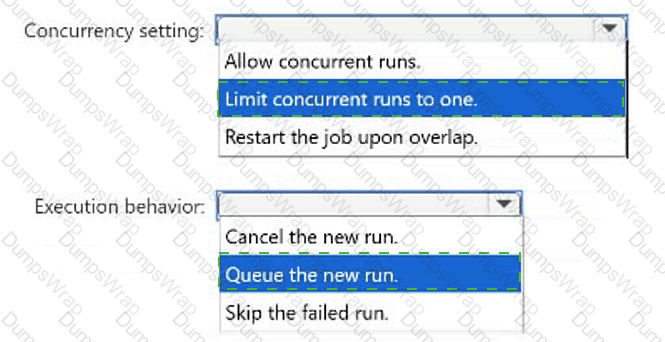
You have an Azure Databricks workspace that contains a job in Lakeflow Jobs named Job1.
Job1 runs every hour.
Occasionally, Job1 takes longer than one hour to complete.
You need to configure the job scheduling behavior to meet the following requirements:
Overlapping runs must be prevented to avoid data corruption.
Scheduled runs must not be discarded when another run is already active.
What should you configure? To answer, select the appropriate options in the answer area.
NOTE: Each correct selection is worth one point.
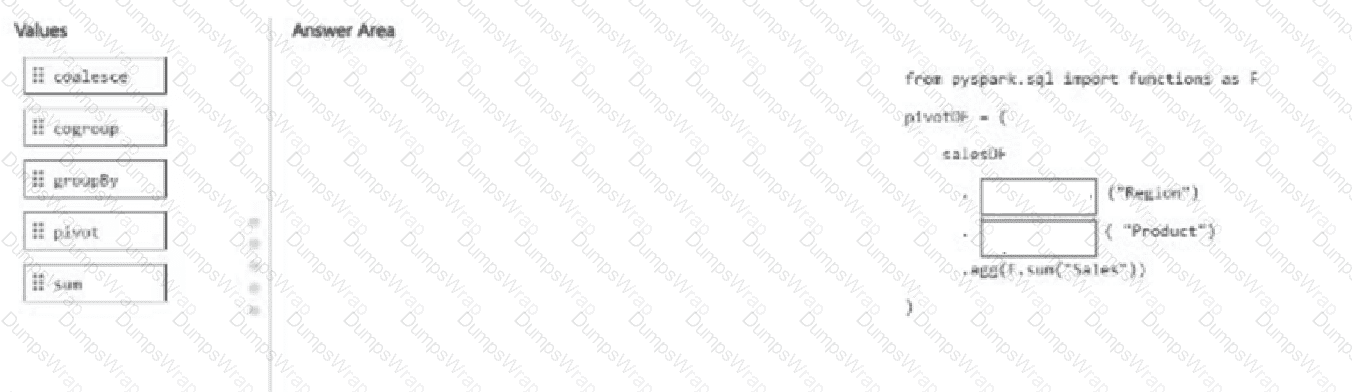
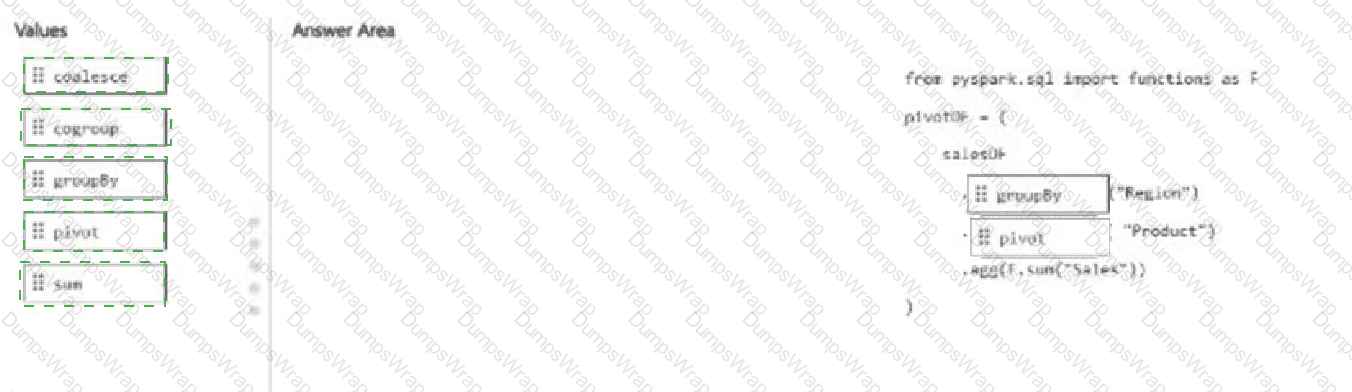
You have an Apache Spark DataFrame named salesDF that contains the following columns:
Product
Region
Sales
Date
You need to create a pivot table that shows the total sales by product for each region.
How should you complete the PySpark code segment? To answer, drag the appropriate values to the correct targets. Each value may be used once, more than once, or not at all. You may need to drag the split bar between panes or scroll to view content.
NOTE: Each correct selection is worth one point.
You have an Azure Databricks workspace that is attached to a Unity Catalog metastore named metastore1. Metastore1 contains a catalog named catalog 1.
You need to create a new schema named schema2 that meets the following requirements:
• Is contained in catalog1
• Uses abfss://containergstorageaccount.dfs.core.windows.net/data as the Managed location
Which SQL statement should you execute?
You have an Azure Databricks workspace that is enabled for Unity Catalog.
You plan to create a job in Lakeflow Jobs named Job1 that:
• Ingests data from cloud storage
• Runs two independent transformation tasks
The transformation tasks must run only after the ingestion completes and must run in parallel.
You need to design the task logic for Job1.
What should you configure?
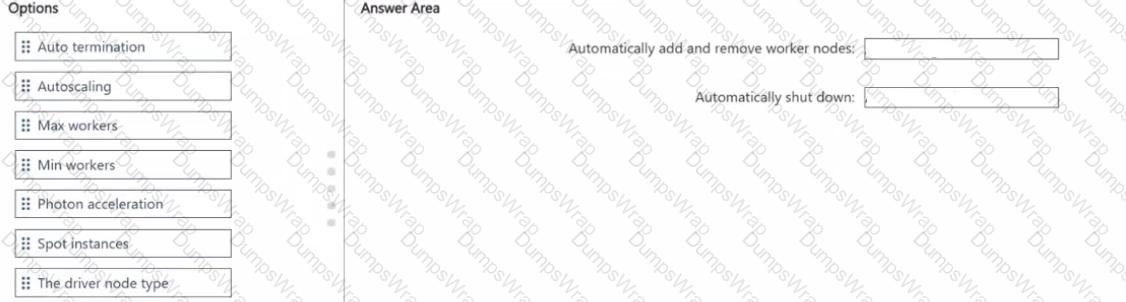
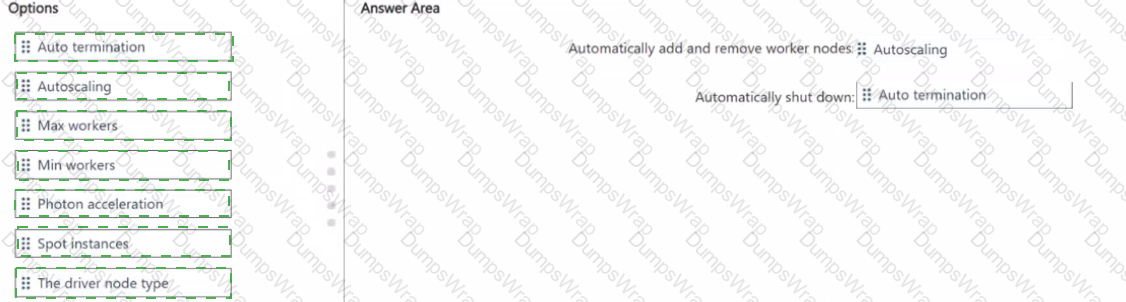
You have an Azure Databticks workspace that contains an all-purpose compute cluster named Cluster1. Cluser1 is used for
interactive development.
You need to configure Cluster1 to meet the following requirements:
• Automatically add and remove worker nodes based on workload demand
• Automatically shut down when the cluster has been idle for a specific period.
What should you configure for each requirement? To answer, drag the appropriate options to the correct requirements. Each option may be used once, more than once, or not at all. You may need to drag the split bar between panes or scroll to view content
NOTE: Each correct selection is worth one point.
You need to configure resiliency for a job in Lakeflow Jobs named Job1 to meet the pipeline deployment and operation requirements.
What should you do?
You manage Declarative Automation Bundles by using the Databricks CLI.
You run the following command in a terminal window.
databricks bundle init
What occurs when you run the command?
You have an Azure Databricks workspace that is enabled for Unity Catalog and contains a Delta table named Sales_orders. Sales.orders stores historical sales data.
You receive a daily CSV file daily that contains new sales records only. The file does NOT contain updates to existing rows You need to load the daily data into Sales.orders. The solution must meet the following requirements:
• Preserve the existing data.
• Add only the new records.
• Minimize processing effort.
Which command should include in the loading strategy?
You have an Azure Databricks workspace that contains a job in Lakeflow Jobs named Job1.
Job1 processes raw data files stored in Azure Storage.
New files arrive at unpredictable intervals.
You need to ensure that Job1 starts automatically when new files arrive and does NOT consume compute resources when no data is available.
Which type of job trigger should you use?
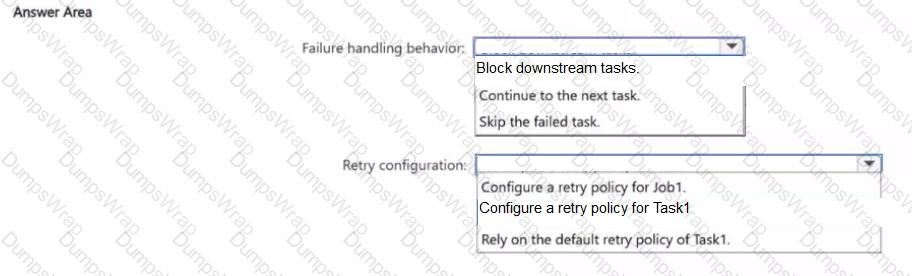
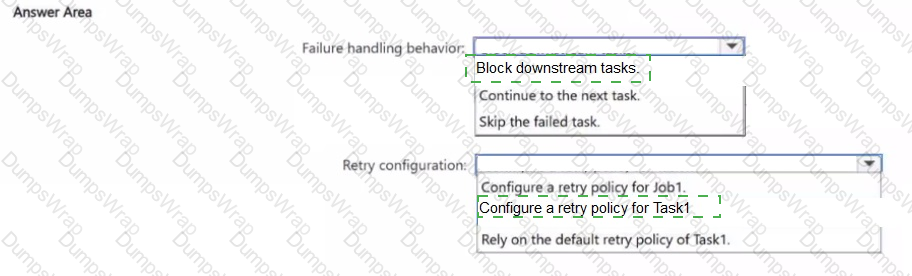
You have an Azure Databricks job named Job1 that contains an ingestion task named Task1 and transformation task named Task2. You need to ensure that if Task1 fails, the task retries automatically, and Task2 is prevented from running How should you configure Job1? To answer, select the appropriate options in the answer area.
NOTE: Each correct selection is worth one point.
You have an Azure Databricks workspace that uses Unity Catalog.
You have a Lakeflow Spark Declarative Pipelines (SDP) pipeline that ingests data into a managed Delta table named Table1. Table1 is used for analytics.
New columns are added to the source data, causing pipeline failures during writes to Table1.
You need to prevent the pipeline failures. The solution must ensure that schema changes are detected and handled.
What should you do?
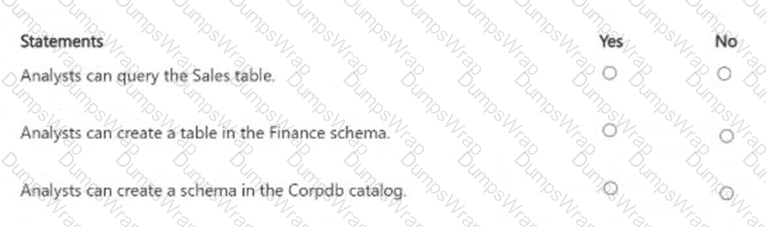
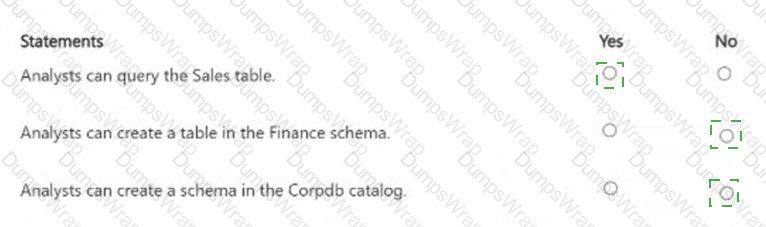
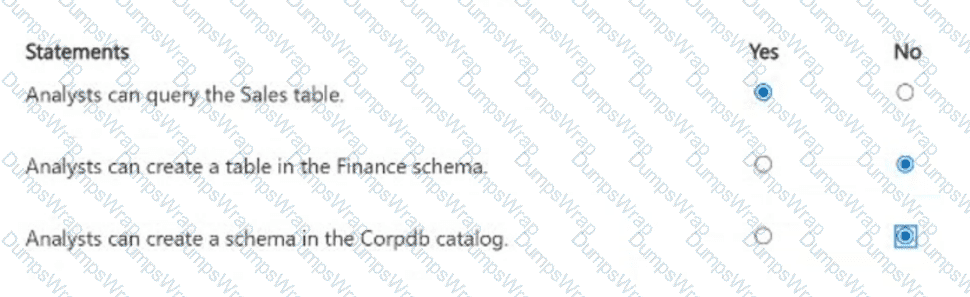
You have an Azure Databricks workspace that is enabled for Unity Catalog and contains:
A catalog named Corpdb
A schema named Finance in the Corpdb catalog
A table named Sales in the Finance schema
You have a group named Analysts.
You assign the following permissions to Analysts:
USE CATALOG on the Corpdb catalog
USE SCHEMA on the Finance schema
SELECT on the Sales table
For each of the following statements, select Yes if the statement is true. Otherwise, select No.
NOTE: Each correct selection is worth one point.
You have an Azure Databricks workspace that contains the objects shown in the following table.
Name | Type
Catalog1 | Catalog
Schema1 | Schema
Sales1 | Table
Notebook1 | Notebook
Space1 | AI/BI Genie space
Users often use the following words to refer to a sale: transaction, event, order, and invoice.
You need to create a knowledge store. The solution must ensure that when the users use any of the words in Space1, Genie queries the Sales1 table. Any other Genie spaces must remain unaffected.
To which object should you add the instructions?
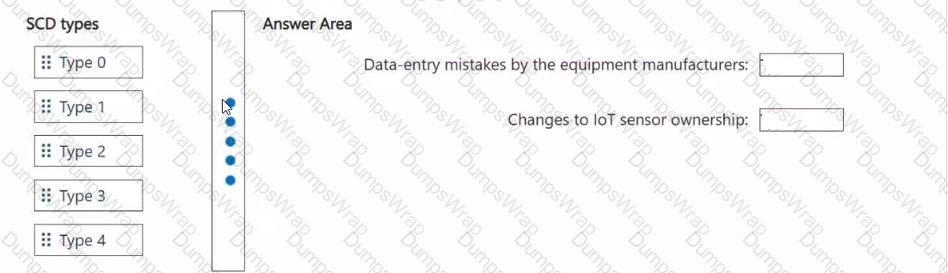
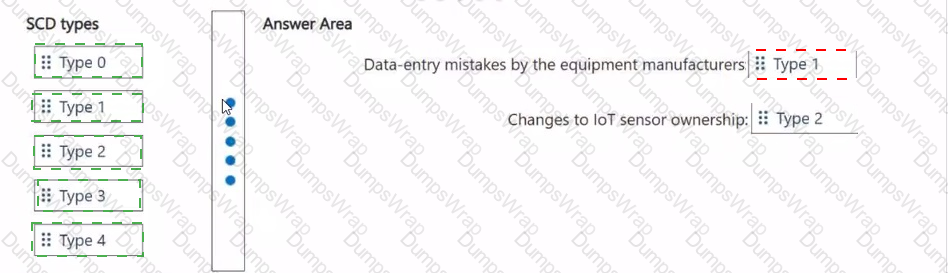
Which SCD type should you use to support the planned data modeling changes? To answer, drag the appropriate types to the correct issues. Each type may be used once, more than once, or not at all. You may need to drag the split bar between panes or scroll to view content.
NOTE: Each correct selection is worth one point.
You need to configure compute for the ingestion of telemetry data. The solution must meet the data ingestion and processing requirements.
What should you do?
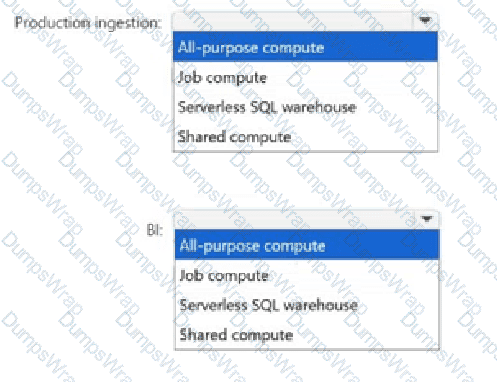
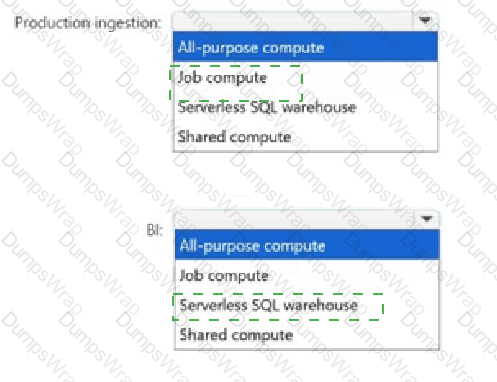
You need to recommend a compute type for the production ingestion workloads and BI workloads. The solution must meet the environment and compute requirements.
What should you recommend for each type of workload? To answer, select the appropriate options in the answer area.
NOTE: Each correct selection is worth one point.
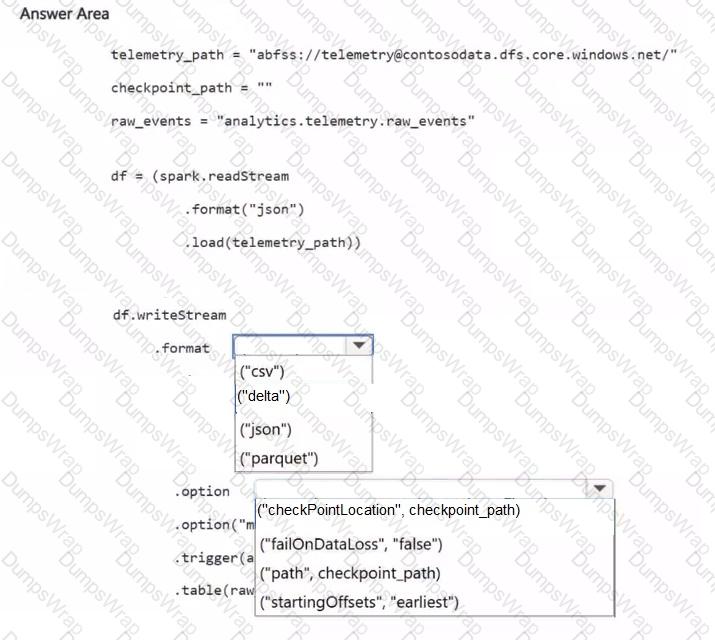
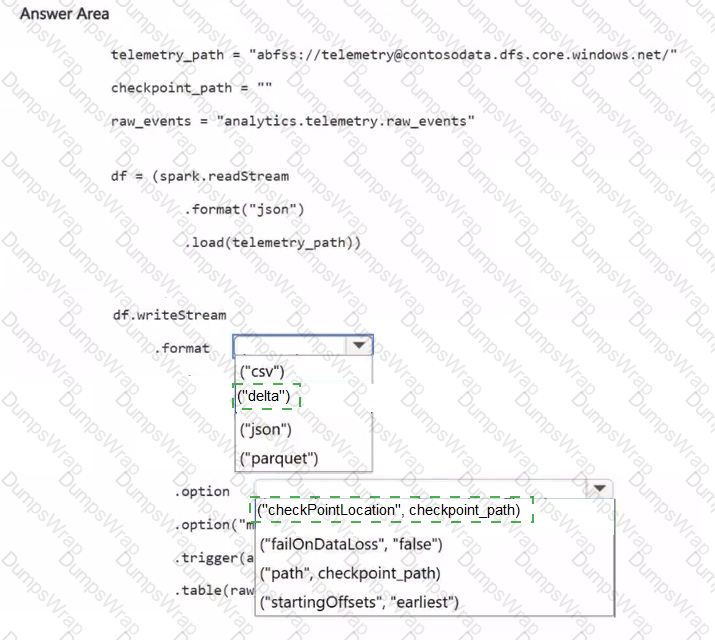
You need to complete the PySpark code for the Spark Structured Streaming pipelines. The solution must meet the data ingestion and processing requirements.
How should you complete the code segment? To answer, select the appropriate options in the answer area.
NOTE: Each correct selection is worth one point.
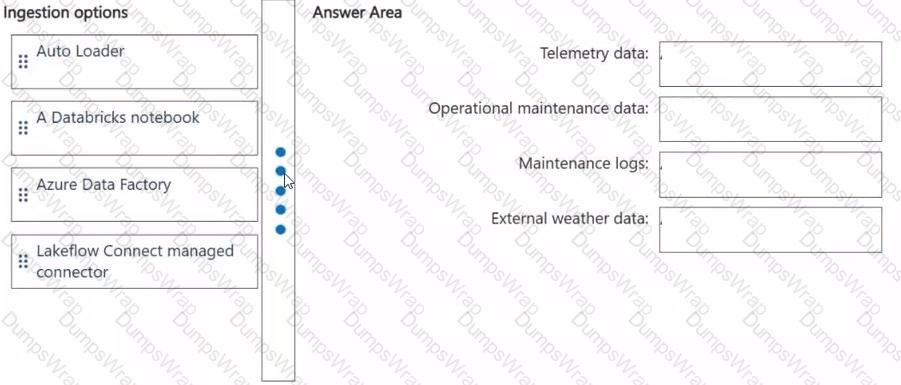
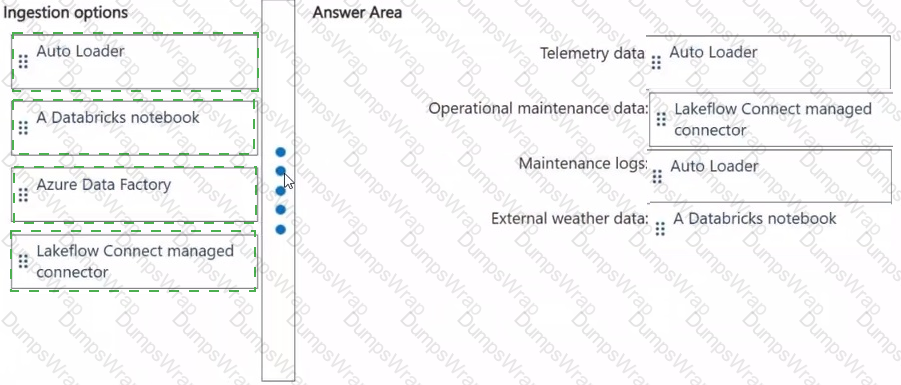
Which ingestion option should you recommend for each data source? To answer, drag the appropriate options to the correct data sources. Each option may be used once, more than once, or not at all. You may need to drag the split bar between panes or scroll to view content.
NOTE: Each correct selection is worth one point.
You need to develop the task logic for a new job in Lakeflow Jobs that processes telemetry data.
Each task must contain only the appropriate logic for its step in the pipeline. The solution must support the planned changes and meet the data ingestion and processing requirements.
What should you do?
