
Netskope Certified Cloud Security Integrator (NCCSI) Questions and Answers
With Netskope DLP, which feature would be used to detect keywords such as " Confidential " or " Access key " ?
What are three methods to deploy a Netskope client? (Choose three.)
Review the exhibit.
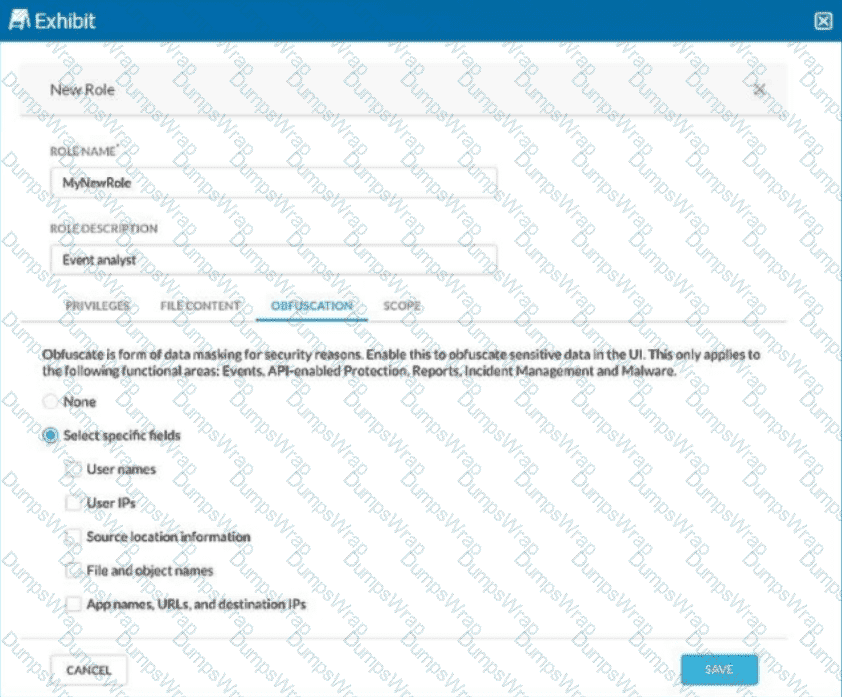
You are asked to create a new role that allows analysts to view Events and Reports while providing user privacy. You need to avoid directly exposing identities and user location information.
Which three fields must you obfuscate in this scenario? (Choose three.)
Review the exhibit.
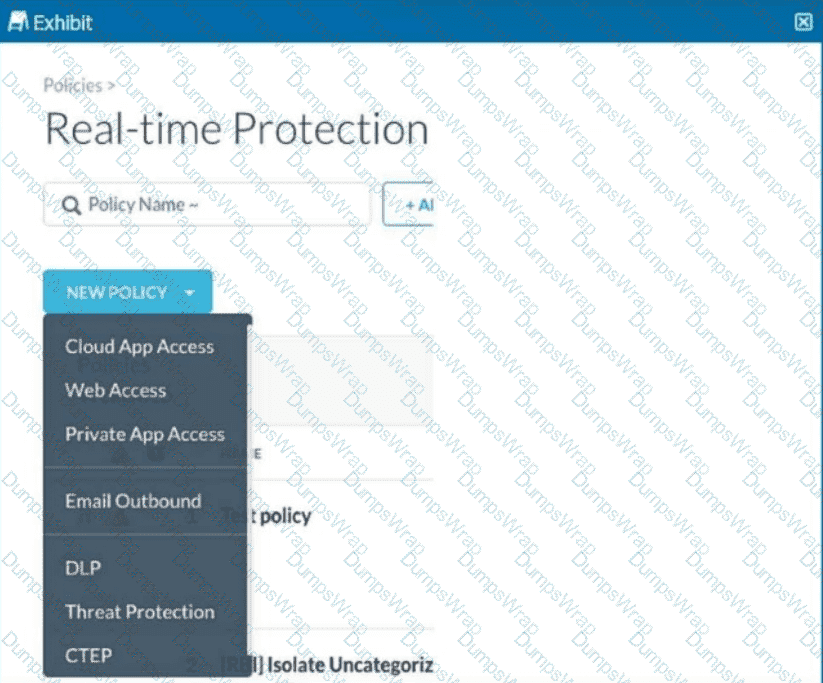
You are asked to create a new Real-time Protection policy to scan SMTP emails using data loss prevention (DLP) for personal health information (PHI). The scope is limited to only emails being sent from Microsoft Exchange Online to outside recipients.
You are implementing tenant access security and governance controls for privileged users. You want to start with controls that are natively available within the Netskope Cloud Security Platform and do not require external or third-party integration.
Which three access controls would you use in this scenario? (Choose three.)
Your organization has three main locations with 30.000 hosts in each location. You are planning to deploy Netskope using iPsec tunnels for security.
What are two considerations to make a successful connection in this scenario? (Choose two.)
Review the exhibit.
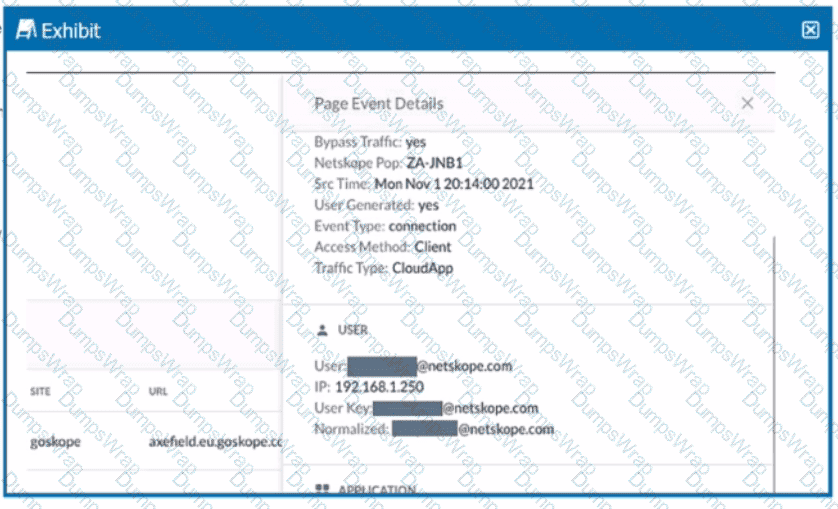
You are asked to restrict users from accessing YouTube content tagged as Sport. You created the required real-time policy; however, users can still access the content
Referring to the exhibit, what is the problem?
Deploying the Netskope Client using IdP requires which two prerequisites? (Choose two.)
You are troubleshooting an issue with Microsoft where some users complain about an issue accessing OneDrive and SharePoint Online. The configuration has the Netskope client deployed and active for most users, but some Linux machines are routed to Netskope using GRE tunnels. You need to disable inspection for all users to begin troubleshooting the issue.
In this scenario, how would you accomplish this task?
You want the ability to perform automated remediation of misconfigurations on GitHub, Microsoft 365, Salesforce, ServiceNow, and Zoom.
Review the exhibit.
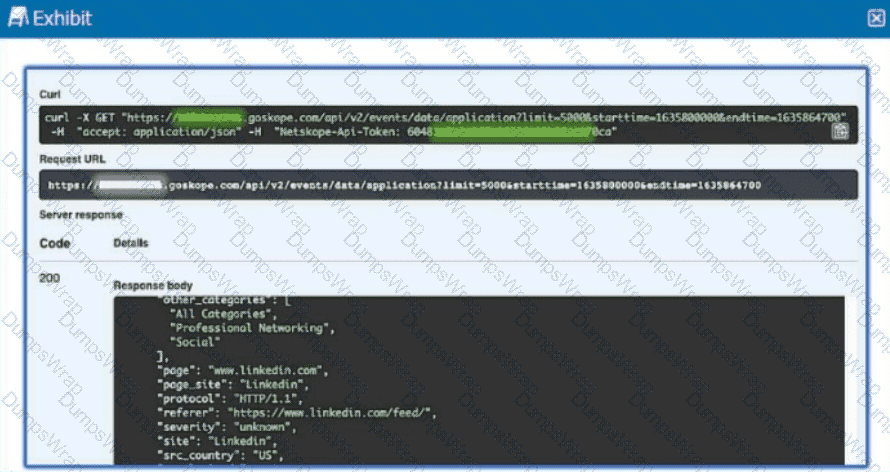
Referring to the exhibit, which three statements are correct? (Choose three.)
Your customer has deployed the Netskope client to secure their Web traffic. Recently, they have enabled Cloud Firewall (CFW) to secure all outbound traffic for their endpoints. Through a recent acquisition, they must secure all outbound traffic at several remote offices where they have access to the local security stack (routers and firewalls). They cannot install the Netskope client.
An engineering firm is using Netskope DLP to identify and block sensitive documents, including schematics and drawings. Lately, they have identified that when these documents are blocked, certain employees may be taking screenshots and uploading them. They want to block any screenshots from being uploaded.
Which feature would you use to satisfy this requirement?
A company allows their users to access OneDrive on their managed laptops. It is against corporate policy to upload any documents to their personal OneDrive. The company needs to enforce this policy to protect their customer’s sensitive data.
What are two ways to enforce this policy? (Choose two.)
The risk team at your company has determined that traffic from the sales team to a custom Web application should not be inspected by Netskope. All other traffic to the Web application should continue to be inspected. In this scenario, how would you accomplish this task?
You are troubleshooting private application access from a user ' s computer. The user is complaining that they cannot access the corporate file share; however, the private tunnel seems to be established. You open the npadebuglog.log file in a text editor and cannot find any reference to the private application.
You are provisioning Netskope users from Okta with SCIM Provisioning, and users are not showing up in the tenant. In this scenario, which two Netskope components should you verify first In Okta for accuracy? (Choose two.)
Review the exhibit.
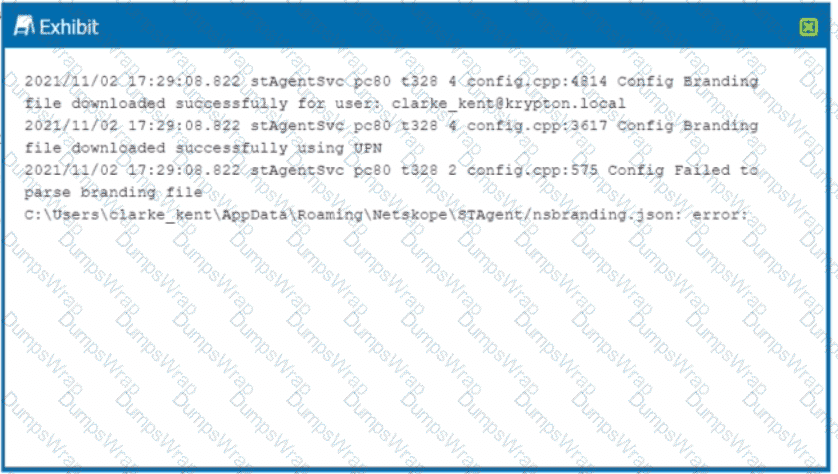
You receive a service request from a user who indicates that their Netskope client is in a disabled state. The exhibit shows an excerpt (rom the affected client nsdebuglog.log.
What is the problem in this scenario?
Your company wants to deploy Netskope using a tunnel because you have a mixture of device operating systems. You also do not want to enable encryption because you want to maximize bandwidth.
A city uses many types of forms, including permit applications. These forms contain personal and financial information of citizens. Remote employees download these forms and work directly with the citizens to complete them. The city wants to be able to identify and monitor the specific forms and block the employees from downloading completed forms.
Which feature would you use to accomplish this task?
Review the exhibit.
add log-upload syslogng parserconfig set log-upload syslogng parserconfig 0
logsource < log-source >
You are asked to deploy a virtual appliance OPLP to accept syslog messages directly from the enterprise Palo Alto Networks firewall. You believe that you have configured the OPLP to accept the firewall logs, yet they are not appearing in Risk Insights. Referring to the exhibit, which parser name would be required to complete the new configuration?
After setting up the Netskope client in an explicit proxy environment, the Netskope client establishes the SSL tunnel between the client and the Netskope gateway. The client cannot connect directly through the default gateway to establish the SSL tunnel. In this scenario, what needs to be done for the client to connect to the Netskope gateway?
A customer wants to deploy the Netskope client on all their employee laptops to protect all Web traffic when users are working from home. However, users are required to work from their local offices at least one day per week. Management requests that users returning to the office be able to transparently leverage the local security stack without any user intervention.
Which two statements are correct in this scenario? (Choose two.)
You notice that your Netskope client icon has a red dot and see " Disabled due to error " when hovering the mouse over the icon. What are two reasons for this message? (Choose two.)
Your IT organization is migrating its user directory services from Microsoft Active Directory to a cloud-based Identity Provider (IdP) solution, Azure AD. You are asked to adapt the Netskope user provisioning process to work with this new cloud-based IdP.
You are having issues with fetching user and group Information periodically from the domain controller and posting that information to your tenant instance in the Netskope cloud. To begin the troubleshooting process, what would you Investigate first in this situation?
You are preparing to deploy Netskope at your company. Users will be 100% remote but are required to deploy the Netskope client to access any company resources. Management wants to ensure that the Netskope client cannot be installed by users outside of the company. In this scenario, how do you ensure that the correct users get connected to Netskope?
Your company has Microsoft Azure ADFS set up as the Identity Provider (idP). You need to deploy the Netskope client to all company users on Windows laptops without user intervention.
In this scenario, which two deployment options would you use? (Choose two.)
