
VMware Certified Advanced Professional - VMware Cloud Foundation 9.0 Networking Questions and Answers
An administrator must provide North/South connectivity for a VPC. The fabric exposes a distributed external VLAN across all ESX hosts. But, the only BGP peer to the core is on a VLAN only accessible on the Edge Cluster. Which design is required?
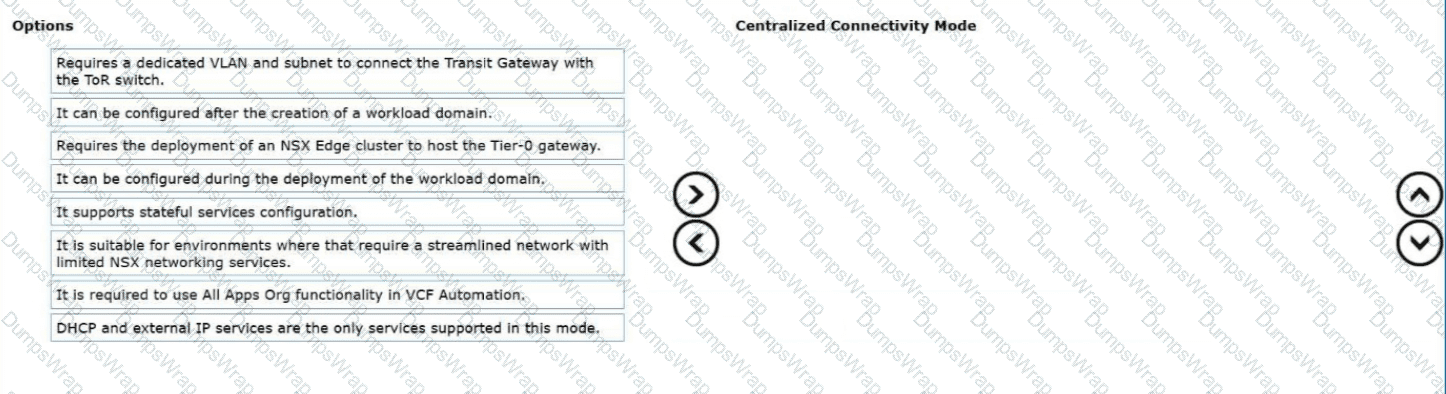
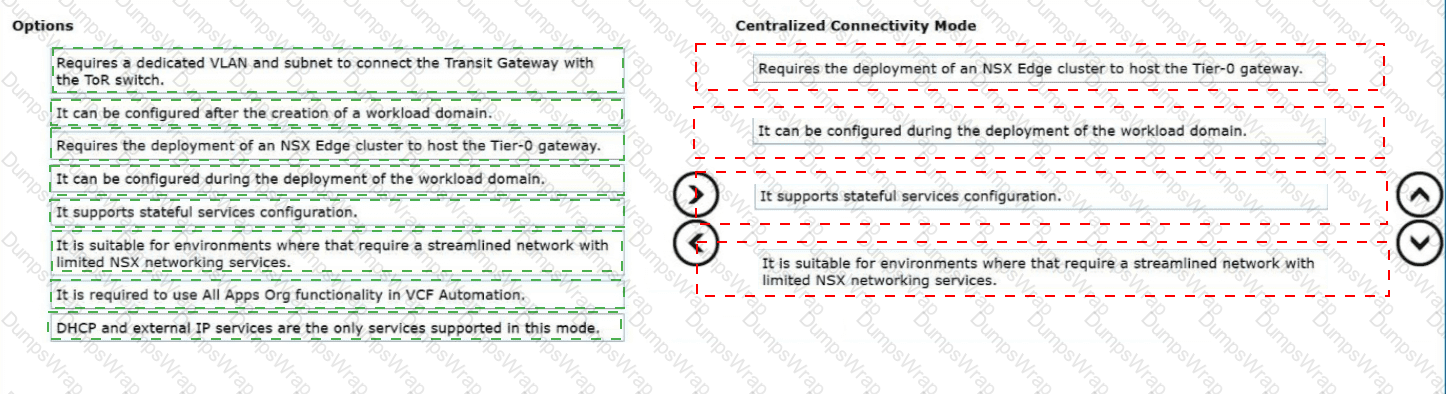
An administrator was asked to explain the characteristic and requirements of Centralized Connectivity Mode which is planned to be configured in one of the workload domains in
VMware Cloud Foundation (VCF) environment.
Drag and drop four options from the Options list on the left and place them into the Centralized Connectivity Mode on the right in any order. (Choose four.)
Which two requirements are part of the registration process for Local Manager (LM) to a Global Manager (GM) in NSX for centralized management of network and security services across different workload domains deployed in separate locations? (Choose two.)
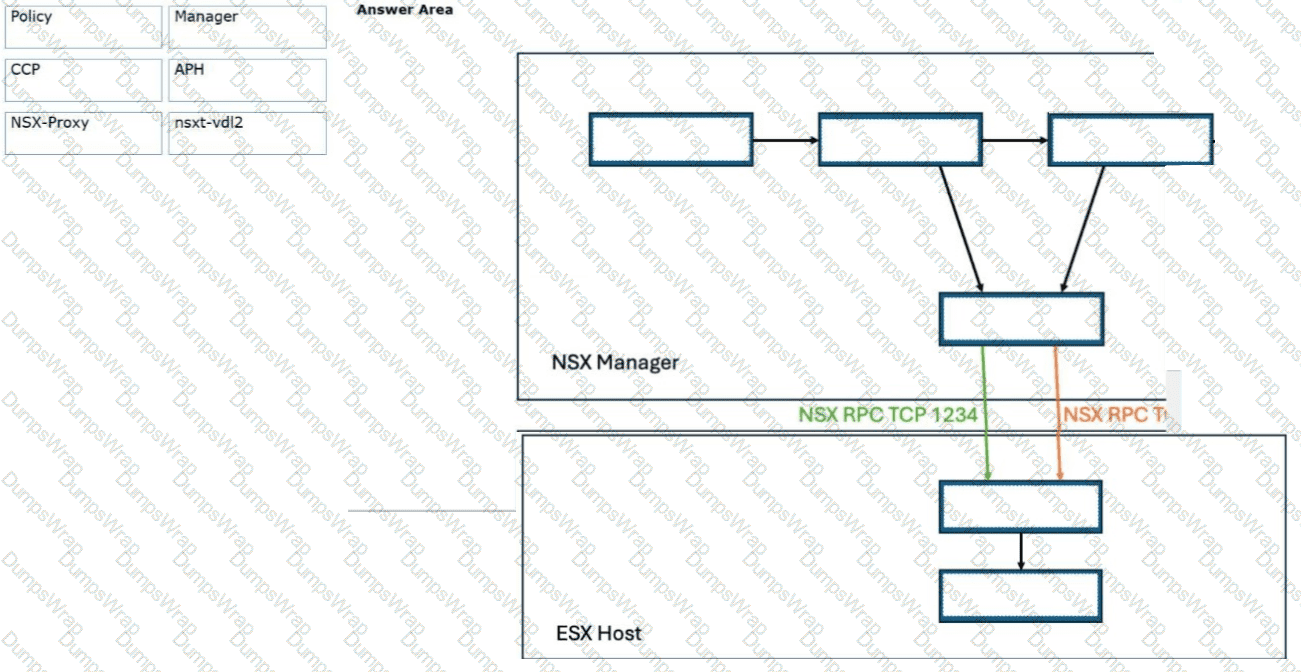
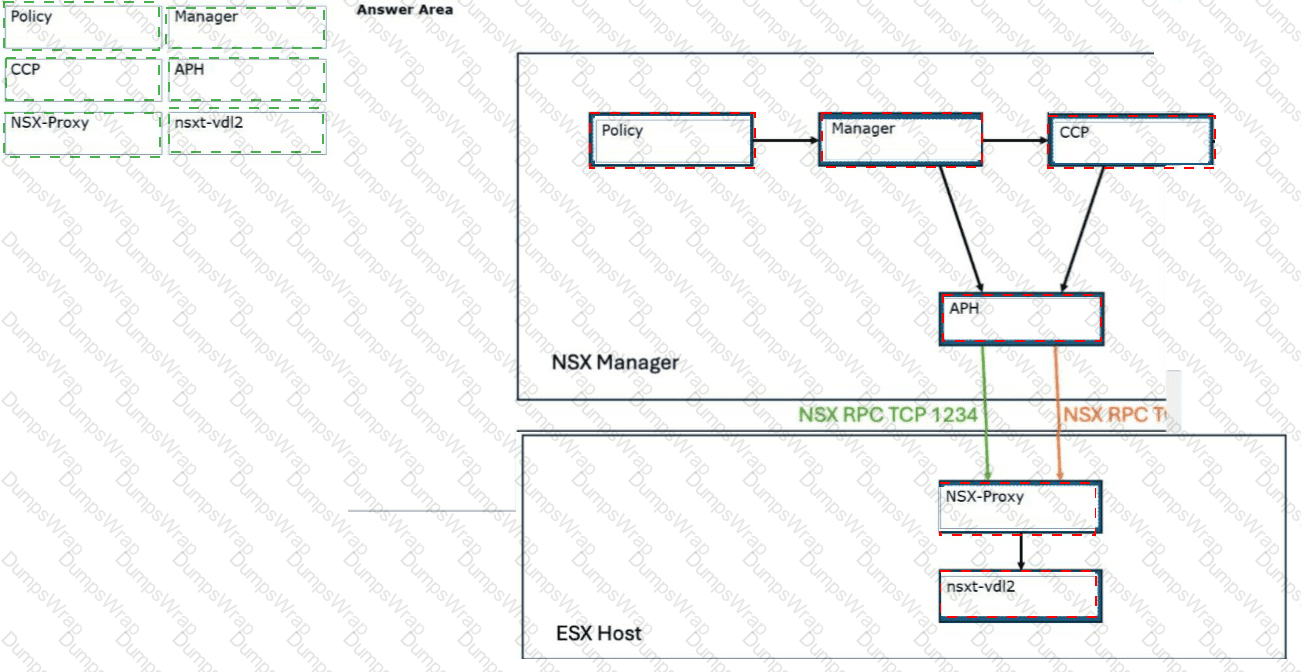
An administrator is creating NSX segments in an environment. The NSX segment on an ESX Host is not realized. To troubleshoot the issue, the administrator needs to track
the communication of components in the environment.
Drag and drop the component to the appropriate location in the diagram to track the path from desired state to completed state.
When using a DHCP Relay on a segment, which design restriction must be considered?
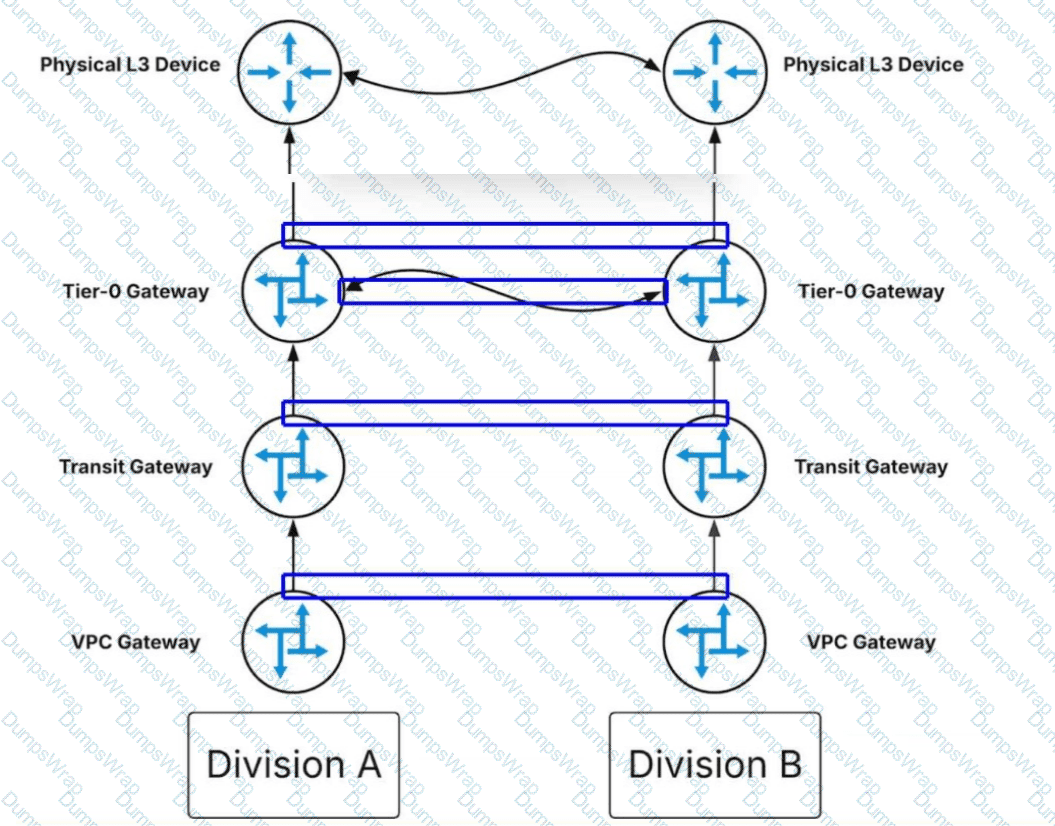
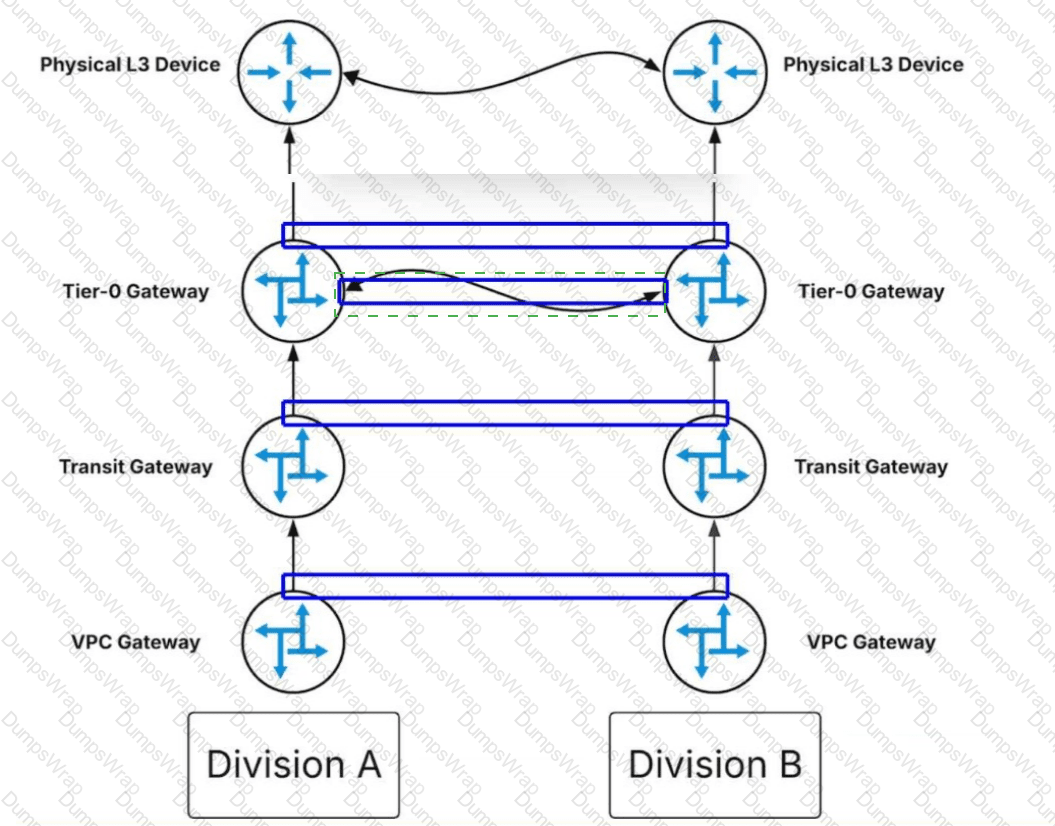
An administrator implements route leaking between the Tier-0 gateways to enhance east/west communication because the physical L3 devices are oversubscribed.
Where should route-maps be configured based on the architecture observed in the diagram?
An administrator has observed an NSX Local Manager (LM) outage at the secondary Site. However, the NSX Global Manager (GM) in secondary Site remains operational. What happens to data plane operations and policy enforcement at the secondary site?
An administrator has deployed a new VMware Cloud Foundation (VCF) management domain. To be compliant with company policy, backups must be configured to occur anytime a change is made to the NSX configuration. How can the administrator ensure that complete configuration backups are captured every time a change occurs?
An administrator has a standalone vSphere 8.0 Update 1a deployment that is running with VMware NSX 4.1.0.2 and has to converge the deployment into a new VMware Cloud Foundation (VCF) instance. How can the administrator accomplish this task?
An architect is designing a VMware Cloud Foundation (VCF) solution. The following information was gathered during the assessment phase:
• There is a critical application used by the Finance Team.
• The critical application has an availability and recoverability SLA of 99.999%.
• The critical application is sensitive to network changes.
Which two configurations should the architect include in their design? (Choose two.)
Which of the following statements is true when configuring Remote Tunnel End Points (RTEPs) with NSX Federation?
An administrator is troubleshooting intermittent connectivity failures between two workloads connected to NSX VLAN segments using Traceflow. In-band Network Telemetry (INT) has been enabled in the NSX Global Configuration. How does Traceflow identify issues in a VLAN network?
An administrator is troubleshooting why workloads in NSX cannot reach the external network 10.100.0.0/16. The Tier-0 Gateway is in Active/Active mode and has the following configuration:
• Uplink-1 (VLAN 100): 192.168.100.0/24 -> router R1 at 192.168.100.1
• Uplink-2 (VLAN 101): 192.168.101.0/24 -> router R2 at 192.168.101.1
• A static route for 10.100.0.0/16 was added with both next-hops (192.168.100.1 and 192.168.101.1).
• The Scope of this route is set to Uplink-1.
Symptoms:
• Virtual Machines (VMs) cannot reach 10.100.0.0/16
• Traceroute from the VM stops at the Tier-0 gateway with "Destination Net Unreachable"
• Pings from the Edge nodes to both 192.168.100.1 and 192.168.101.1 are success
What explains why workloads in NSX cannot reach the external network?
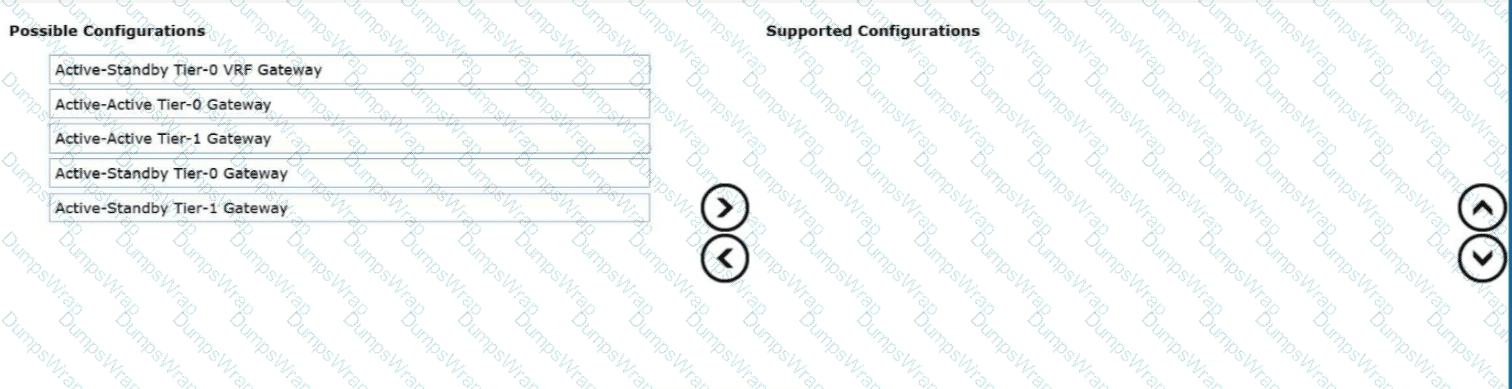
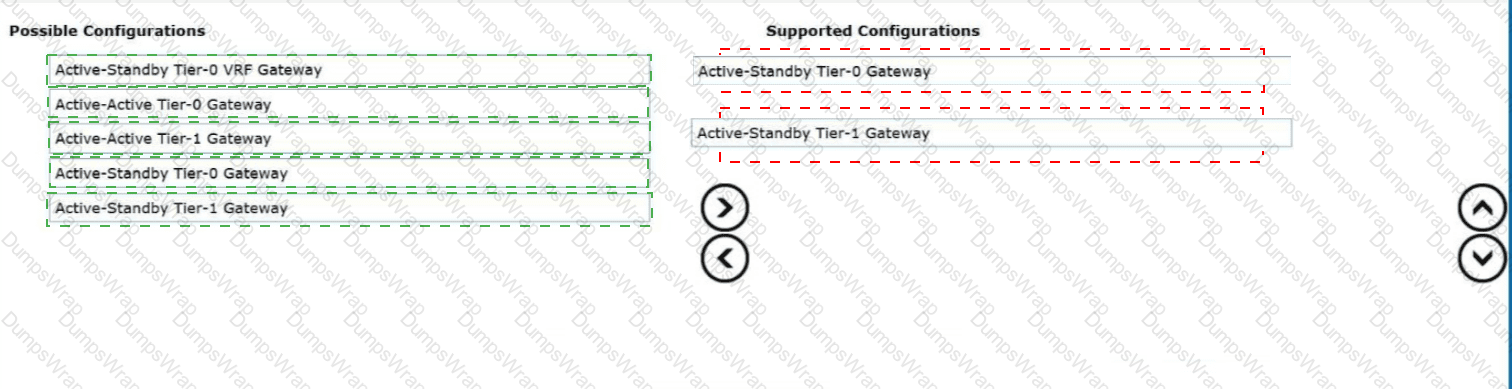
An administrator is responsible for the management of a VMware Cloud Foundation (VCF) Fleet that consists of two VCF instances that are located in different physical locations. The administrator has been tasked with configuring a VPN between the two locations and has been tasked with identifying the two supported NSX Gateway configurations for an IPSec VPN. Drag and drop two items from the list of Possible Configurations into the list of Supported Configurations in any order.(Choose two.)
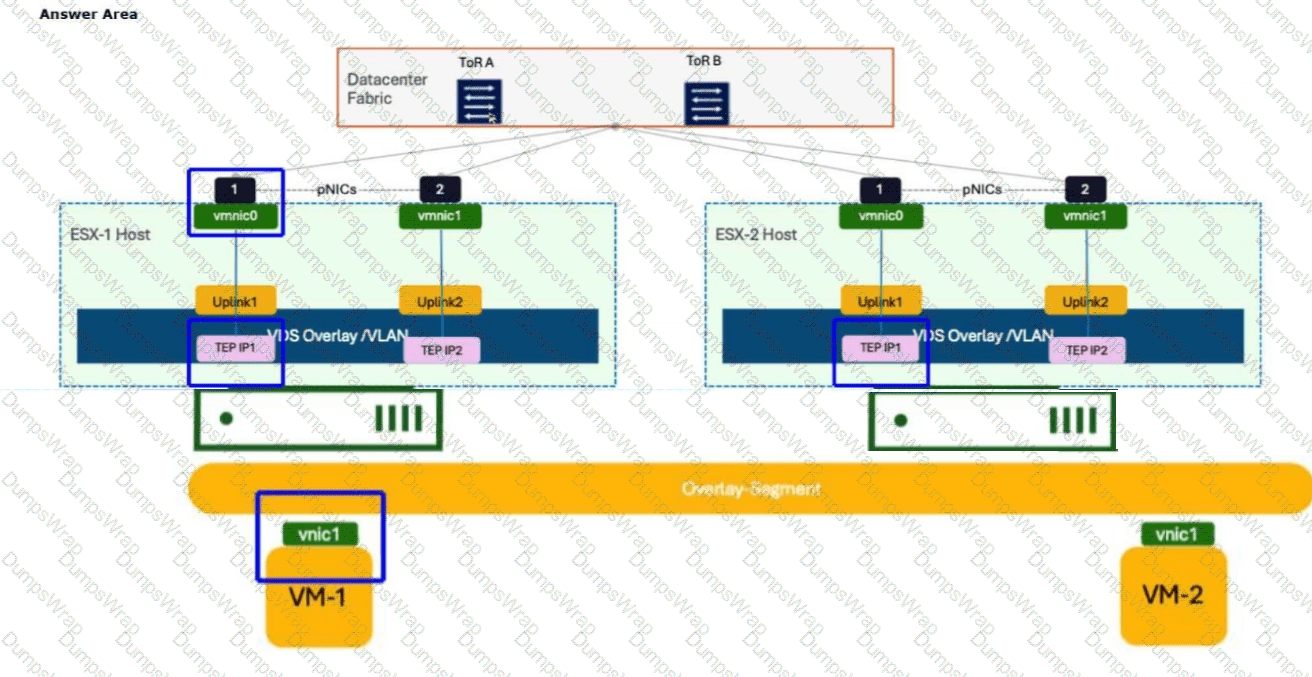
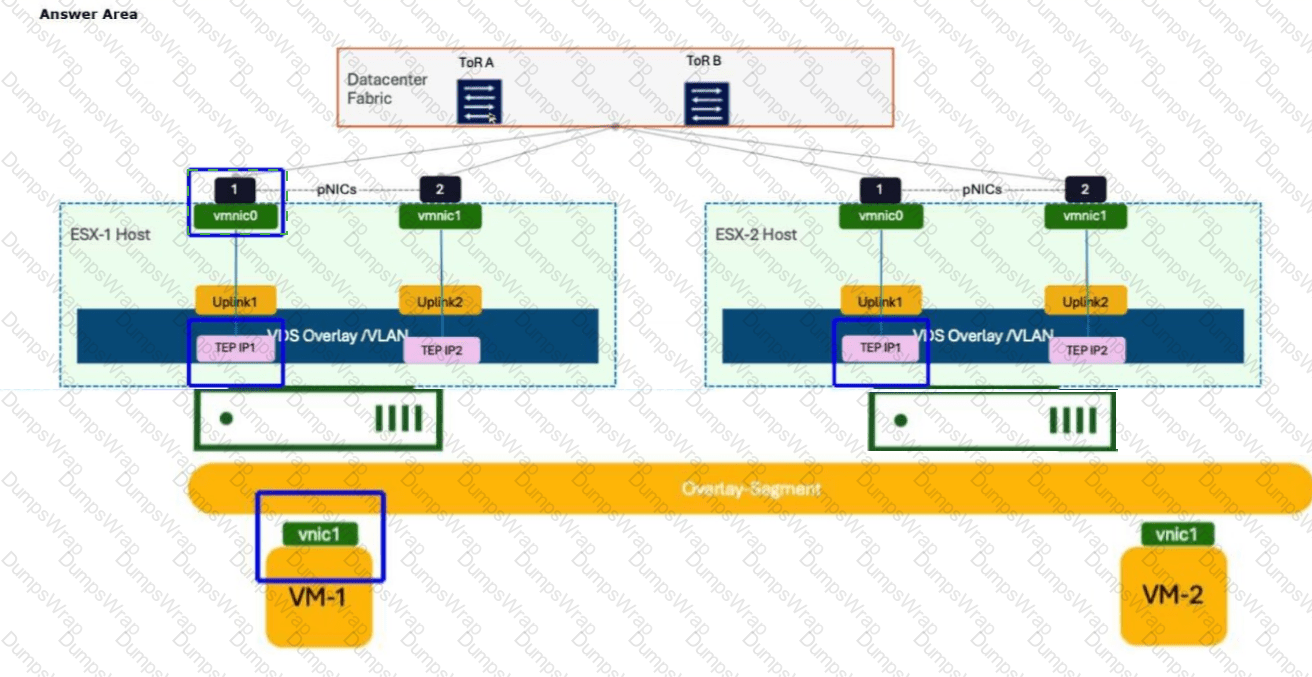
The administrator is working to ascertain the encapsulation of GENEVE by reviewing the capture on Wireshark.
The administrator instructed VM-1 to send a continuous ICMP request directed at VM-2.
Click to highlight where the administrator should observe the GENEVE encapsulated packet.
How should the Global Managers (GMs) and Local Managers (LMs) be distributed to ensure high availability and optimal performance in a multi-site NSX Federation deployment comprised of three sites? (Choose two.)
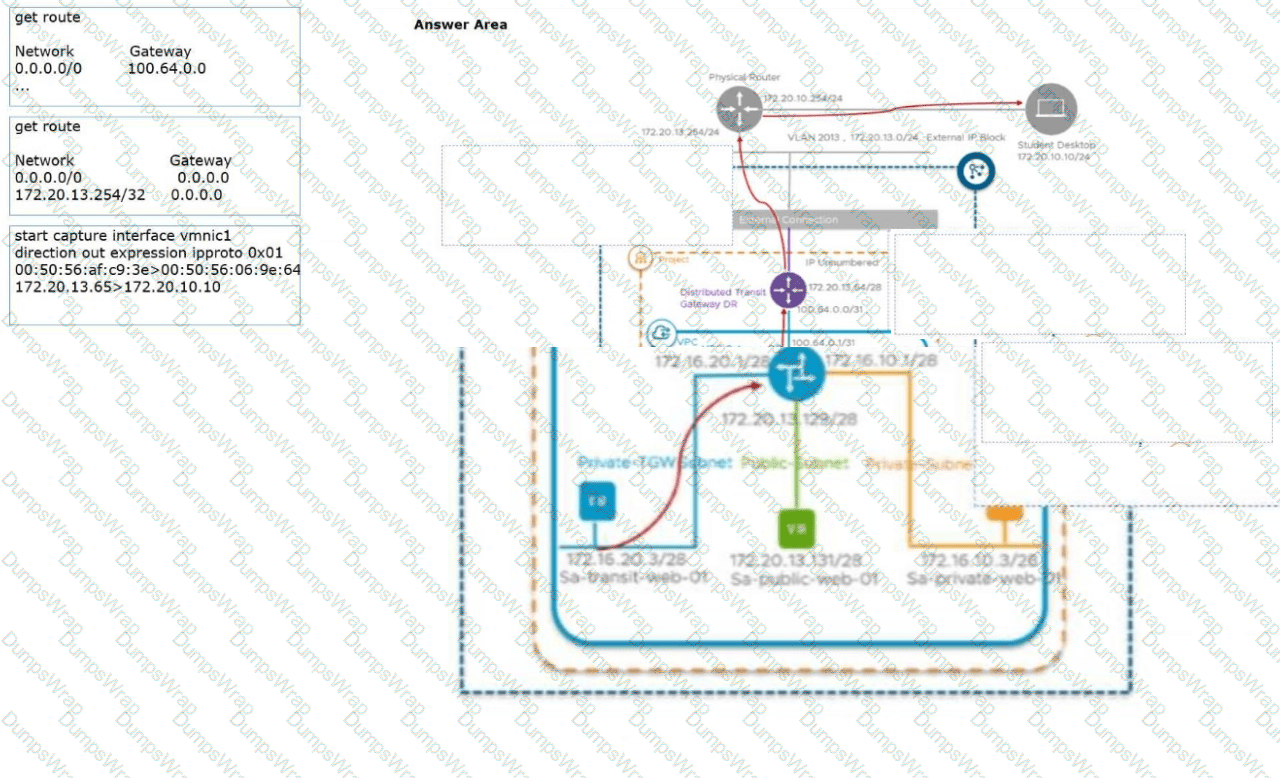
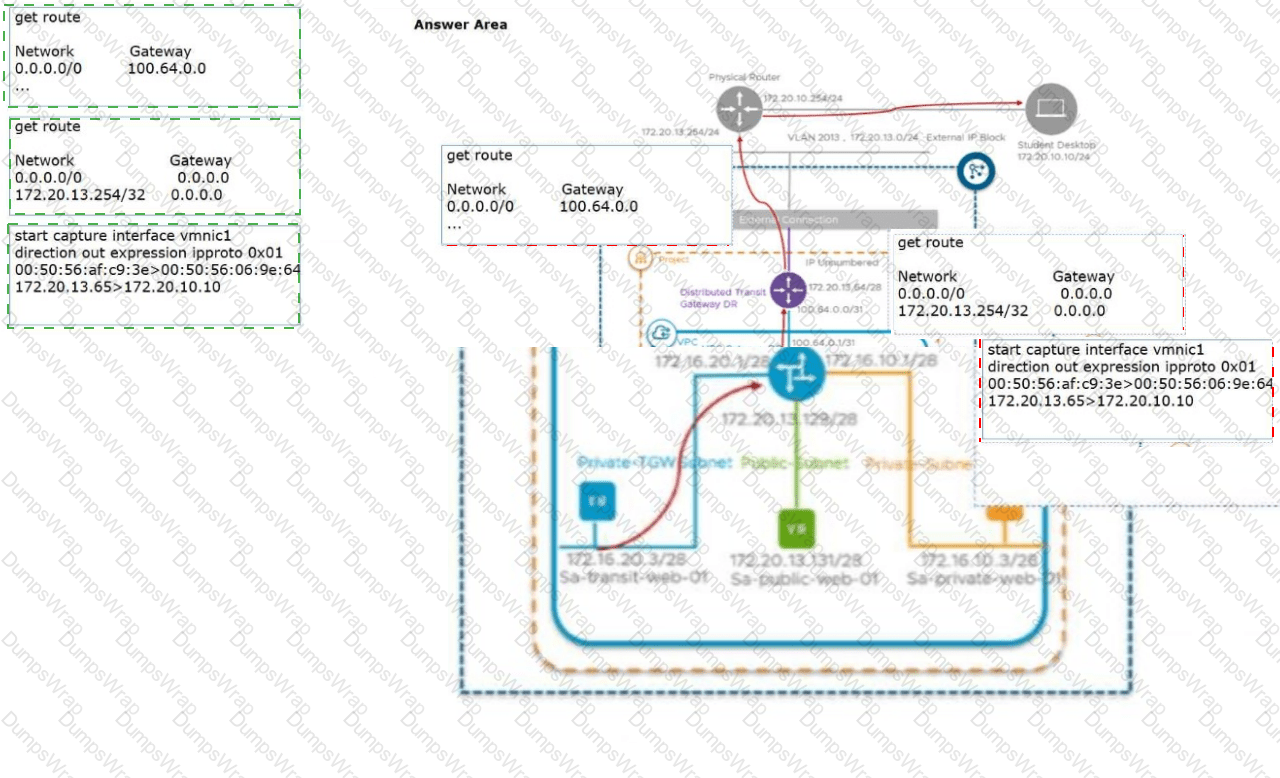
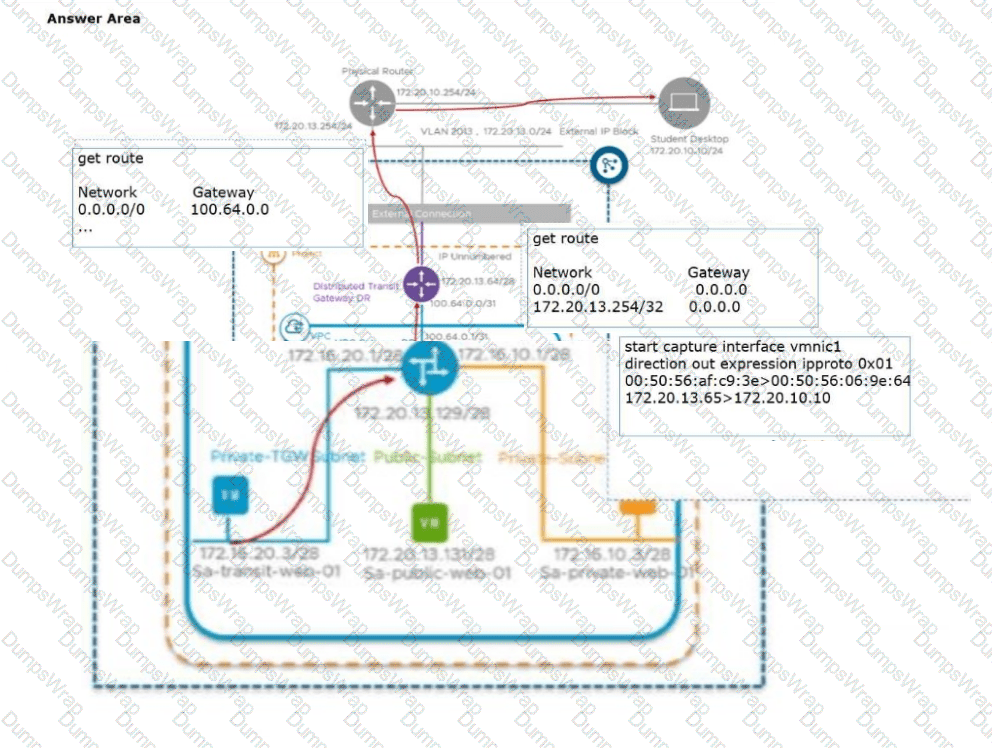
An administrator is attempting to confirm the successful transmission between an internal VM to an external destination.
An ICMP request packet is being sent from Sa-transit-web-01 to the Student Desktop in the diagram.
Drag and Drop the commands output into their appropriate originating NSX object.
An NSX Manager cluster has failed. The administrator deployed a new NSX Manager using the latest version and attempted to restore from a backup, but the restore operation failed. What would an administrator do to recover the cluster?
