
Workday ProTime Tracking Exam Questions and Answers
Refer to the following scenario to answer the question below.
You are reviewing time for a worker in California. The worker has reported hours for the seventh consecutive day and the hours are calculating as configured. This week the worker reported 11 hours on the seventh consecutive day worked. This worker is eligible for double time on all hours worked over 8 on the seventh consecutive day; however, all 11 hours are tagged as seventh consecutive day hours.
While reviewing the Seventh Consecutive Day Double Time calculation, you notice there are two time calculation tags sharing the same row in the grid.
What does this signify?
You want to ensure all historical reported and calculated time data is permanently locked from editing by any user.
What function do you use?
Refer to the following scenario to answer the question below.
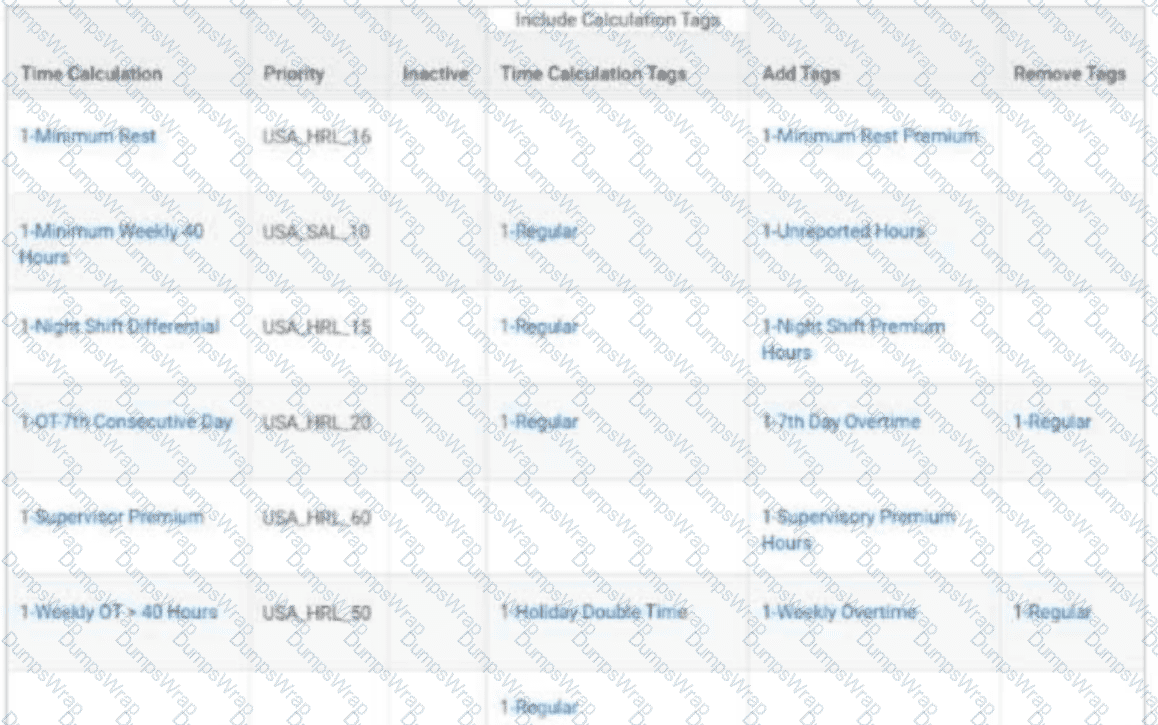
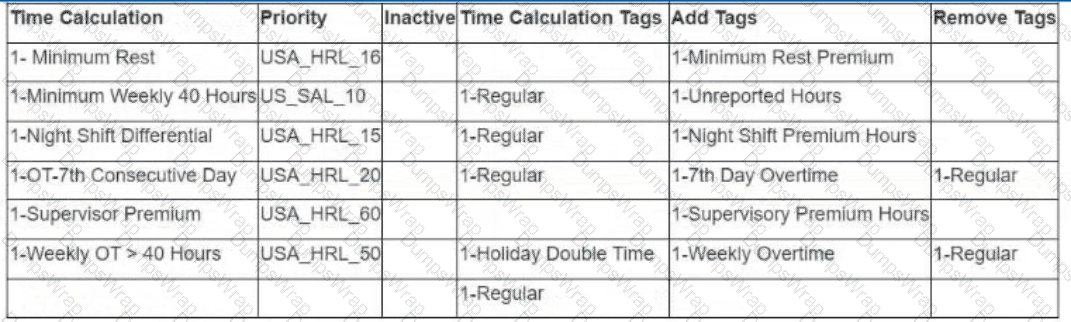
In the report, what calculation has the highest priority?
When using the Generate Period Schedule task, how many years can you automatically generate periods?
Refer to the following scenario to answer the question below.
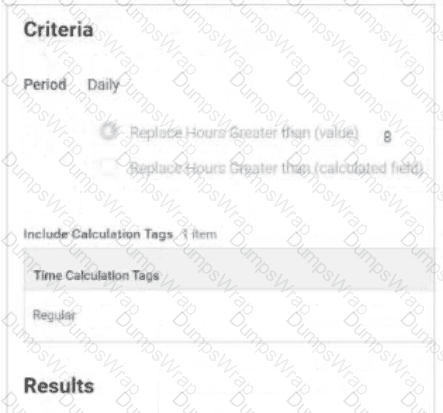

Table is labeled Include Calculation Tags 1 Item
The Time Calculation Tag included is Regular.
Results:
Add Tags field includes Daily Overtime.
Remove Tags field is empty.
Time Day Based On field selection is Calculated Date
The Daily Overtime calculation is tagging hours with both the Regular and Daily Overtime tags. This calculation should only tag hours with the Daily Overtime tag.
What should you edit in the calculation?
The time tracking administrator asks you to confirm that workers are reporting their scheduled hours each day.
What type of time calculation will you use?
You need to create a validation that warns a worker if they have multiple time blocks with overtime in a time period.
What is the top-level business object?
Refer to the following scenario to answer the question below.
You have received a requirement to create a set of Time Tracking Components for workers who have the following attributes:
Time Type = Salary
Country = United States
Supervisory Organization = Facilities Group
A worker that you are testing is already assigned to a template. During testing, this worker, who meets all of the newly defined criteria, is not assigned to the new Time Entry Template.
How do you troubleshoot this issue?
What calculated field type will you use to calculate the number of holidays a worker has in a time week?
What worker population will an administrator commonly use Mass Submit Time for?
A worker is eligible for a validation group which only contains the validations Unsubmitted Time and Cannot Work on a Holiday . You create a new validation, Cannot Work on Sunday , and you do not place it in a validation group.
What validations will the worker be eligible for?
Refer to the following scenario to answer the question below.
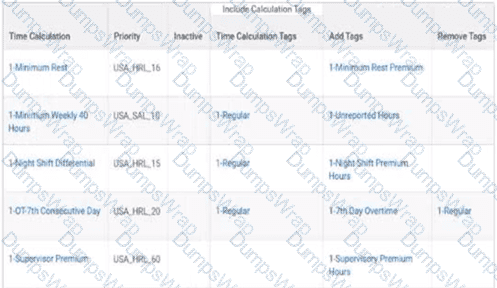
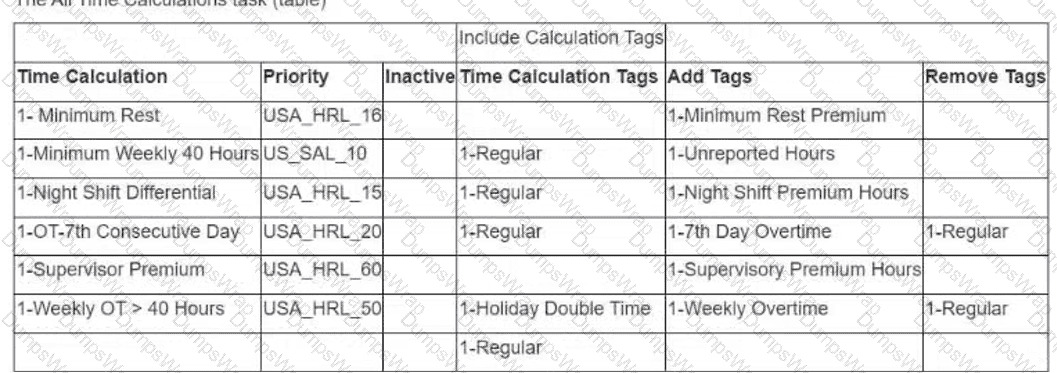
The All Time Calculations task shows the following calculations and priorities:
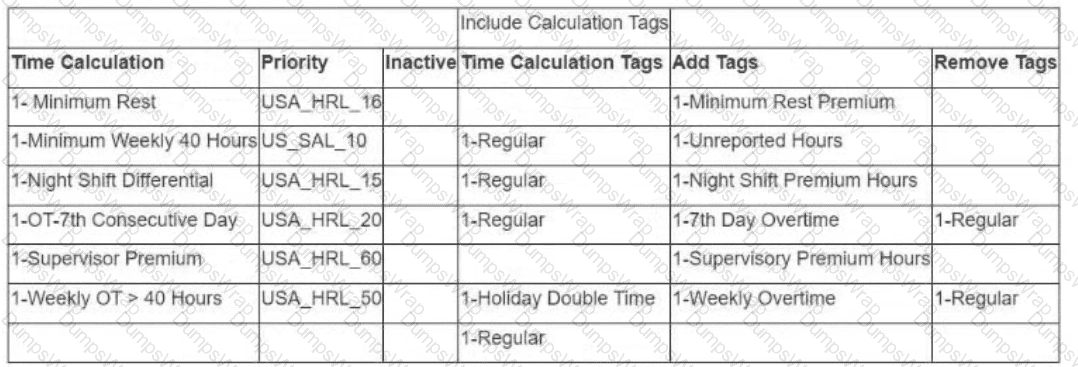
What is the appropriate priority for the time calculation that creates the 1-Holiday Double Time tag for hourly workers?
What EIB is used for loading legacy time entry data for configuration testing?
How are Time Tracking Calculations assigned to workers?
To prevent a worker from entering time on a holiday, which two business objects can you reference to create a critical validation to remind workers of this restriction?
What Time Type do you use to enter elapsed time?
